
 Scoop has an Ethical Paywall


Arts Festival Review: Eraritjaritjaka
Eraritjaritjaka
Reviewed by Lyndon Hood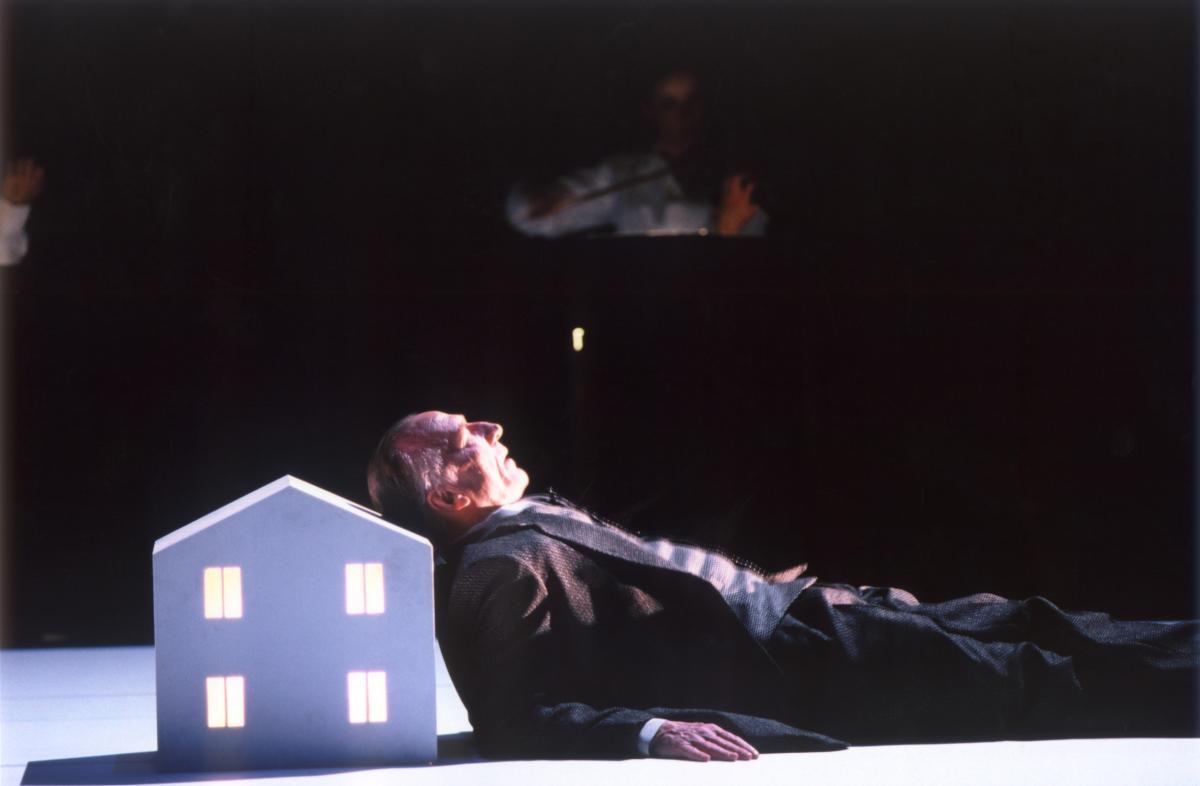
Click for big version
Eraritjaritjaka - The Museum
of Phrases
Théâtre Vidy-Lausanne, dir. Heiner
Goebbels
Based on texts by Elias Canetti
24 - 26 Feb at
7:30pm and 26 Feb at 1:30pm
85 Minutes
The Opera
House
Eraritjaritjaka was inspired by the works
of Nobel laureate Elias Canetti. His words as they appear in
the performance - from notebooks and prose works - have the
structure and beauty of poetry, as well as hinting at deeper
meanings; about the connections between the phrases, about
writing, about the mind of the author, about the individual
and the world.
Director Heiner Goebbels has brought these phrases to the stage, using all the methods available to the theatre (music, voice, action, design, video, technolgy ... ) as magic mirrors to reflect the texts into new forms, both serious and playful, hugely deepening the experience of the words without unravelling their enigmas.
In fact, Eraritjaritjaka opens with the Mondriaan Quartet performing Shostakovich on a black stage under stark lighting. The music is chosen for its themes and its intensity. While the simplicity of the staging does not anticipate what is to come, the emotional urgency and changing tones of the music are reflected in the whole production.
The musical opening also leads the audience into an approach to the piece. We are not dealing with the literal - as image after image unfolds they fascinate the attention and stir the emotion but the meanings that can just be sensed will not resolve into anything logical or concrete.
Each technical element of the production is given more than one moment to shine on its own. The music, the actor (André Wilms), the video work and the design would in fact each be worth going to see independently. In fact, all this technical magnificence is integrated into complimenting, interconnected lines like the tunes in the Bach Conrapunctus (the only piece of music not from the twentieth century) that appears as the performance nears its conclusion.
The thing that everyone seemed to talk about when the house lights came up was a coup de theatre built by use of video. It begins when, not halfway through the show, the only actor take his hat and coat and leaves the theatre. He is followed by a cameraman out onto the street, literally taking the production off the stage and into the real world. The live nature of the video that follows is emphasised with a concreteness that is, in this production, unusual. But the big surprise is in fact yet to come.
And that after an impressive cameo by a piece of lighting equipment.
Perhaps the only disappointment of the evening arose from our failure to understand French (the language of Canetti's writing and Wilms' performance). The production is surtitled but the choice between watching the figure on the stage and seeing the translation projected above it often involved, either way, missing out on something vital. Some of the translations did not mirror the syntax of the French closely enough to convey some of Canetti's poetic constructions or allow the audience to follow Wilms' emphasis, and at one stage they were badly out of sync with the dialogue.
It was a pleasure - proabably for everyone - when the surtitles could briefly ceased for a litany of the names of musical instruments - recognisable in either language.
Through the play, Wilms speaks Canetti's words, seperated into phrases or sentences as a rhythmic as well as conceptual conterpoint to the other images.
The tone and form of the performance shifts in line with the content of these. Canetti contemplates writing and the life of writing, music and social order; he imagines darkly realistic or surreal and fantastical societies. Accompanying his suggestive themes and bridging the gaps between them, the technical elements perform for us as in some kind of existential caberet. Trying to interpret the whole is irresistable, but the important thing is the parts and the experience - the succeding images that work on the emotions and and hidden responses more than the mind.
As we leave the theatre still visible of the stage are the dominant images of the production. A white house with four windows, and a minature white house, upturned, all on white square - all in the middle of blackness.
"Eraritjaritjaka", according to a definition given by Canetti, means "Full of desire for something lost".
NZ Arts Festival: Eraritjaritjaka
Scoop
Audio: Heiner Goebbels interview
Scoop
Full Coverage: Festival
06
 Keith Rankin: Has Sweden Become A De Facto Apartheid Narco State?
 Bruce Mahalski: Change In The Weather #194
 Binoy Kampmark: Dangers To The Fourth Estate - The 2026 World Press Freedom Index
 Richard S. Ehrlich: Strait Of Hormuz Blockades & Thailand's Land Bridge
 Keith Rankin: 'I Am A Semite'
 Binoy Kampmark: Show Me The Money - A Loutish Administration Confronts A Craven Congress