
 Scoop has an Ethical Paywall


Is The NZ Govt's Immigration Review Repressive?
Is The New Zealand Government's Immigration Review Repressive?
Human rights experts and immigration lawyers are uneasy about proposed legislation.
Last month the Minister of Immigration released a discussion paper for the review of the Immigration Act. It’s been long-needed: the Act’s last revision came in 1987 and the global political landscape has changed dramatically since then with the fall of the Soviet Union and the rise of China, civil wars and UN interventions, not to mention al-Qaeda. These changes, among others, affect global migration patterns, affect who wants to come to New Zealand, and affect how New Zealand desires to respond to potential immigrants.
 All those
who Scoop spoke to welcome the review of the
Immigration Act. The discussion paper itself has been
praised, particularly for its clear presentation of the
material. In its 257 dense pages, the document considers
the shortcomings of the current legislation and discusses
possible alternatives for the future legislation. “It’s a
very good example of how you can lay out policy options and
intentions”, says Ced Simpson (pictured left), head
of Amnesty International New Zealand.
All those
who Scoop spoke to welcome the review of the
Immigration Act. The discussion paper itself has been
praised, particularly for its clear presentation of the
material. In its 257 dense pages, the document considers
the shortcomings of the current legislation and discusses
possible alternatives for the future legislation. “It’s a
very good example of how you can lay out policy options and
intentions”, says Ced Simpson (pictured left), head
of Amnesty International New Zealand.
But it’s the content of the discussion paper that has many concerned. The proposed changes are huge steps away from the status quo, and have immigration and human rights experts worried. Particular disquiet is held over the suggested introduction of classified information into immigration decision making.
Much concern stems from the legislation’s potential. While the Act gives a broad legal basis to the immigration service’s work, a lot rests on the actual policy details that will not be determined until after the revised Act comes into force. The discussion paper talks of amalgamating the world-respected Refugee Status Appeals Authority with the other immigration appeal tribunals, and considers increasing the powers of immigration officers to a level similar to that currently held by police in immigration matters. These proposals could potentially work well – but also could be very problematic. The outcome will depend on the way in which the legislation is implemented through Immigration Service policy.
There are several elements in the discussion paper “which have the potential to be very good” says Peter Cotton, Head of the Refugee and Migrant Service – speaking personally as the organisation hadn’t yet developed a comprehensive response to the discussion paper. One such suggestion is that the powers of the Minister in regards to residence applications be devolved to high-level Immigration Service officials (Section 5.1), in a bid to reduce the current processing delays. This is likely to be a good move, says Cotton.
 But it is
hard to predict how the practical interpretation of some
other proposals will work out. One which is attracting
concern is the proposal to give immigration officers powers
of detention, search and entry similar to those currently
held by police and customs officers (Section 10.1). Matt
Robson (pictured left), a former cabinet minister and
immigration lawyer, notes that this was considered in the
1987 Immigration Act Review. At that time the idea was
rejected on the basis of it being “dangerous”, according to
Robson. Yet Amnesty International says that the idea isn’t
necessarily problematic, as long as the immigration officers
have the same training and knowledge as those who currently
carry out these duties. “Similar powers need to be matched
with similar responsibilities”, says Simpson. It all
depends on how the legislation is put into practise.
But it is
hard to predict how the practical interpretation of some
other proposals will work out. One which is attracting
concern is the proposal to give immigration officers powers
of detention, search and entry similar to those currently
held by police and customs officers (Section 10.1). Matt
Robson (pictured left), a former cabinet minister and
immigration lawyer, notes that this was considered in the
1987 Immigration Act Review. At that time the idea was
rejected on the basis of it being “dangerous”, according to
Robson. Yet Amnesty International says that the idea isn’t
necessarily problematic, as long as the immigration officers
have the same training and knowledge as those who currently
carry out these duties. “Similar powers need to be matched
with similar responsibilities”, says Simpson. It all
depends on how the legislation is put into practise.
A similar concern has been raised in regards to the idea of amalgamating all four immigration review tribunals (Section 8.1). At present, New Zealand has four immigration appeal authorities: the Deportation Review Tribunal; the Removal Review Authority; the Residence Review Board; and the Refugee Status Appeals Authority (RSAA). Each body has a distinct purpose, but if an applicant falls into multiple categories the decision making process can become lengthy as each relevant authority is appealed to consecutively. A single appeal authority could be beneficial if it resulted in a streamlining of the process, and the elimination of “multiple avenues for people to rip off the system”, says Simpson.
But while the proposal is welcomed in theory, it comes with a serious caveat in regards to refugee determination. Simpson says the amalgamation would only be welcomed “if we can be assured that the expertise of the RSAA can be carried forward”. It’s a common theme coming from those Scoop spoke to. “The RSAA is considered as a model internationally in terms of competency and the jurisprudence to come out of it”, says Peter Cotton. “It’s important that we don’t lose the calibre of authority that we have now [in amalgamating the appeal bodies]”.
Matt Robson notes that asylum-seekers have very different needs – and bases in law – to other immigrants or potential immigrants to New Zealand. He cautions against forgetting that the RSAA was established for a very good reason: the country had “awful problems” in refugee determination before its creation. Robson cites the case of Jagpal Singh Benipal, an Indian asylum-seeker who was jailed unlawfully in Mt Eden prison for four months in 1983. Benipal’s treatment was roundly condemned at the time, and provoked Amnesty International to call for a review of the procedures for dealing with asylum seekers arriving at the border. The case was a “huge embarrassment”, says Robson, and the reason for the establishment of the RSAA. The authority is there for a solid reason and it should not be “dismantled for expediency” says Robson.
A major point of concern, no matter how the policy details work out, is the proposition that would allow classified information to be relied upon in immigration decision making (Section 9). Amnesty International is worried by the ways in which classified information would be used under the proposed changes, and prefers that classified information not be used: “it makes if hard for justice to be seen to be done”, says Ced Simpson.
Security information is variable in its accuracy says Simpson, and the proposal of having a single immigration officer making a decision on the basis of secret information, with just a single judge available to review the information is not good enough. “[It] puts a huge onus on that person”, says Simpson. At the very least, Amnesty International would like to see an appeal system similar to that in place in the United Kingdom, where a panel of three people conduct immigration appeals, one of whom is a security intelligence expert familiar with the potential pitfalls of such information.
Matt Robson echoes this sentiment. Drawing on his wide experience as an immigration lawyer, he says that applicants need lawyers to argue their case with immigration – “the Immigration Service makes mistakes” – and an effective defence cannot be mounted in the face of secret evidence.
Simpson refers to British and European court decisions which have stressed the need for the appellant to be given at least some information, a “sanitised” version of the information being used against them. “The whole system [of using classified information] is very vulnerable to miscarriages of justice” says Simpson.
 Immigration Minister David Cunliffe (pictured left)
defends the proposals. New Zealand has a “well deserved
reputation for having a tolerant and liberal society”, says
Cunliffe, and argues that those subject to negative security
information are likely to be people who would seek to
disrupt this way of life. Classified information is
“professionally collected by a recognised security agency…
It is very very carefully obtained,” says Cunliffe. “You
couldn’t dob in your neighbour”. Only a small number of
officials senior enough to be trusted with receiving and
basing their decisions on classified information would deal
with such cases: “senior officials, experienced officials,
trusted officials”, stresses Cunliffe.
Immigration Minister David Cunliffe (pictured left)
defends the proposals. New Zealand has a “well deserved
reputation for having a tolerant and liberal society”, says
Cunliffe, and argues that those subject to negative security
information are likely to be people who would seek to
disrupt this way of life. Classified information is
“professionally collected by a recognised security agency…
It is very very carefully obtained,” says Cunliffe. “You
couldn’t dob in your neighbour”. Only a small number of
officials senior enough to be trusted with receiving and
basing their decisions on classified information would deal
with such cases: “senior officials, experienced officials,
trusted officials”, stresses Cunliffe.
 Intelligence expert Dr Paul Buchanan (pictured left)
is highly sceptical about Cunliffe’s assurances. The
intelligence gathering and review system is open to
political manipulation he says, and he has “very, very
serious concerns about the quality of intelligence gathering
in this country”. He has little confidence in the proposed
system, which would have a small number of immigration
officials be privy to classified information, officials who
are “basically a mix of political appointees and career
bureaucrats”, and thus likely to follow orders from above.
Immigration officials, Buchanan believes, are unlikely to be
able to distinguish between accurate and fallacious
classified information. “If it’s classified, they’re going
to believe it’s true … A lot of what passes for classified
information is in the realm of the fictitious rather than
fact.” He has little faith in Cunliffe’s assurance that
allowing only senior officials to deal with such cases is an
appropriate safeguard. The more senior an officer is, the
more likely they are to want to pander to government
interests: “in the US we call it brown-nosing, I’ll leave
that to your imagination”, says Buchanan.
Intelligence expert Dr Paul Buchanan (pictured left)
is highly sceptical about Cunliffe’s assurances. The
intelligence gathering and review system is open to
political manipulation he says, and he has “very, very
serious concerns about the quality of intelligence gathering
in this country”. He has little confidence in the proposed
system, which would have a small number of immigration
officials be privy to classified information, officials who
are “basically a mix of political appointees and career
bureaucrats”, and thus likely to follow orders from above.
Immigration officials, Buchanan believes, are unlikely to be
able to distinguish between accurate and fallacious
classified information. “If it’s classified, they’re going
to believe it’s true … A lot of what passes for classified
information is in the realm of the fictitious rather than
fact.” He has little faith in Cunliffe’s assurance that
allowing only senior officials to deal with such cases is an
appropriate safeguard. The more senior an officer is, the
more likely they are to want to pander to government
interests: “in the US we call it brown-nosing, I’ll leave
that to your imagination”, says Buchanan.
But won’t having the Inspector-General of Intelligence and Security review classified information guard against any problems that may arise from the immigration officer’s judgement? “The Inspector-General serves at the mercy of the Director-General of Intelligence and Security – and in this case, he’ll serve at the mercy of the immigration department”, says Buchanan.
Although the Inspector-General is supposed to be overseeing the workings of the Security Intelligence Service (SIS), he is often bound by the will of the Director General. For example, says Buchanan, “the Inspector General cannot see foreign-derived classified information if the Director-General doesn’t want him to see it”.
The number of people involved in the review of immigration decisions based on classified information should be expanded according to Buchanan. “In issues as fundamental as immigration, you’d think you’d expand [the number of people reviewing the information], under oath of secrecy – and there are very heavy criminal penalties for breaking that oath – to include interested and uninterested parties.” It needs to be clear that those reviewing the information are independent and free from political manipulation says Buchanan. He suggests having a group of people, including at least an intelligence expert, a representative from the community into which the applicant wants to come into, and the immigration department, to look at the information under oath and discuss its accuracy together: “you cannot have one, two or three people, often people with political motivations”.
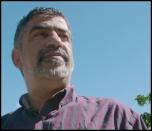 Section 4A
of the Immigration Act deals with cases involving security
concerns and to date Ahmed Zaoui (pictured left) is
the only applicant to have been subject to it. The section
has been explicitly excluded from the review, pending the
conclusion of Zaoui’s case. However, Ced Simpson argues
that it would appear that with the introduction of
classified information in immigration decisions, Section 4A
is being “imported into the wider legislation”.
Section 4A
of the Immigration Act deals with cases involving security
concerns and to date Ahmed Zaoui (pictured left) is
the only applicant to have been subject to it. The section
has been explicitly excluded from the review, pending the
conclusion of Zaoui’s case. However, Ced Simpson argues
that it would appear that with the introduction of
classified information in immigration decisions, Section 4A
is being “imported into the wider legislation”.
Matt Robson believes that the document seems to be asking “how can we stop someone [like Ahmed Zaoui] exercising their rights?” He is disappointed that the discussion paper, which he describes as “repressive”, doesn’t leave much room for public input, and that the officials who put it together were working from “an extreme position”, on the assumption “that we are under threat”. “It sounds like Winston Peters walking down Queen Street and saying ‘ooh, there’s too many Asians, they’re challenging my sense of identity’” says Robson.
Devised by bureaucrats and politicians, the discussion paper is now available for public comment. Copies are available from the Department of Labour at www.dol.govt.nz/actreview and submissions are due by 14 June 2006.
*******
Katie Small was co-author of the book "I Almost Forgot About The Moon – The Disinformation Campaign Against Ahmed Zaoui" and blogs at ketewere.blogspot.com. Her previous piece for Scoop was Chile Bolivia And The Rightwing Backlash.
 Richard S. Ehrlich: Strait Of Hormuz Blockades & Thailand's Land Bridge
 Keith Rankin: 'I Am A Semite'
 Binoy Kampmark: Show Me The Money - A Loutish Administration Confronts A Craven Congress
 Ian Powell: Do Wellington Floods, Climate Change And Wealth Accumulation Equal “Suicidal Capitalism”?
 Ramzy Baroud: The Pendulum Swings - The Slow Death Of Europe’s Pro-Israel Consensus
 Dr Nasim: Poem From Gaza - Her Smile