
 Scoop has an Ethical Paywall


Bush In Bangkok Blasts Burma & China
Bush In Bangkok Blasts Burma & China
BANGKOK, Thailand -- U.S. President George W. Bush arrived Wednesday (August 6) to meet a tantrum-prone Thai prime minister, express America's "opposition to China's detention of political dissidents," and later plot with Burmese to force regime change in Burma.
Bluntly using Bangkok to blast China -- a very close friend of Thailand -- President Bush plans to say in a major speech on Thursday (August 7): "America stands in firm opposition to China's detention of political dissidents, human rights advocates, and religious activists.
"We speak out for a free press, freedom of assembly, and labor rights, not to antagonize China's leaders, but because trusting its people with greater freedom is the only way for China to develop its full potential.
"And we press for openness and justice not to impose our beliefs, but to allow the Chinese people to express theirs," President Bush says in the text of a speech released in advance by the White House.
Washington and Bangkok officially celebrate 175 years of diplomatic relations during the two-day visit by the president and first lady Laura Bush.
They arrived from South Korea and travel north to the Beijing Olympics when they depart from Bangkok on Thursday (August 7).
The Bushes were welcomed by Prime Minister Samak Sundaravej, winner of a December 2007 election after voters turned against military leaders who seized power in a bloodless September 2006 coup.
Prime Minister Samak is perceived by many Thais as a staunch, wily, rightwing politician who frequently inflicts verbal abuse on anyone who crosses him, despite repeated complaints by Thailand's media demanding he curb his tongue.
Mr. Samak's latest outburst erupted in a public market on Sunday (August 3) after he stayed in a public toilet for about one hour, while journalists waited to ask about his cabinet reshuffle and problem-wracked administration.
"The prime minister was in the toilet, and they were standing in his way, blocking him from exiting," Mr. Samak complained, referring to himself in third-person while venting his infamous anger.
"Can't I have any privacy? Should I be filmed inside [a toilet] while emptying myself?"
"The prime minister's tantrums make him unfit to serve," an English language newspaper, The Nation, responded in an editorial on Wednesday (August 6), echoing sentiments expressed elsewhere.
Domestic political wrangles, and Thailand's smoldering border- demarcation feud with Cambodia, have kept many Thais from focusing on President Bush's visit to this modernizing, Buddhist-majority, Southeast Asian nation.
"I think Bush is a good political leader, he is lively and active, but I don't know much about his policies in Iraq because that is far away from," a middle-class businesswoman said in an interview.
"I heard many American people don't like Bush, but I just want to see what he is like, and what his personality is," she said, hoping to watch him on TV.
On Thursday (August 6), President Bush visits the Mercy Center, a slum-based group of schools, AIDS hospices, orphanages, and medical clinics in Bangkok run by a high-profile American Catholic priest, Rev. Joe Maier.
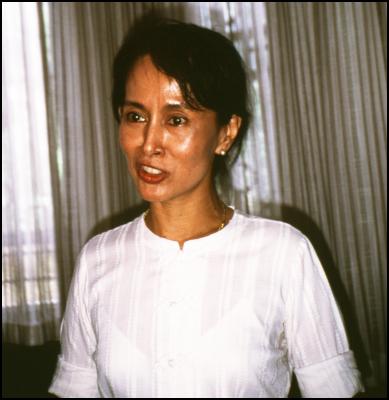
Later that day, President Bush will eat lunch with Burmese "activists" in the U.S. ambassador's stately residence, and be interviewed there for a radio station which broadcasts into Burma.
Mr. Bush apparently hopes to boost morale among Burmese dissidents who have tried for decades to topple Burma's military regime.
Washington's aggressive intervention in Burma -- and China -- dates back to the 1950s when U.S. President Eisenhower reportedly installed thousands of armed Chinese Nationalists in northern Burma, to wage cross-border assaults against China's communists.
President Bush recently tightened economic sanctions against Burma, an impoverished nation also known as Myanmar.
But Washington allowed a loophole for Chevron Corp. -- the biggest U.S. investor in Burma -- to continue doing business with the military regime and extract natural gas via Chevron's stake in a Yadana pipeline project.
"If they think they are politicians who really love the nation and the people, they should not call for any economic sanctions against the nation," Burma's regime said last week in its New Light of Myanmar newspaper.
In a bizarre twist, the regime quoted recently published comments by U.S. Professor Noam Chomsky, "who is held in highest esteem among the world's live scholars."
"When asked what are the consequences of the enormous U.K. investment in Myanmar, of earlier U.S. weapons sales, of recent Israeli weapons sales, and of Chevron Oil's continued supply of millions and millions of dollars in oil money, he [Chomsky] said that the consequences of the U.S.-U.K.-Israeli operations are, of course, to strengthen the Myanmar government.
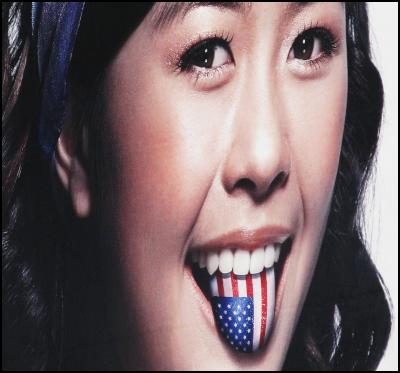
"That indicated the policy of 'double face and double tongue'" by America, Britain and Israel, said the paper, which mirrors the regime's perception.
First lady Laura Bush, meanwhile, was scheduled to travel west to the Thai-Burmese border and meet people working with Burmese refugees.
************
Richard S Ehrlich is a Bangkok-based journalist who has reported news from Asia since 1978. He is co-author of "Hello My Big Big Honey!", a non-fiction book of investigative journalism, and his web page is http://www.geocities.com/asia_correspondent
ENDS
 Keith Rankin: Clipping The Ticket; Solving Hormuz, In Context
 Ian Powell: Inhumanity Of US Economic Sanctions Against Cuba – Infant Mortality And Starvation; Time To End NZ’s Silence
 Ramzy Baroud: Subjects Of Empire - Breaking The Cycle Of Arab Dependency On US Elections
 Peter Dunne: Dunne's Weekly - The Pragmatic Food For Fuel Deal With Singapore
 Eugene Doyle: After Israel’s Brutal Attack On Kiwis, Our Government Does Nothing
 Keith Rankin: Has Sweden Become A De Facto Apartheid Narco State?