
 Scoop has an Ethical Paywall


Nethui Editorial: News Disrupted - Has News Lost Its Mojo?

News Disrupted: Has News Lost Its Mojo?
By Scoop Co-Founder Alastair Thompson

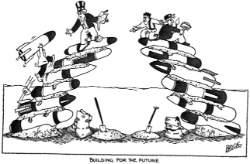
Illustration by Lyndon
Hood, after 'Accolade' by Edmund Blair
Leighton
For the inaugural edition of Nethui.Scoop Alastair Thompson surveys the outlook for the online news industry in a time of accelerating disruption and asks the question: Where are the patrons?
Firstly - Some Things You Will Not Read In The Newspaper
Yes. The news industry has lost its mojo. It is being disrupted, faster than before, and on multiple fronts. 12 months ago newspapers had hoped to reverse falling advertising revenue. They failed.
A year on, no matter how you look at the numbers, online revenues are not growing fast enough to cover the cost structures of the news giants.
And now, unable to adapt, Australasia's news engine (the newspapers) are being effectively skinned alive by their management/bankers.
Paradoxically in this environment Fairfax's strength, Trademe, is also its weakness. Unlike APN, Fairfax has something worth selling (a.k.a. something worth liquidating). Conversely APN's creditors have no choice but to try to transform APN's business and preserve what value remains.
Fairfax meanwhile has drawn the attention of the sharks.
Last Friday mining billionaires Gina Rinehart drew blood. To keep Fairfax's share-price stable when she sold down 3.5% of the news behemoth a very significant cash cost was incurred.
Q: How Did This Happen? A: Google Did It
In the lead up to the disruption (in the 80s and 90s) private equity and listed companies borrowed, acquired and aggregated advertising channels. They did this in an attempt to monopolise the remaining advertising dollar as their "rivers of gold" started to run dry. They created an ocean of debt.
In the early noughties the rot - which had till then been characterised by fragmentation of media - turned into a digital rout. E-Bay, Craig's List and Trademe decimated the classified part of the "rivers of gold". Then Google revolutionised online marketing with Adsense. Performance based - targeted cost per click and cost per acquisition advertising was available to everybody.
These advertising systems (and Google has many competitors now) have built a perfectly efficient aggregated online advertising marketplace. Advertising channel monopolisation is now near impossible.
NZ Online Advertising By The Numbers
So what does this mean in practice. Lets take the NZ online advertising market as an example (Note: The Australian situation is the same only bigger).
The NZ Online Advertising/marketing is now the biggest online industry in NZ. Bigger than Trademe with reported revenues over $330 million a year and growing at close to 20%pa. Online is now bigger than Magazine or Radio advertising and around half the revenues earned by newspapers or television.
So this should be great then for online content producers?
Unfortunately not.
Only a fraction of this revenue is being earned by NZ based companies - and almost none is being earned by NZ owned companies (both Fairfax and APN are foreign owned).
Trademe is the only significant domestic earner in the NZ online advertising market - dominating the "classified" category. The other two categories "search" and "display" are dominated by Google, Facebook and a myriad of international advertising networks and advertising exchanges (futures markets for advertising).
And on most of this revenue (thanks to the great Irish tax dodge - and in Fairfax's case masthead writedowns) no tax is being collected either.
Practically speaking this means that revenue which was previously supporting the creation of NZ content is no longer doing so - in ever larger quantities. While newspapers are the worst hit, TV and radio are also having a hard time.
Finally it is worth noting that the tax avoided in the NZ online advertising market alone is significantly greater than the cost of supporting TVNZ7.
Some possible solutions to the "News" crisis:
Advertise Local: NZ's online media culture is fragile and subscale. NZ's advertising industry needs to differentiate between international and local publishers.
Participation: Online publishers - both private and Government - should enable, encourage and promote citizen journalism and citizen news curation.
Facilitate Copyright Licensing Revenues (See also Page 5 - The Meltwater Case): Government, businesses and educational institutions which utilise the work of NZ publishers' blogs, news websites and commentators could be asked to pay for their re-use of such material under existing copyright law as clarified in the Meltwater Case. (Possible subject for Bar Camp session on Friday 13th July).
Community: Links are online currency. We need to link to each other, network, cooperate, collectivise, converse. Scoop routinely links to and encourages new online news participants. If mainstream news providers were to start doing this it would revolutionise news content inside New Zealand.
Patronage: For the news industry to get through these times it will need a hand. That hand can be provided by industries which understand the need for an informed market, obvious examples being the telecommunications and capital markets sectors. But a hand can also be provided by the Government. An online content funding arm for NZ On Air is an immediate need.
How is NZ Online Content Coping?
Badly. NZ lacks scale as a market in all senses. Leaving aside the advertising scale problem, even as a news/community audience NZ lacks scale.
It is hard to acquire an online audience in New Zealand. Very hard.
Commercialising subscale audiences whilst providing free public access to comprehensive news coverage is impossible. In NZ such an objective can possibly only be supported by philanthropy.
While Google, Facebook and Twitter are making it a bit easier to get noticed, the other net giants Yahoo, MSN, Stuff , TVNZ and the Herald give very little link love to anyone.
Excluding news aggregators, real NZ "news" websites which are not linked to traditional (TV, Radio or Print) publishers which employ people to write news can be numbered on a single hand.
Blogging is flourishing as is citizen journalism and the later is increasingly being done by professional journalists posing as amateurs. However much of this flies under the radar.
Even NZ’s largest blogs only earn a modest income, enough to cover the costs of maintaining blogging infrastructure in a country where hosting is by international standards very expensive.
The Rise Of Newspaper Patrons - Why Gina Is Possibly The Answer
While it is not the PC thing to say, the Fairfax bid by Gina Rinehart is quite probably the only "realistic" solution to Fairfax's problems. And Gina will eventually win unless a more beneficent patron steps up. Sage of Omaha Warren Buffett has also been purchasing newspapers, and not as "business owner", rather he - like Gina - also wants a to become a patron/influencer.
We should not neceessarily be scared of this. In days of old the news business had patrons, wealthy families (in the US the Grahams & Bancrofts, here the Hortons & Blundells and in Oz the Fairfax, Packer and Murdoch dynastys) with deep pockets. People who loved news, freedom of the press and the rule of law.
What Happens Next - In NZ
For now in NZ the patrons have gone. Private equity firms and bankers control the levers in NZ's newsrooms. The boards managers and shareholders are increasingly irrelevant.
It is true that NZ's newspaper companies are in better shape than most. Featherbedding is long gone, subbing is already centralised and the lights went out on mahogany row a decade ago.
What remains is a core of experienced committed real journalists supervising a large number of new young, low-paid, hamsterised proto-journalists.
This is the "good news" story that the newspapers will tell you.
However what happens in NZ isn't currently driving our future.
The Australian Metro newspaper businesses of both APN and Fairfax dominate both companies in cost and revenue terms.
So in fact NZ's "news" future is currently being decided in the advertising markets of Sydney and Melbourne.
In July 2011 margins in both APN's and Fairfax's Australian metro businesses were dangerously low. Since then revenues have continued to fall and while both businesses are slashing costs they cannot do it quick enough.
In Fairfax's case the math is roughly this: Revenue down $100 million, costs down $40 million. Solution: Forecast $50 million in cost cutting for each of the next three years and "hope" you can build online revenues – both advertising and subscription based (Apps and paywalls).
The problem is that the gap is too large. Consider that even the biggest online news publications in the world The Guardian and New York Times are bleeding cash - what hope do Australian publishers have? They too are subscale.
Paywalls, Facebook and ADD
And yes paywalls will doubtless be part of a solution (along with Patrons) but they face huge obstacles. Obstacles which go beyond the initial problem of overcoming the aversion existing news consumers have to paying for content, (when they feel pretty well catered for by twitter and facebook).
News now faces a new challenge - Attention Deficit Disorder.
Ask yourself, do you really feel like the newsfeed reaching you has deteriorated? For me quite the reverse is happening - these are the days of miracles and wonders, 100+ TV channels, cell-phones, smart-phones, skype, internet radio, twitter and (most importantly of all) Facebook. We all face information overload not an information deficit.
Sure news is important to me, but do I actually have any time for it beyond the TV and radio? Can I get by on my Facebook news stream? Hell yeah!
Scoop's Solution For NZ News
Democratisation, Copyright, Hyperlocalism and Patronage
All of which is to say that yes. The News Industry has lost its mojo. It is lost, foundering, severely disrupted and in danger of expiring altogether in the form that we have come to know it.
But as the recording and directory industries have learned internet disruption means destruction. It also means radical change, and that means opportunity. Disrupt.
From the ashes rises the Pheonix etc. and for the team at Scoop this opportunity is palpable, albeit somewhat elusive.
NZ's response to the challenge of delivering news services to support its democratic institutions in the 21st C will need to be creative as our lack of scale inherently undermines our cultural strength (especially online).
ENDS
(NOTE: Scoop is sponsoring Nethui 2012 as part of the Scoop Media Cartel, an alliance of independent NZ online news publishers. Nethui runs Wednesday 11th to Friday 13th July 2012. An abridged version of this editorial appears as the interactive bytes column in the July edition of Admedia magazine.)
Alastair Thompson
Scoop Publisher
Alastair Thompson is the co-founder of Scoop. He is of Scottish and Irish extraction and from Wellington, New Zealand. Alastair has 24 years experience in the media, at the Dominion, National Business Review, North & South magazine, Straight Furrow newspaper and online since 1997. He is the winner of several journalism awards for business and investigative work.
 Ian Powell: Hidden Waiting List Exposed; Unmet Health Need Unreported
 Ramzy Baroud: The Assault On A French Nun And The Forgotten Story Of Palestinian Christians
 Frances Palmer: Defending Values In A Volatile World
 Peter Dunne: Dunne's Weekly - Waititi Correct, But Unlikely To Get His Wish
 Keith Rankin: Does The United States Have A Debt Problem That Needs Fixing?
 Bruce Mahalski: Change In The Weather #195