
 Scoop has an Ethical Paywall


Sport and the Christchurch Earthquakes
Sport and the Christchurch Earthquakes
by Connie Lawn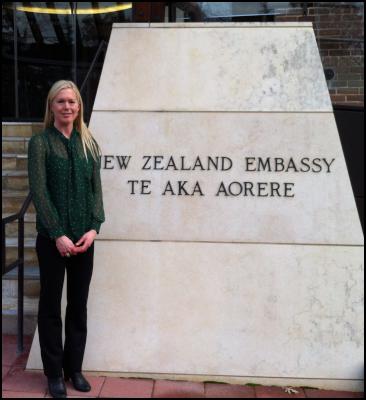
Dr. Holly Thorpe, outside the New Zealand Embassy in Washington D.C.
Photo by Charles Sneiderman
There are few countries in the world more athletic than New Zealand. Kiwis love their sports, and revere their beautiful outdoors. When nature turns around and attacks them, it is especially heartbreaking. (Americans hit hard by hurricanes in the US understand this only too well!).
A smart and beautiful Kiwi, Dr. Holly Thorpe, gave a presentation at the NZ Embassy in Washington DC. She discussed the ways sports were disrupted by the earthquakes of February 2011, but sports ultimately helped many people recover their equilibrium. She conducted a series of interviews with Kiwis who lived in Christchurch before the quakes, during them, and after. Most say they will remain; others will move on. Dr. Thorpe showed slides of daring young Kiwis skateboarding over crevices in the road, and sometime falling into them! They also used piles of destroyed rubble for their sport. Surfers had to find new, less polluted beaches further away from their homes. Mountain and rock climbers, as well as skiers and snowboarders, had to find new locations. Athletes who had to curtail their action sports found they gained weight from eating and drinking too much. But ultimately they returned to their rigorous life styles, even if the locations changed.
Dr. Thorpe prepared her investigation for her Department of Sport and Leisure Studies at The University of Waikato. In the US, she has been a Fulbright Visiting Scholar, where she taught a course called "Sport and National Identity." She also directs a group called "Fuel Aotearoa -Empowering athletic girls and women through education."
There can be some inspiration in this study for young Americans who have lost so much in their natural disasters. NZ Ambassador Mike Moore also suggests some aspects of the study might be useful to many officials involved in recovery and rebuilding. Many lessons can be learned, but it was a hard way to learn them.
 Eugene Doyle: Did The NZ Prime Minister Just Commit Treason?
 Binoy Kampmark: Ted Turner - The Devil Behind Cable News
 Keith Rankin: Clipping The Ticket; Solving Hormuz, In Context
 Ian Powell: Inhumanity Of US Economic Sanctions Against Cuba – Infant Mortality And Starvation; Time To End NZ’s Silence
 Ramzy Baroud: Subjects Of Empire - Breaking The Cycle Of Arab Dependency On US Elections
 Peter Dunne: Dunne's Weekly - The Pragmatic Food For Fuel Deal With Singapore