
https://www.scoop.co.nz/stories/AK2605/S00251/waikato-aquaculture-forum-charts-path-toward-180-million-industry.htm
|
| ||
Waikato Aquaculture Forum Charts Path Toward $180 Million Industry |
||
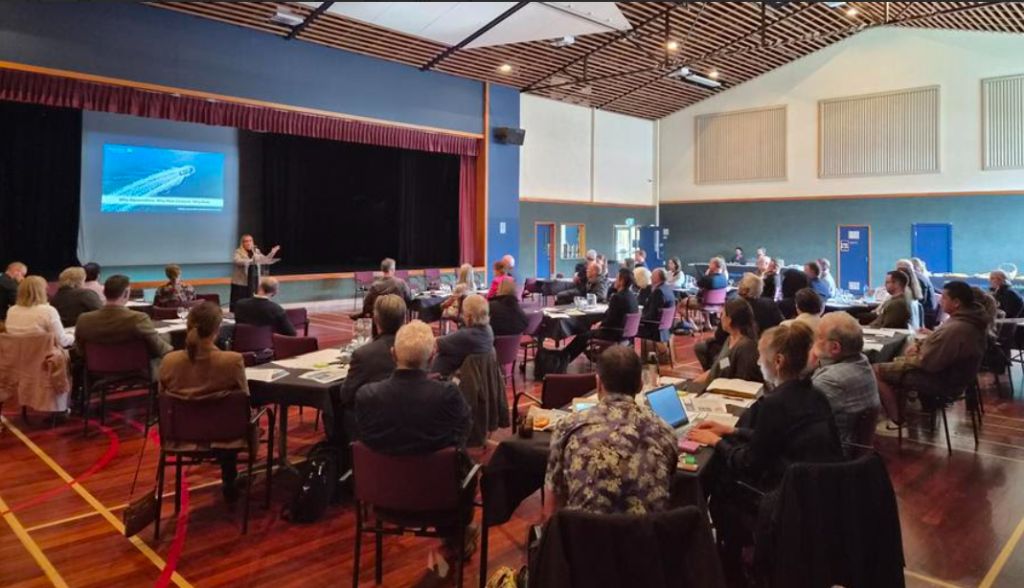
Key players from the aquaculture industry, iwi, research organisations and local and central government gathered in Thames last week to map out the future of the sector in the Waikato region.
The Waikato Aquaculture Forum was held last Friday 9 May at the Thames War Memorial Civic Centre and organised by the Waikato Regional Aquaculture Group (WRAG). Thames-Coromandel District Council and Waikato Regional Council played key roles in bringing the event together. WRAG Chair Rebecca Clarkson led the day's proceedings, which focused on turning the Waikato Regional Aquaculture Strategy into concrete actions.
The strategy sets an ambitious target: doubling the value of aquaculture exports to $180 million by 2044.
Thames-Coromandel District Mayor Peter Revell welcomed attendees, emphasising the district's deep connection to the industry.
"Here in Thames and across the Coromandel, we have a strong connection to the aquaculture industry, it's part of our history, our identity, and our future," Mayor Revell said. "For our communities, this is about jobs, resilience, and keeping our towns thriving year-round."
Thames-Coromandel District produces 26% of New Zealand’s mussels and 23% of our oysters, both sources of sustainable food protein. The sector directly employs 400 people in the Coromandel.
“Aquaculture matters to the Waikato. Our coastal and marine environment offers significant opportunity to grow a thriving blue economy, and if we get it right, aquaculture can be a cornerstone of regional prosperity for generations to come," said Waikato Regional Council Chair Warren Maher.
The forum brought together voices from across the sector, including Under-Secretary for Oceans and Fisheries Jenny Marcroft, representatives from Aquaculture New Zealand, the Coromandel Marine Farming Association, and local operators Gulf Mussels and Moana New Zealand.
Presentations throughout the day examined barriers to growth, regulatory changes, and how local infrastructure can better support the industry. Jake Bartrom highlighted the importance of continued investment in marine infrastructure to unlock future industry growth.
“Infrastructure like Ariki Tahi Sugarloaf Wharf is critical to the future of aquaculture in the Waikato,” Mr Bartrom said. “If we want to grow the industry, we need infrastructure that can support that growth.”
Researchers from the University of Auckland and University of Waikato also outlined science priorities for the sector, including work on spat supply reliability and new species pathways.
The forum built on momentum from a 2022 event that led to the formation of WRAG and the development of the regional aquaculture strategy. This time, the focus was on delivery; identifying priority actions for the next three years. A key theme that emerged was the need to enable adaptation and growth by reducing water space consenting challenges. With upcoming changes to the Resource Management Act and ongoing local government reform, participants identified the importance of collaborating strategically to ensure the new system supports responsible growth and long-term industry resilience.
WRAG Chair Rebecca Clarkson set out the next steps: "We heard enthusiasm for the future of the industry in Waikato despite a range of challenges and are now collating feedback from participants on priority barriers, opportunities and pragmatic solutions. The WRAG will take this into account in setting out its action plan for the next few years."
"One thing that's clear, no one group can deliver this on their own," Mayor Revell noted. "It's going to take iwi, industry, and government all pulling in the same direction."
More information about aquaculture in the Waikato and the work of WRAG is available at waikatoaquaculture.co.nz.
Home Page | Auckland | Previous Story | Next Story
Copyright (c) Scoop Media