Tuesday, 14 October 2025, 7:35 pm Press Release: Kiwi Economics
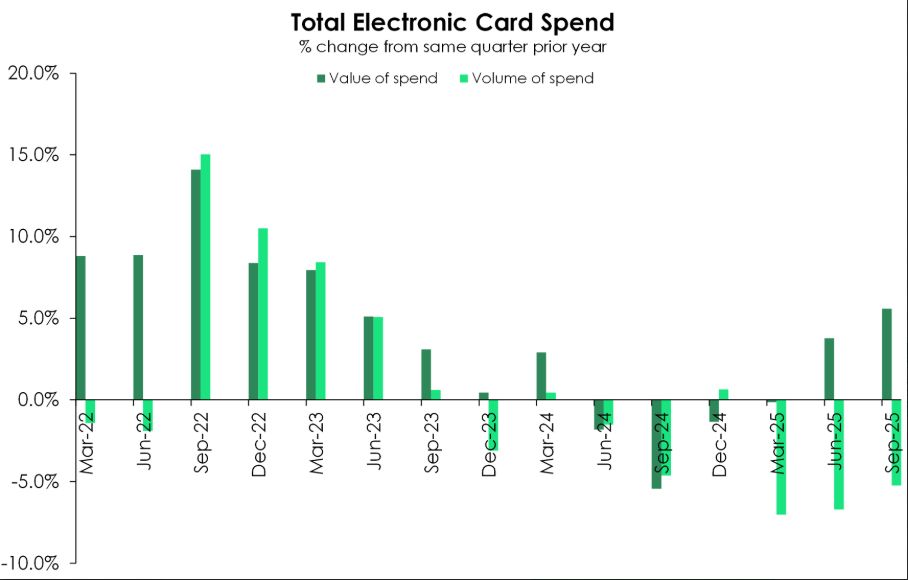
According
to Kiwibank electronic card data, total dollars spent lifted
5.6% over the September quarter compared to last year’s
levels. However, the volume of transactions declined 5.2%.
Fuelled by historically low interest rates and “lockdown
savings”, consumer spending was strongest in 2022. Since
then, spending has gently corrected lower.
Beneath
the headline, households are clearly prioritising costlier
essential goods and services over durables – despite the
discounted prices. Both the value and volume of transactions
made at supermarkets increased from last year. But the
growth in dollars spent is double the pace of growth in the
number of transactions. With food prices up 5% from last
year, it’s clear that a price effect is still working
behind the scenes. Similarly, the value of household
utility-related transactions have also tracked
higher.
Household balance sheets have come under
significant pressure over the last few years. Financial
conditions have been tight, with high consumer prices and
expensive credit. Household disposable incomes have been
squeezed. And as households have cut back on spending,
it’s been discretionary items culled first. More
discretionary goods and services are getting squeezed.
Although, encouraging signs are emerging within
housing-related spend.
Despite continued softness in
discretionary spending, retailers remain optimistic for a
pickup in activity over the fast-approaching holiday season.
According to NZIER’s latest Quarterly Survey of Business
Opinion, nearly a third of retailors expect an improvement
in economic conditions over the current December quarter.
Major upcoming spending festivities, from Black Friday and
Cyber Monday to Christmas and Boxing Day, are no doubt
fuelling these hopes. And it’s a hope we’re holding out
for too. Households are still grappling with a number of
challenges, like the rising costs of essentials and
lingering job insecurity. But the recent falls in interest
rates should help free up disposable incomes and support a
recovery in
consumption.