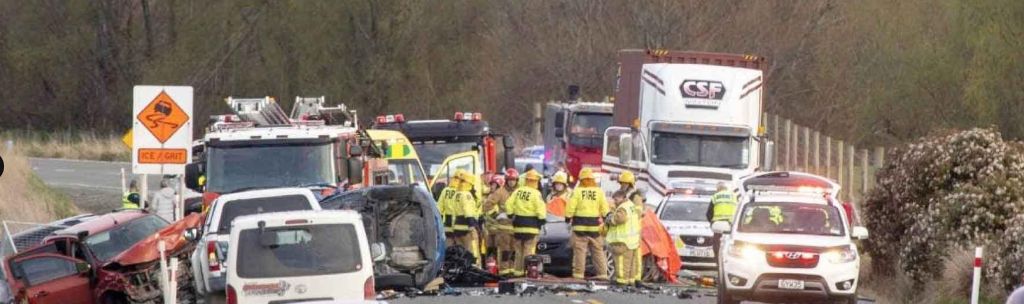

https://www.scoop.co.nz/stories/BU2512/S00454/economic-recession-kept-the-2025-road-toll-low.htm
|
| ||
Economic Recession Kept The 2025 Road Toll Low |
||
Economic recession kept the 2025 road toll low, says the car review website dogandlemon.com.
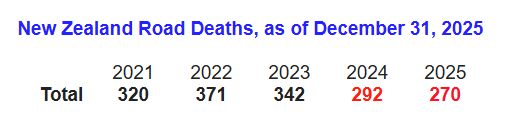
As at 5pm on December 31, 2025, the New Zealand road toll was 270, compared to 292 for the whole of 2024
Editor Clive Matthew-Wilson, who is an outspoken road safety campaigner, says:
“There is broad international consensus — among organisations as diverse as the World Health Organisation, the OECD, the World Bank, together with the vast majority of major road safety researchers — that economic conditions and road deaths are closely linked."
“The International Transport Forum at the OECD, an intergovernmental organisation with 69 member countries (including New Zealand), states bluntly:
"There is clear evidence that when economic growth declines and particularly when unemployment increases, road safety improves."
Editor Clive Matthew-Wilson, who is an outspoken road safety campaigner, says:
“There is broad international consensus — among organisations as diverse as the World Health Organisation, the OECD, the World Bank, together with the vast majority of major road safety researchers — that economic conditions and road deaths are closely linked."
“The International Transport Forum at the OECD, an intergovernmental organisation with 69 member countries (including New Zealand), states bluntly:
"There is clear evidence that when economic growth declines and particularly when unemployment increases, road safety improves."
Matthew-Wilson adds:
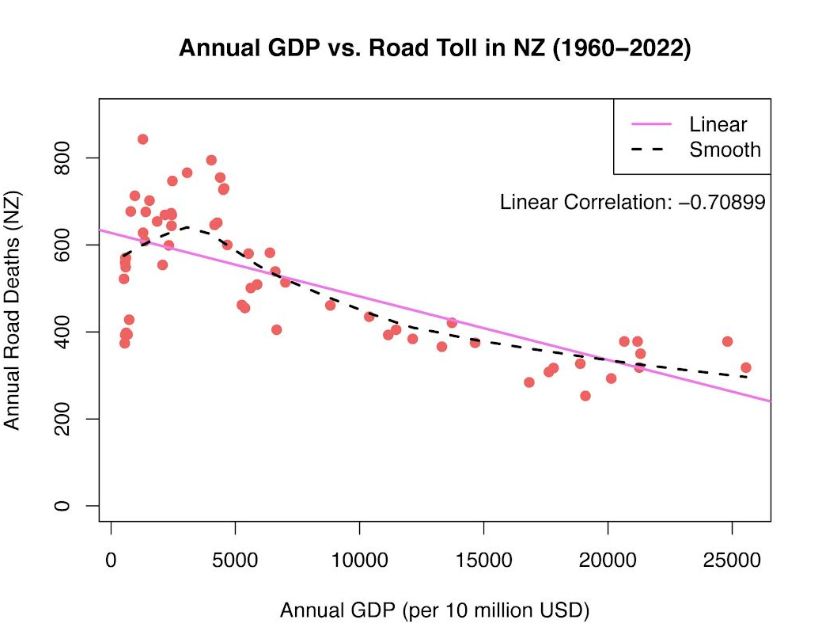
“The overall road toll in New Zealand has been steadily falling since the late 1980s, but the annual highs and lows of the toll closely follow the highs and lows of the economy.”
"unemployment is a good predictor of the road toll: high unemployment means a lower road toll, and vice versa".
“Currently, unemployment among the young is very high, which is undoubtedly bad for them but probably good for the road toll".
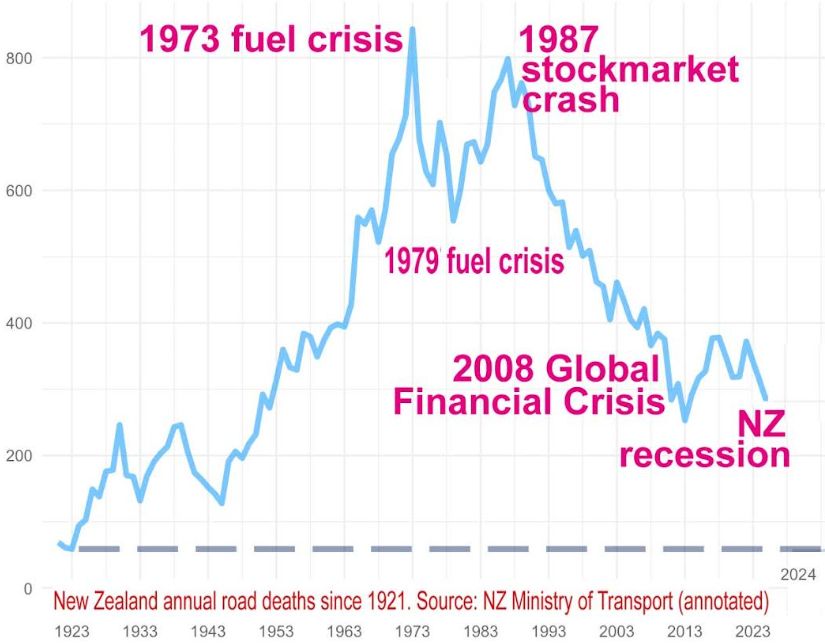
New Zealand’s worst road toll was 1973, when 843 people died.
Matthew-Wilson says the reasons for the high 1973 road toll are painfully obvious:
“There was very low unemployment in the early 1970s and fuel was cheap. So was alcohol. Driving after drinking was normal. Most of the affordable cars were decades old, had terrible tyres and often lacked seatbelts. Seatbelt use was optional before 1972. Those who couldn’t afford a car often rode motorbikes, but helmets were not compulsory at all speeds until 1973. Prior to 1973, helmet use was only required for riders exceeding 50kp/h. The 80km/h speed limit (which was already widely ignored) was raised to 100km/h in 1969. The result was carnage."
"Then the 1973 fuel crisis crashed the world’s economy."
"One year later, the road toll had dropped by nearly 200, to 676.”[1]
“The second highest road toll (797), was in 1987, just before the global sharemarket crash. The next year the toll had dropped by another 70, to 727.[2]”
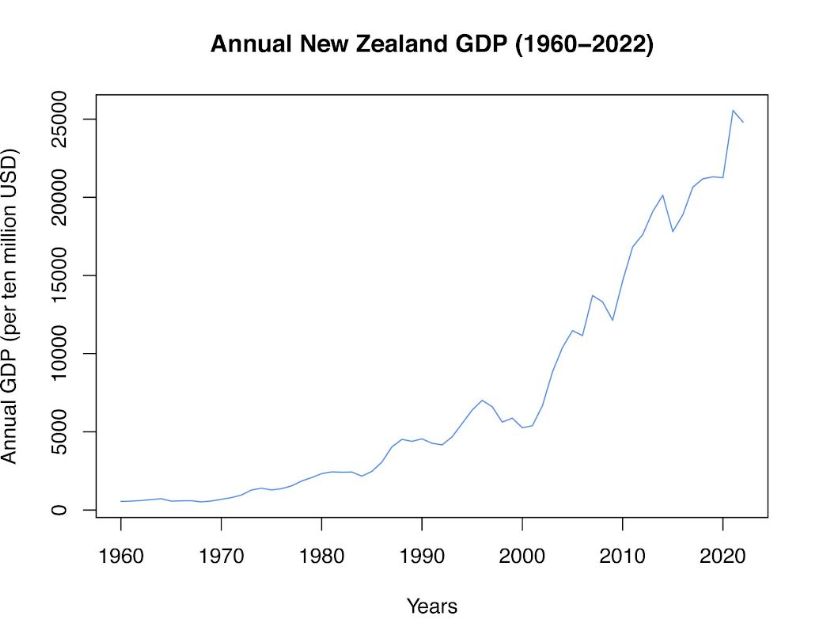
“After 1987, the road toll continued its fall, to this day, due to four main factors: the improvement of the vehicle fleet that began with the mass importation of safer used Japanese cars[3], the gradual installation of median barriers and other highway improvements, the growing enforcement of speed, drink-driving and seatbelt laws and the vastly improved medical trauma response system. A possible fifth factor was the gradual mass adoption of cellphones, which enabled motorists to contact emergency services from a significant proportion of the country. However, cellphones have also increased the risk of accidents caused by distraction."
Poor people die more often on the roads than rich people.
“Poverty, in terms of lack of education, substance abuse and poor quality vehicles, appears to heavily influence the road toll. The same drivers most likely to crash are also most likely to be impaired and are often not wearing a seatbelt at the time of the accident.”
About two-thirds of fatal accidents occur on rural roads, many of them far beyond the reach of speed cameras and police radar. A large percentage of these deaths are males, with Maori heavily over-represented.
“A significant percentage of industrial workers are heavy drinkers with a casual attitude towards health and safety. Worse, 3/4 of New Zealand drivers who die in drug-related crashes have more than one substance in their system. According to Waka Kotahi, the combination of alcohol, illegal drugs and legal medication can increase your risk of an impaired fatal crash by 23 times.”
"The groups most likely to be unemployed during recessions, such as mill workers, often get jobs again as the economy recovers, so the road toll will go up again once the factories start hiring once more.”
The mortality rate for males is consistently higher than the rate for females. In 2019, the mortality rate for males was 9.5 deaths per 100,000, compared to 3.6 per 100,000 for females.
Younger adults (15–24 years) and older adults (75+ years) have higher mortality rates in vehicles. Unfortunately, older people are more fragile. Mortality rates among pedestrians were also highest in older adults.
The highest mortality rates were for males 85 years and over.
In 2024, there were 52 fatal crashes, 547 serious injury crashes, and 806 minor injury crashes involving motorcyclists. So about one in five fatalities involved motorbikes.[4]
Matthew-Wilson points out:
“In the last two decades there has a been a huge spike in the number of deaths of middle-aged men riding large motorbikes. These motorcyclists were at more than 100-times greater risk of death than non-motorcyclists.”
“While sales of these large bikes tend to drop during recessions, the men who already own them are likely to keep riding, although they may ride less often. So, motorbike accidents are likely to eventually fall also, but perhaps not as fast as car and truck accidents.”
“Recessions mean fewer trucks on our roads. As economic activity increases at the end of a recession, so do the numbers of trucks moving goods. Therefore, the road toll rises once more."
“Trucks are a major road safety hazard: in 1980, accidents involving trucks made up 12% of the road toll. In New Zealand, trucks typically account for around 18% of fatal crashes and 10-20% of all road deaths, though this varies annually. In 2024, trucks were involved in just 16.1% of fatal crashes. That’s far lower than in recent years, probably due to economic recession, which almost always reduces the number of truck movements.”
Twice recently, trucks drivers caused serious fatal accidents while using cellphones. In December, Robert Wayne Clifford was jailed after admitting using his phone as his truck smashed into a van, killing one person and injuring five others.
Clifford had been caught using a cellphone while driving four times before.
Sarah Hope Schmidt was last year sentenced to two years and four months in prison after crashing her 30-tonne truck and trailer unit into the back of stationary vehicles, killing another driver.
During her nearly-two-hour trip before the accident, Schmidt had been using her handheld phone for 44 minutes, or 38% of the entire journey. Schmidt looked up just two seconds before the crash on the Hawke’s Bay Expressway which killed 22-year-old Caleb Baker.
Matthew-Wilson believes drivers who use cellphones in moving vehicle should have their phones confiscated. Repeat offenders should have their vehicle confiscated.
Trucks are also implicated in a large percentage of cyclist deaths.
NOTE: this graph is part of a three-graph sequence, displayed at the bottom of this release.
Home Page | Business | Previous Story | Next Story
Copyright (c) Scoop Media