
https://www.scoop.co.nz/stories/BU2604/S00272/better-than-bad-or-worse-than-good.htm
|
| ||
Better Than Bad? Or Worse Than Good? |
||
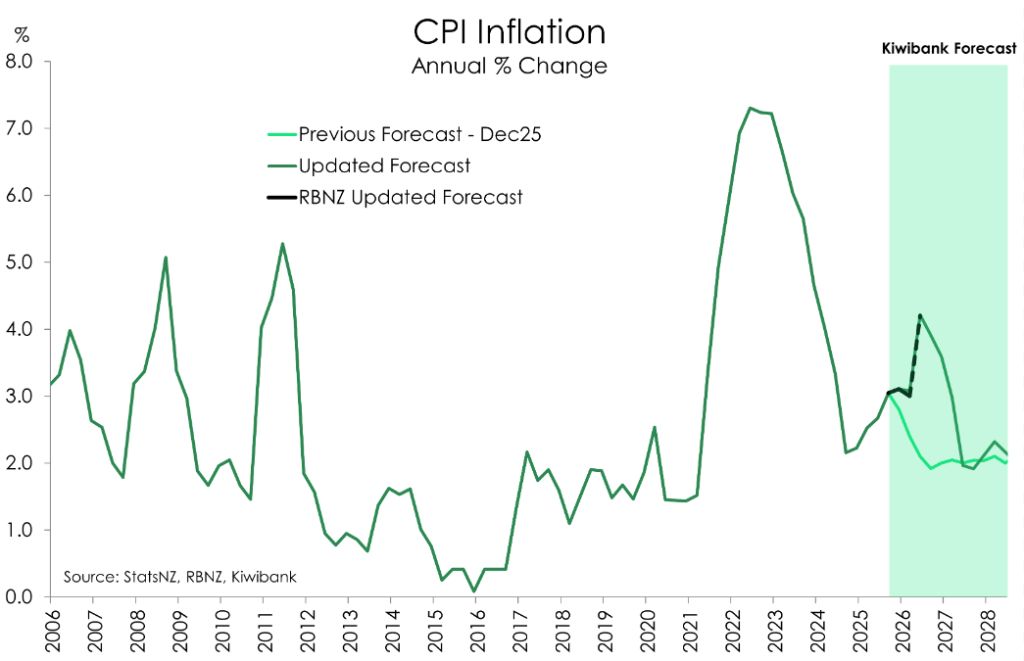
All eyes are on the inflation numbers out next week. The starting point for 2026 is likely to be 3.1%, the same run rate we finished 2025 on.
Before the war in Iran, we expected to see headline inflation decrease. We knew the rate was driven, in part, by higher administered costs like council rates, electricity and the like. Underneath, excluding food and energy prices, core inflation held at 2.5% after being on a general downtrend since hitting the peak in late 2022. Trimmed mean, another way of excluding volatility in inflation, accelerated to 2.8% from 2.5%. Without a strong demand-side growth story to tell, the increased prices weren’t the best news. We hoped that 2026 would finally be the year where growth caught up with prices.
We’re now less optimistic. Businesses and households are facing yet another cost in a cost-of-living crisis. Demand destruction is our biggest concern. The downside risk to global and domestic growth can’t be understated here. The IMF and other forecasters have slashed global growth forecasts. That’s worse than good. Until the conflict in the Middle East is resolved, we will continue to see the cost of oil and oil-derived products remain elevated. And this is severely impacting industries heavily reliant on diesel.
The March 2026 quarter only got to see the very beginning of the oil crisis, so we don’t expect next week’s numbers to show much price pressure. The June quarter is when the true impact will be felt.
The war in Iran broke out on the 28th of February, but the real impact didn’t hit our shores until mid-March, when we started to see petrol prices increase. That means only 1/6 of Q1 was affected (2 weeks out of 12).
We’re playing it by ear and making some
adjustments to our Q1 CPI forecasts. We’re expecting a
chunky 0.9% over the first quarter, keeping the annual rate
at 3.1%. That is significantly above our original forecast
of 2.4% for the March quarter.
Last quarter, we were
concerned that administered costs were not the only costs
pushing higher. When we removed these (mostly) government
charges, inflation was still pushing up – from 2.4% to
2.6%. Other hot spots within the CPI basket included an
a-typically expensive retail sector. The holiday-period
“discounts” left us feeling very disappointed. The
percentage of retail goods that were discounted over the
2025 December quarter dropped to just 15% down from 20% the
same time in 2024. For household furniture specifically, the
average discount was just 3% compared to the 11% in December
2024. Discounts in 2025 just didn’t stack up to previous
years. Instead prices for clothing & footwear increased
0.8%, while household contents & services lifted 0.6%.
Both stronger prints than we had expected.
Another point of interest was the uptick in prices across construction. Up 0.6% over the quarter, we thought construction prices would be softer given the still slumped housing market. Unfortunately, 2026 is not the year to bring any relief to the sector.
In the mean time, we’re hearing more and more stories of Kiwi businesses struggling under the strain of increased fuel prices, especially diesel. The increased operating costs passing through supply chains from B2B businesses are now reaching the final consumer. The push-back is powerful. Businesses at the end of the supply chain are faced with consumers more and more willing to cancel or delay projects, because wearing the cost of the entire supply chain is proving impossible.
We’re also hearing about the significant cost pressure on agri businesses. The cost of harvesting crops and feeding livestock has jumped to unsustainable levels.
A big shift is coming to industries that rely on diesel. We expect that some suppliers, dealing with understanding Kiwi businesses have been working on the honour system to overcome what we’ve hoped is a short-term shock. Negotiations about who should wear the cost of this continuing supply shock are gearing up.
Home Page | Business | Previous Story | Next Story
Copyright (c) Scoop Media