
https://www.scoop.co.nz/stories/CU1405/S00117/ships-and-shipwrecks-maritime-history-1912-2006.htm
|
| ||
Ships and Shipwrecks: Maritime History 1912 – 2006 |
||
Ships and Shipwrecks: Maritime History 1912 – 2006
The
dangers and pleasures of shipboard life will be illustrated
in this New Zealand Film Archive compilation screening on
our country’s maritime history. The films date from 1912
through 2006 and feature maritime life, onboard adventures
and shipwrecks.
The evening’s screening will include stirring live piano accordion accompaniment by Jonathan Berkahn (visiting lecturer to the New Zealand School of Music) for the silent films on the programme.
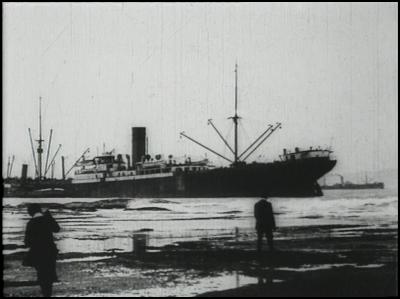
Ships and Shipwrecks: Maritime History 1912 - 2006 includes the earliest maritime film held by The Film Archive, The Wreck of the Star of Canada (1912). Southerly gales led to the ship striking rocks off Kaiti beach, Gisborne - and despite valiant efforts to unload her cargo (of frozen lamb), pump the water out and refloat her, the ship was doomed. The film records these desperate attempts and a diver’s unsuccessful attempt to try and rectify the damage.
Other
ships met similar fates. The S.S.Tyrone off Otago heads,
the Wahine on 10 April 1968 (New Zealand’s worst modern
maritime disaster) and the passenger liner Mikhail
Lermontov. The weather was the cause of many a wreck; but
not always - the Mikhail Lermontov in 1986 grounded because
the New Zealand harbourmaster made a inexplicable change of
course in the Marlborough Sounds,
causing the ship to
strike rocks. An excerpt from the dramatised documentary
Back from the Dead - The Saga of the Rose Noelle (1997)
recounts the story of the crew who, following a storm in
1989, survived for months in their upturned trimaran, before
they were literally hurled onto the rocks of Great Barrier
Island.
These later shipwreck stories use news footage of the time and interviews with survivors after the event to tell tales of endurance in the face of terrible danger.
Watching some of these films is like being on the ocean, you experience the same sensation as the cameraman. One such film was taken aboard a fishing trawler in 1913. The fishermen coal the trawler and haul in the nets, and interestingly after the catch is landed the sailors release homing pigeons to alert those on dry land of their success. The National Film Unit classic, The Coaster (1948), with Denis Glover’s commentary follows the MV Breeze from Wellington to Lyttleton and back up to Whanganui.
Other films show the shipboard travel of tourists and immigrants. In From England to New Zealand (1920) men and women board a boat in Liverpool bound for a new life in New Zealand. Another film, Around the World in 80 Minutes (1923), shows some of the rituals of shipboard life, including boxing matches on a deck thronged with spectators - not only boys vs boys, but also woman vs woman.
One film, Wreck of Port Bowen (1939), is newly preserved by The Film Archive. The 8mm colour, fully intertitled film was made by W.J. McKee, a Hawera Cine Club member. Now converted to digital file - it reports the grounding of the ship, the efforts to save it, and the excitement of spectators gathered on Castlecliff beach.
Other ships or wrecks in the programme are: Battle Cruiser, HMS New Zealand, Ionic, Orvieto, Hydrabad, Paloona, S.S. Kaponga.
ENDS