
https://www.scoop.co.nz/stories/PO2605/S00064/for-dairy-cows-there-is-no-happy-mothers-day.htm
|
| ||
For Dairy Cows, There Is No Happy Mother’s Day |
||
Yesterday, families across Aotearoa celebrated Mother’s Day. Children handed over handmade cards and bunches of flowers. Cafés filled with families gathering to honour the labour, care, sacrifice, and love associated with motherhood. Social media overflowed with tributes to mothers and mother figures — those who nurture, protect, comfort, and raise children.
Yet while we celebrate motherhood in humans, another form of motherhood remains almost entirely invisible.
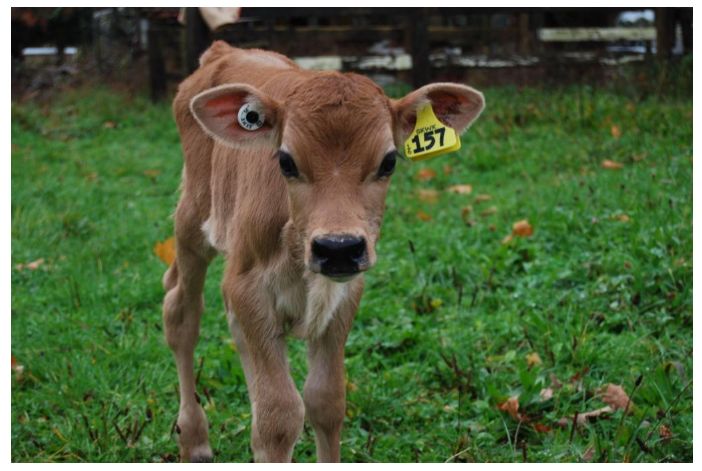
Across rural Aotearoa, dairy cows are entering one of the most intensive periods of reproductive labour in the farming calendar. The winter calving season is beginning again, bringing with it the annual slaughter of between 1.8 and 2 million “bobby calves” — babies born into the dairy industry who are deemed economically surplus to requirements. Most are between four and ten days old when they are killed.
Farmwatch has documented some of the routine cruelties dairy cows and their calves are subject to every year. Please watch here some of the devastating footage that brings to life the suffering of these
Mother’s Day invites us to reflect on maternal bonds: on the significance of connection between mother and child, on care, attachment, nourishment, and protection. But the dairy industry depends on systematically disrupting these same bonds in other mammals.
Milk does not simply appear. Like humans, cows produce milk because they have given birth. The biological purpose of that milk is to nourish their calves. Yet within the dairy system, calves are commonly removed shortly after birth so that the cows can be milked for human consumption.
The contradiction is striking. On Sunday we celebrated motherhood as sacred, emotional, relational, and deserving of protection. But within the dairy industry, motherhood becomes something entirely different: an industrial process organised around extraction, productivity, and profit.
At the heart of the dairy industry lies a deeply ideological understanding of what counts as “real” motherhood. Only human mothers, it seems, possess an unquestioned right to nurture and raise their children. The maternal bonds of other animals are rendered economically irrelevant.
The industry depends upon a series of largely unspoken assumptions: that calves can be removed from their mothers at human discretion; that a cow’s milk can be appropriated without ethical consideration of the subjectivity of the calf for whom it was produced; that unwanted offspring can be sold, raised, or killed according to market needs.
This process repeats across generations. Female calves who survive become dairy cows themselves, entering cycles of impregnation, birth, separation, and milking. Their reproductive lives are tightly managed through artificial insemination and seasonal production demands. A cow who does not become pregnant is labelled “empty” — a chilling term that reduces a living being to her economic productivity. If she no longer produces profit, she may be killed.
The language of the industry matters. Calves are “surplus.” Cows are “productive units.” Lives become “outputs.” These terms obscure the reality that we are dealing with sentient beings capable of attachment, distress, and social relationships.
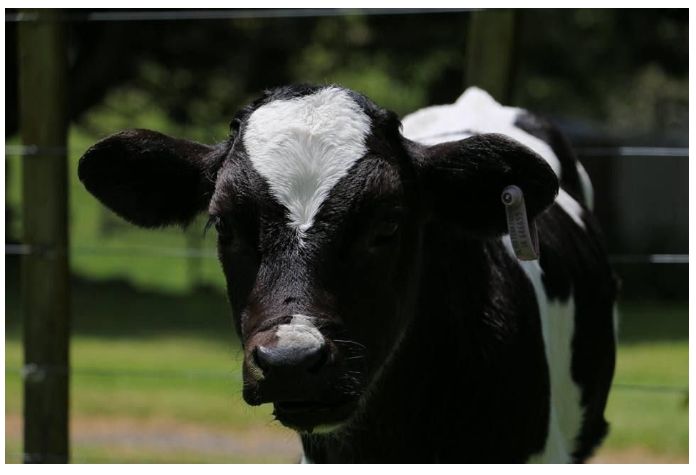
Scientific evidence increasingly confirms what many people instinctively recognise: cows form strong maternal bonds with their calves. They vocalise after separation. They search for their young. Calves show signs of distress when removed from their mothers. Yet the system requires this separation to occur repeatedly and routinely.
New Zealand’s dairy industry often presents itself through imagery of care and harmony: green paddocks, healthy cows, sustainable farming, family values. But the annual killing of bobby calves sits uneasily beneath this pastoral mythology. It exposes a hidden truth: the dairy industry cannot function without producing unwanted babies.
Yesterday we celebrated mothers as symbols of unconditional love and devotion. We recognised the emotional significance of motherhood because, at some level, we understand these bonds matter profoundly.
But perhaps Mother’s Day should also invite harder questions.
Why do we recognise motherhood as sacred in humans while denying its significance in other mammals whose reproductive systems we industrially exploit? What does it say about us that newborn calves can be bred into existence only to be killed days later because they are inconvenient to a production model? Why are some maternal bonds celebrated while others are systematically broken?
As another calving season begins in Aotearoa, perhaps the most uncomfortable truth is this: the milk in our refrigerators is inseparable from motherhood — and from the repeated disruption of it.
For dairy cows, there is no Happy Mother’s Day.
Home Page | Politics | Previous Story | Next Story
Copyright (c) Scoop Media