
 Scoop has an Ethical Paywall


Sludge Report #173: Meanwhile Down At t'Bank

Sludge Report #173: Meanwhile Down At t'Bank
Includes full audio of today's RBNZ Governor's press conference
By C.D. Sludge
Also posted to Scoop's Eco-Economy email list
Click for big version
Overview And Policy Assessment
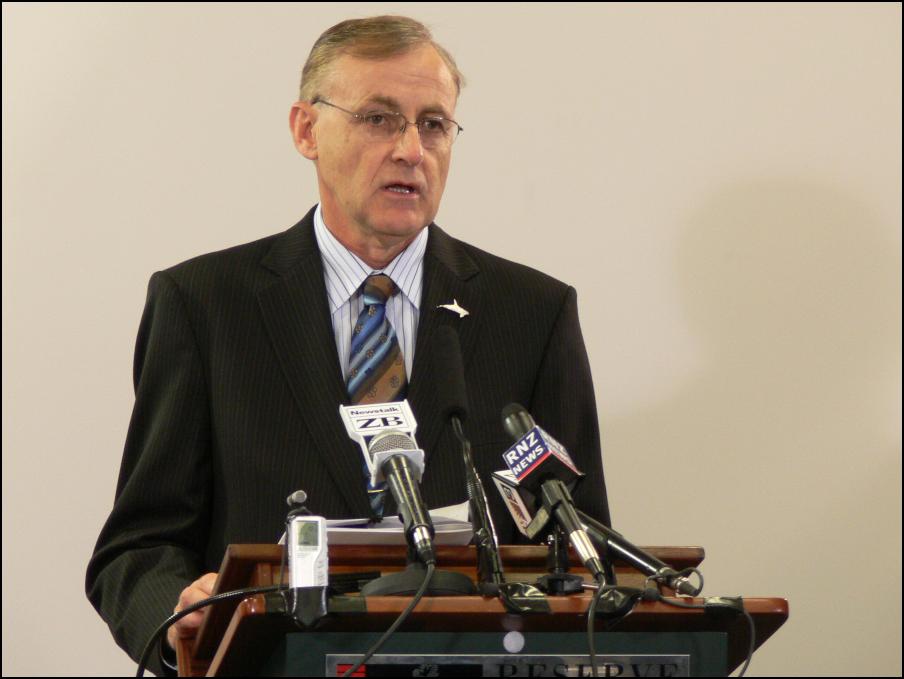
In response to increasingly shrill criticisms of the spending habits of fellow Kiwis, C.D. Sludge elected today to take a trip down to No. 2 the Terrace and watch the quarterly counting of the nation's $$$ fortunes at the quarterly unveiling of the Reserve Bank Monetary Policy Statement.
Today's was not the most exciting of MPS and its headline impact might be reasonably summed up as a message of "steady as she goes" to the good ship Godzone (aka NZ Inc.).
This morning's MPS is in fact fairly encouraging for kiwi battlers - householders and consumers - and even to its farmers and exporters.
Interest rates are not up yet (and haven't been increased now since December 2005 – meaning mortgage rates are not going up in a hurry either - probably); the inflation outlook is mildly encouraging (i.e. inflation is low in the short term – meaning there is no good reason for interest rates to go up - yet); and – most importantly for homeowners – the Reserve Bank is no longer picking a fall in house prices in the coming year* (at least not a big one.)
* NOTE: The Reserve Bank has been mistakenly picking a fall in house prices for several years. A fall that has never yet eventuated, but one which they seem to consider necessary for our personal economic wellbeing. The last MPS was particularly hawkish on the subject and elicited considerable coverage on the subject – this latest MPS is considerably less forceful about the prospect of falling house values.
For the export and business sector the exchange rate (and current account) picture is not helped by a weakening U.S. Dollar. But this is partially offset by some of the highest commodity prices seen for some time.
Apart from that the story remains very familiar.
Our current account deficit is still kinda humungous – albeit shrinking at the margins; unemployment remains low & more Kiwis are working than ever before; and economic growth is continuing to remain stubbornly ahead of forecast, albeit fairly unspectacularly.
And while part of the cause for this period of relative economic tranquility is significantly more friendly oil prices – this break from the oil driven inflation cycle does enable the economy watcher to take a bit of time and see that the sun is still shining, and the flowers (clover) is still growing down here in Godzone.
Some Questions and (Partial) Answers
 Listen to the Reserve Bank Governor's Press
Conference (27 Minutes)
Listen to the Reserve Bank Governor's Press
Conference (27 Minutes)- .m3u STREAM .mp3 DOWNLOAD
But if everything is so seemingly peaceful on the economic front, why then are NZers being incessantly railed at on the radio by economists of various stripes, accused of living beyond their means and warned that the end of the Golden weather may be at hand if they do not mend their spendthrift ways?
Sludge wants to know if things may just as likely continue to be just fine if we continue to behave exactly as we do at present?
Afterall last MPS – and for several years - the Reserve Bank has reckoned house prices are going to fall. They haven't. And now three months after warning us of a housing crunch, they don't even really expect them to fall much – just stop growing as fast for a while.
In addition Sludge wants to know - if rising house prices are such an evil – whether all the blame for this should be sheeted home to householders or whether the banking system ought to shoulder some of the responsibility.
In recent weeks an seemingly endless series of bank economists and commentators have expressed the view that New Zealand homeowners are excessively indebted.
Most of this indebtedness arises out of the seemingly unstoppable housing boom which, as the Reserve Bank governor points out in his MPS, has "improved household balance sheets" considerably – meaning we think we are more wealthy because our houses are worth a bundle more than they were a few years back.
Meanwhile many of these commentators work for banks whose lending policies are surely at least partly responsible for this situation? And is there not in all of this perhaps a little bit of the drug pusher blaming the addict for his ongoing demand for product, in this case mortgage finance?
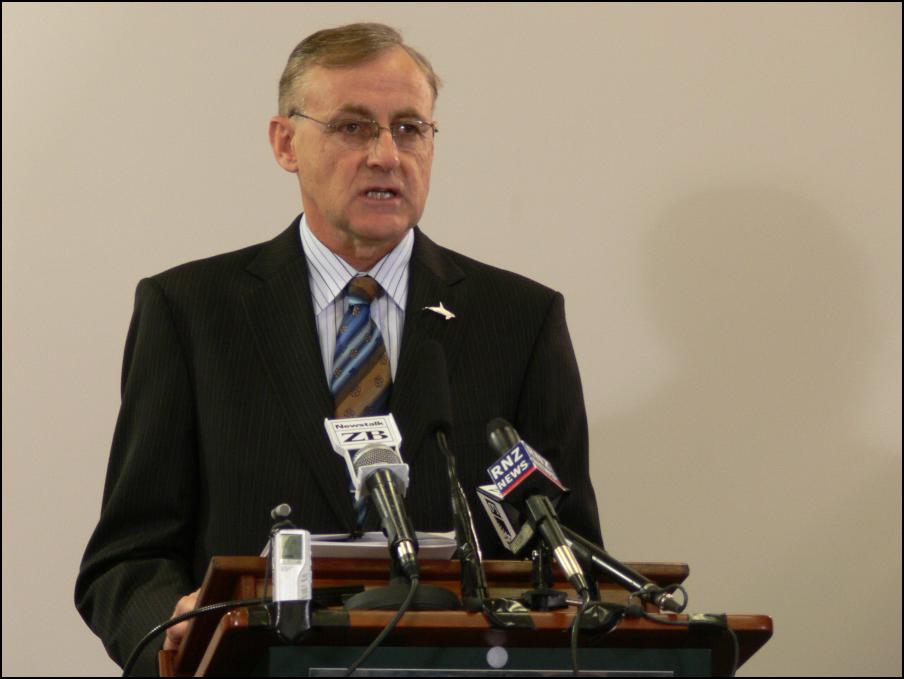
And so Sludge was keen today to question the Reserve Bank Governor on all the recent hype over excessive house price inflation and current account fears. Are we really the authors of our own misfortune in our borrow and spend ways, or are we in fact just doing precisely what we are expected to do.
Click for big version
For example:
- Why, when Australian, UK and U.S. house inflation has followed a similar path (over the past few years), namely up and up and up, should anything else be expected in NZ?
- Why, when the size of the Current Account Deficit is fairly directly dictated by New Zealand's ongoing positive economic performance - and when it's magnitude seems to not cause currency traders even a moments pause – should we care about it?
- Is our current account deficit not in fact in large part a natural consequence of financial market deregulation and foreign direct investment in New Zealand – for example the $2.5 billion of annual profits earned by Australian owned banks which is totted up against our current account?
- If the Reserve Bank, and the trading banks and everybody else are so concerned about NZers rarking up their mortgages why do banks continue to lend so enthusiastically into the market?
…and…
…and…
…and…
As may be expected this was not a question line that Dr Bollard enjoyed, or for that matter seemed to even understand.
Listen to the Reserve Bank Governor's Press
Conference (27 Minutes)- .m3u STREAM .mp3 DOWNLOAD
Dr Bollard's position is that bank borrowing for mortgage financing is purely and simply a matter of supply and demand, and wholly the responsibility of borrowers. Banks it seems are powerless to do anything other than lend us the money we crave – even if (as they claim) they think it is bad for us.
In conclusion then:
Since Dr Bollard seemed unwilling to participate in this debate Sludge will pose a few more questions in preparation for the next MPS when this debate will hopefully be rejoined:
- Since mortgage finance is far and away the largest contributor to monetary supply growth in the New Zealand economy and a key driver to gross economic performance of NZ Inc. – certainly domestically anyway – where, if mortgage finance growth were to slow abruptly, would the money come to finance debt servicing requirements let alone ongoing growth in the NZ economy? (I.E. by borrowing against our houses aren't we in fact patriotically contributing to the ongoing financial welfare of our country.)
- Given that as a matter of credit policy most NZ banks do not tend to lend against anything other than physical assets – usually mortgages – and that many finance companies have a similar approach to requiring mortgage security or guarantees for loans, is this not also a contributor to the cause of ramping up of NZ property values? (I.E. NZ businesses are capitalised via mortgage finance because that is the only kind available.)
- Why if interest rates in other countries can fall to 4% and lower is it not possible that once we get even more indebted here in NZ that we too can cope with the burden simply by having lower interest rates?
Alastair Thompson
Scoop Publisher
Alastair Thompson is the co-founder of Scoop. He is of Scottish and Irish extraction and from Wellington, New Zealand. Alastair has 24 years experience in the media, at the Dominion, National Business Review, North & South magazine, Straight Furrow newspaper and online since 1997. He is the winner of several journalism awards for business and investigative work.
 Keith Rankin: Clipping The Ticket; Solving Hormuz, In Context
 Ian Powell: Inhumanity Of US Economic Sanctions Against Cuba – Infant Mortality And Starvation; Time To End NZ’s Silence
 Ramzy Baroud: Subjects Of Empire - Breaking The Cycle Of Arab Dependency On US Elections
 Peter Dunne: Dunne's Weekly - The Pragmatic Food For Fuel Deal With Singapore
 Eugene Doyle: After Israel’s Brutal Attack On Kiwis, Our Government Does Nothing
 Keith Rankin: Has Sweden Become A De Facto Apartheid Narco State?