
 Scoop has an Ethical Paywall


Your Images: Amazing Images Of Comet McNaught

Your Images: New Zealanders Submit Amazing Images Of Comet McNaught
With clear and cool southern skies proving perfect for star-gazing, New Zealanders have been out comet spotting and capturing images of Comet McNaught as it passes by Earth. Comet C/2006 P1 (McNaught) was discovered by Australian astronomer Rob McNaught at Siding Springs Observatory on August 7, 2006. At this point it was still 525 million kilometres from the Sun and very faint. That is twice the distance of Mars.
***
Bren Harrison - This photo of Comet McNaught was submitted to Scoop by Bren Harrison of Auckland, taken on 18th Jan 2007 from the top of the dormant volcano Mt Eden in the heart of Auckland City, New Zealand.
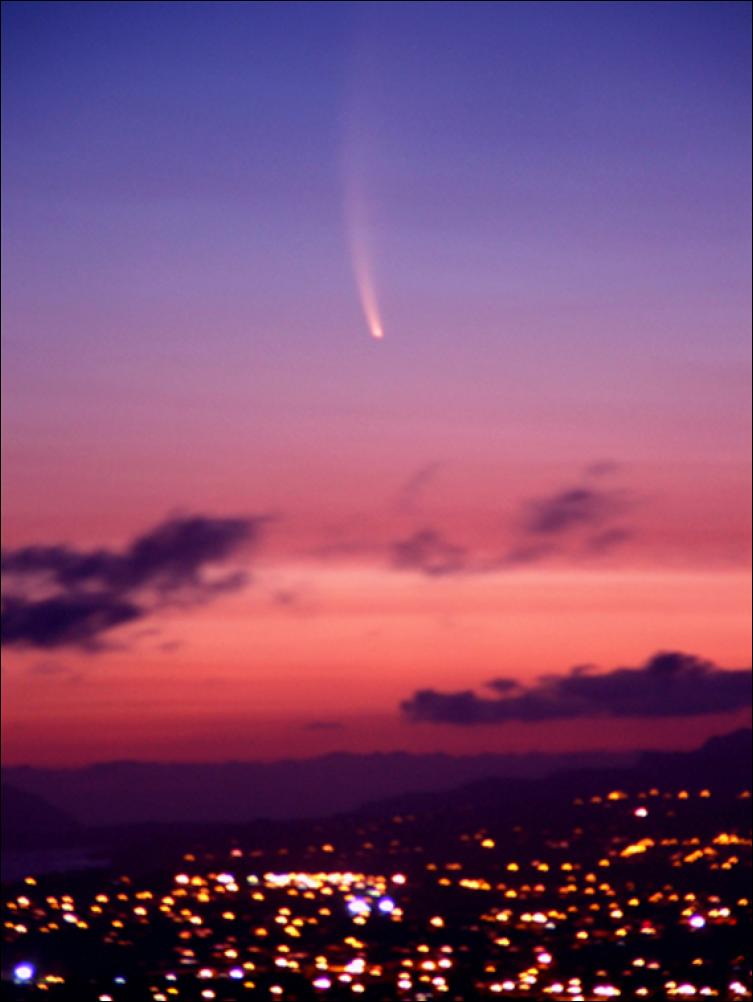
Click for big version – Image by Bren Harrison, Mt Eden, Auckland.
Chas, submitted the following two images that were taken from Princess Bay, Wellington, Thursday 18 January 2007 at 10.12pm. He says it was quite a cloudy evening and had to wait a from 9.20pm for the Comet to drop into view,well worth the wait!! And for you techo's: it was shot with a Canon EOS20D, ISO200, 125mm Lens, F/5.0, 6.0secs exposure,
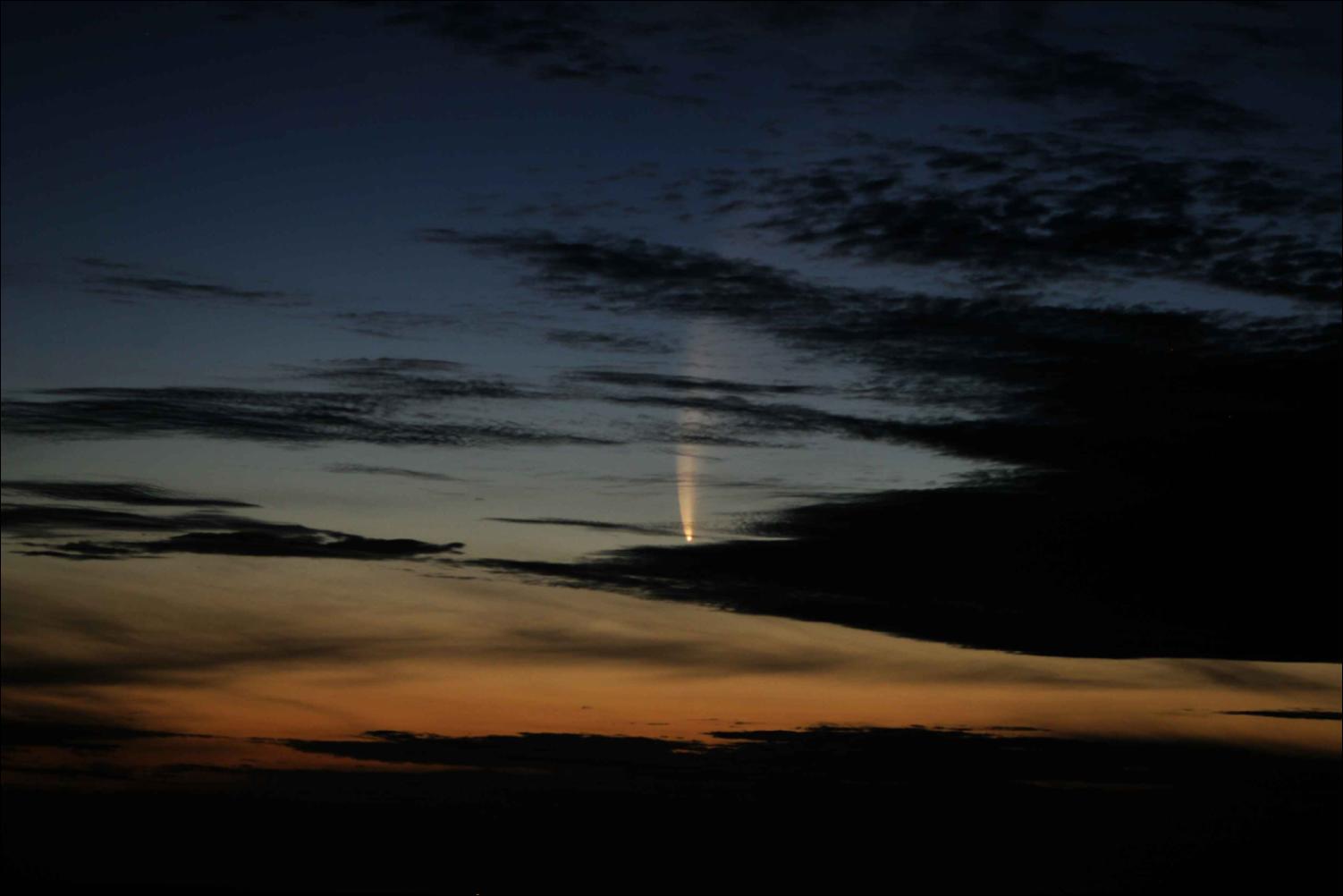
Click for big version - Image by Chas, Princess Bay, Wellington.
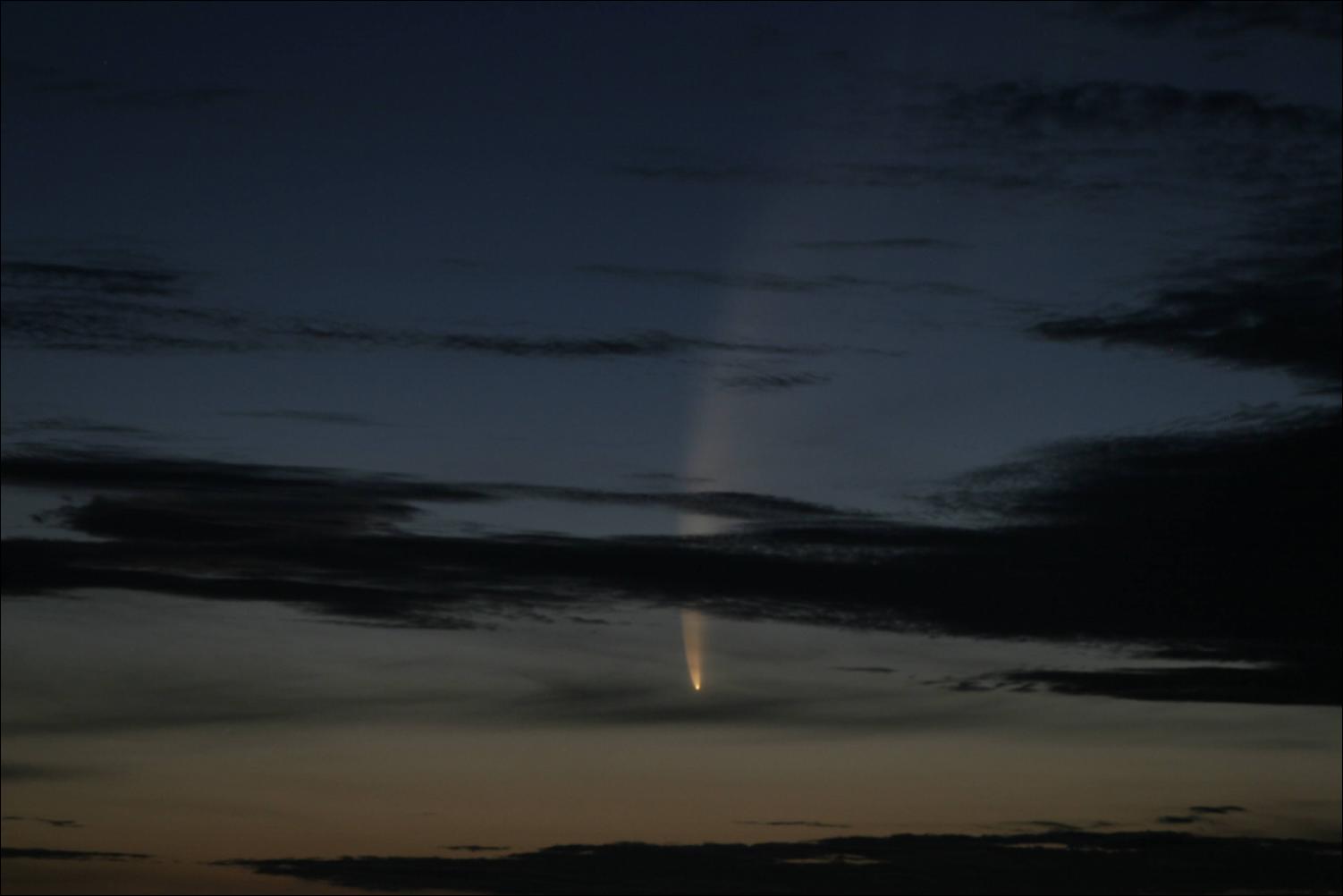
Click for big
version – Image by Chas, Princess Bay,
Wellington.
***
David Clark
submitted this image of Comet McNaught, taken Thursday 18
January at
9pm. David writes: This was taken from the
roof of my house in St Heliers, Auckland, and shows the
stunning comet - the brightest seen for decades. I used a
standard digital camera (Canon EOS 350D)
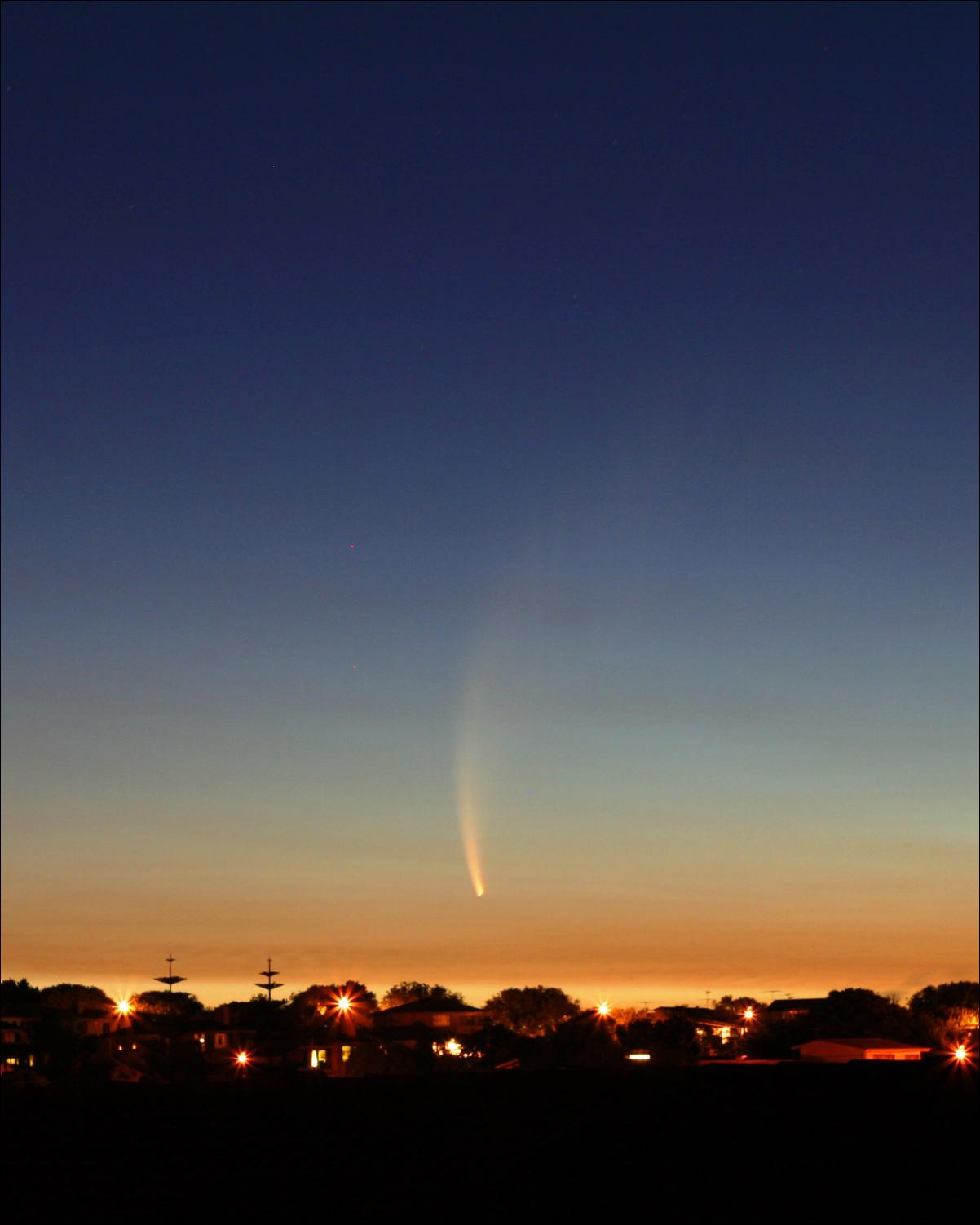
Click for big version – Image: David Clark, St Helliers, Auckland.
Text by Stardome Observatory - Comet C/2006 P1 (McNaught) was discovered by Australian astronomer Rob McNaught at Siding Springs Observatory on August 7, 2006. At this point it was still 525 million kilometres from the Sun and very faint. That is twice the distance of Mars.
The comet continued to brighten as it approached the Sun but became lost in the Sun's glare during December and was not sighted again until Boxing Day. It brightened sharply leading up January 13th when it passed within 25 million kilometres of the Sun, half the distance of the innermost planet, Mercury.
This placed the comet on the "sun-grazer" category and a prime candidate to be split apart by the Sun's gravitational pull.
Over the next week, the comet will continue to move up the sky and remain visible longer after sunset. The brightness changes of comets are notoriously hard to predict but unless it suddenly starts ejecting more dust and gas, it will steadily fade over the coming week.
Scoop
Scoop Independent News
Scoop is NZ's largest independent news source; respected widely in media, political, business and academic circles for being the place on the internet for publishing "what was really said", and for the quality of its analysis of issues.
 Ramzy Baroud: Subjects Of Empire - Breaking The Cycle Of Arab Dependency On US Elections
 Peter Dunne: Dunne's Weekly - The Pragmatic Food For Fuel Deal With Singapore
 Eugene Doyle: After Israel’s Brutal Attack On Kiwis, Our Government Does Nothing
 Keith Rankin: Has Sweden Become A De Facto Apartheid Narco State?
 Bruce Mahalski: Change In The Weather #194
 Binoy Kampmark: Dangers To The Fourth Estate - The 2026 World Press Freedom Index