
 Scoop has an Ethical Paywall


Interview With noted American Novelist Anne Tyler
Interview with Novelist Anne Tyler
In a USINFO interview conducted by e-mail, noted American writer Anne Tyler discusses the origins of her latest novel, Digging to America, which deals with two families — one long-established, native born American and the other newer, Iranian-American — who have each adopted baby girls from Korea.
Tyler is one of the most highly respected writers in the United States, author of many novels, most of which deal with characters who seek meaning in their lives through the context of family life and ties in the United States. (See related article.)
(begin transcript)
Question: Can you identify the origins or inspiration for Digging to America? Did you begin with the idea of writing about the immigrant experience in America, or the experience of foreign adoption?
The book’s original inspiration was a memory from real life: a chance glimpse of a family of strangers meeting their adopted baby for the first time at the Baltimore airport. It was only later, when I was actually outlining the plot, that I realized the book was also about the immigrant experience.
Question: Why did you choose to have the key “ethnic” family be Iranian? Was your own family connection paramount? It’s said that Iranians are not exactly keen on adopting, especially outside the ethnic or family line. Was this a concern for you as you wrote the book? Having the infants be Korean seems to be a critical layer of the book’s presentation of the immigrant experience and the concept of “belonging” in a culture, and the concept of family.
Since my late husband’s family was Iranian, I felt better equipped to write about Iranians than about some other ethnic group. And since my experience with Iranians has been so positive -- so warm and entertaining and often humorous -- I knew they would be fun to depict.
I don’t really know very much about the Iranian attitude toward adoption; it didn’t come up with my in-laws. But I assumed that the older generation, at least, might have reservations about it, which is why I had Ziba’s parents show a bit of resistance at the outset. [Ziba is the Iranian-American mother and Maryam's daughter-in-law.]
That the infants were Korean was a matter of chance -- the baby I glimpsed at the airport was Korean -- but I consider it a stroke of good luck, since it led eventually to my writing a book about people “digging into” another culture.
Question: You always stress that the characters and situations in your fiction are all inventions. In an interview with USA Today, however, you acknowledged that you drew upon your observations of your late husband's extended Iranian family. Can you describe, a little, the process of translating those family experiences into a work like Digging to America?
One example might be the conversations that Sami overhears while the women are working in the kitchen. [Sami is the Iranian-American father and Maryam's son.] I knew from my own real-life experience that Iranians are wonderful storytellers, that they love to discuss interpersonal intrigues and family complications; but the actual stories that those women tell in the kitchen are entirely imaginary. I made them all up from scratch.
Question: Digging to America is packed with characters from two families who each have adopted Korean infants, the Yazdans and the Donaldsons. But the dominant figure is the widow and grandmother, Maryam. Was Maryam's central role intentional from the time you started the book, or did her character evolve in ways that weren't entirely predictable?
I always knew that Maryam would be a central character. Her dignity and reserve and strength are qualities I’ve admired in countless Iranian women who have settled in the U.S. And I especially wanted to show American readers what very hard work immigrating is, and how much fortitude it requires.
Question: The book really brings out the conflict immigrants feel about retaining their identities while yearning and resisting becoming American. Maryam is a well drawn and fascinating character who in the end realizes that this extended family is where she belongs; she’s suddenly comfortable in her own skin, accepting all her life’s complexities and cultural tugs. Would you say that’s the core “message” of the book?
I’m scared of the very idea of a "message" in a novel. All I ever want to do is to tell a story — in this case, the story of a woman who will forever (even at the book’s end) have her feet in two different cultures.
Question: I understand you visited Iran, many years ago. Do you retain interest in Iran or continue to read memoirs and novels written by Iranians? There’s quite a growth industry in Iranian-authored books, particularly by Iranian women.
I do continue to have a great interest in Iran, and a great fondness for it — not just because it’s a beautiful country but because its citizens have always seemed to me so welcoming and so appealing. I’m impressed that there has been such a blossoming of Iranian women writers in particular, and I try to keep up with their books.
Question: Have any of your books been translated into Persian? Are there translation plans for Digging to America?
As far as I know, none has been translated.
Question: Are there any plans to make this book into a movie? (USINFO staff members have commented that they could see the famous Iranian actress Shohreh Aghdashloo as Maryam.)
I don’t think there are any plans for a movie, but I agree that Shohreh Aghdashloo — whose work I admire enormously — would make a wonderful Maryam.
(end transcript)
ENDS
(USINFO is produced by the Bureau of International Information Programs, U.S. Department of State. Web site: http://usinfo.state.gov)
More: Latest World News | Top World News | World News Archive
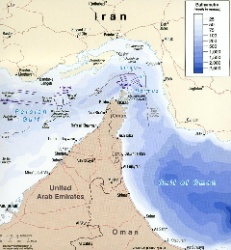 UN News: Uncertainty Continues Over Safety In The Strait Of Hormuz
 Australian Museum: Celebrate Sir David Attenborough's 100th Birthday With The Australian Museum
 Clean Shipping Coalition: Shipping - IMO’s Net Zero Framework Progresses But ENGOs Slam Unnecessary Delay
 Gena Wolfrath, IMI: Understanding News Fatigue—and How To Stay Informed Without Overload
 Access Now: A Statement To Our Community About Why RightsCon 2026 Will Not Take Place In Zambia
 Climate Action Network: Santa Marta Plants The Seeds Of A Fossil-Free Future - Civil Society Will Hold Governments To Account