
 Scoop has an Ethical Paywall


Civil defence information for the blind community
7 February 2010
A new resource that will make it easier for people who are blind or partially sighted to access civil defence emergency information was launched today.
The Director of Civil Defence Emergency Management, John Hamilton, said the interactive, electronic resource, “Get ready now so you can get through – A resource for the blind and partially sighted community,” is the result of collaboration between the Ministry and the Royal New Zealand Foundation of the Blind (RNZFB).
The information in the new resource is aimed at improving understanding of the types of hazards that can happen in New Zealand, with civil defence advice on what to do to be better prepared.
The resource can be used with “DAISY” readers, e-text and electronic braille readers (braille displays). These systems are already widely used by people who are blind or partially sighted. The information in the resource is also on the RNZFB’s telephone information service and on cassette.
The resource is available from the RNZFB and as audio files on the Ministry’s public education website, www.getthru.govt.nz
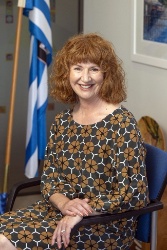
RNZFB Chief Executive, Sandra Budd, said the RNZFB’s aim is to empower its members and help them take responsibility for themselves.
“This civil defence information helps our members prepare as individuals and families to make the personal decisions and arrangements they need to get ready for an emergency,” Ms Budd said.
“Having access to information is a fundamental human right as agreed by UN conventions. Alarmingly, only five per cent of printed material globally is available in formats accessible to blind and partially sighted people.
“It is the RNZFB’s dream for blind and partially sighted people to have access to the same literature and information as their sighted peers. Through working with the Ministry on this project, we are removing barriers for our members to very important information.”
Digital Accessible Information System (DAISY)
DAISY is free software developed internationally by blindness organisations. It is used on DAISY CD players and computers.
DAISY allows several “talking books” to be recorded on one CD (usually it takes several CDs to record one talking book) and, crucially, it includes a sophisticated and very flexible indexing or referral system. Voice prompts and a telephone-style keypad allow a user to select and immediately go to chapters, sub-headings, page numbers, sections within a body of text and to bookmarks they can create themselves.
E-text
Text is usually formatted to make information more attractive or easier to read for people with full vision. Such formatting does not help people who are sight impaired and can even make it harder for them to read.
E-text reformats information in a way that is easier for people who are sight impaired to see and read it on a screen. It also allows a reader to enlarge and reduce text as they require and can be connected to a voice synthesiser that will “read” the text to the user.
Braille
Braille is available in printed books and electronically through software that converts text on a computer screen into braille on a reader (display) that is attached to the computer. The braille display uses metal pins that feel like braille dots.
Braille is a system of raised dots that stand for individual letters, combinations of letters, punctuation signs and other symbols. The RNZFB teaches adult members to read and write braille. The Blind and Low Vision Education Network NZ supports braille reading children in mainstream schools.
About the RNZFB
• The Royal New Zealand
Foundation of the Blind (RNZFB) is New Zealand’s main
provider of sight loss services to blind and partially
sighted people.
• It has more than 11,500
blind and partially sighted members nationwide.
•
Each year nearly 1,100 New Zealanders who have become blind
or experienced serious sight loss register as RNZFB
members.
• It equips its members with the
adaptive skills, technology and resources they need to
overcome the barriers they face to participating fully in
society and leading independent
lives.
ENDS
 Gordon Campbell: On Pauline Hanson’s Rise, And The TOP Renaissance
 New Zealand Alliance Party: Alliance Party Firmly Opposes “Backdoor Privatisation” Of Kiwibank
 Taxpayers' Union: New Poll - Coalition Still Ahead; Luxon Regains 'Preferred Prime Minister' Top-Spot
 NZ National Party: Judith Collins’ Valedictory Speech
 Forest And Bird: Government Biodiversity Credit Scheme Welcomed As Opportunity For Restoration
 Office of the Ombudsman: Ombudsman Publishes Findings On Ministry Of Education Sensitive Claims Scheme
 Nelson City Council: Mayor Welcomes Auditor-General Decision Not To Prosecute Councillor


