
 Scoop has an Ethical Paywall


Carterton Council Unlocks Key Water Project
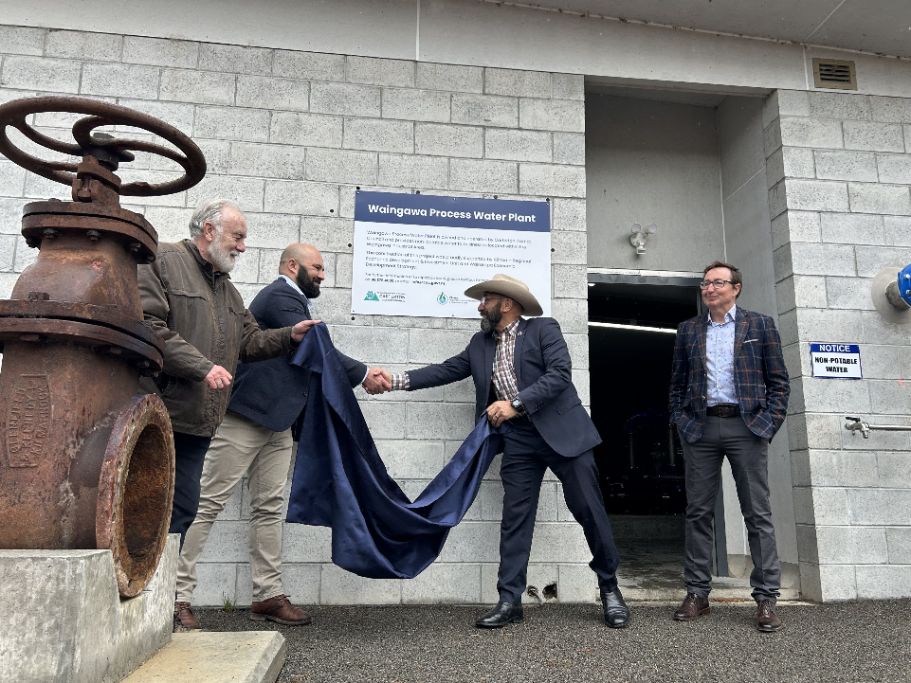
A multimillion dollar project that would have been “dead in the water” if it weren’t for the "bravery" of Carterton councillors is officially up and running.
The $2.7 million Waingawa Process Water Plant in Carterton’s industrial area was given a stay of execution by Carterton councillors last year after council staff deemed it an uneconomic investment and recommended it be scrapped.
The staff recommendation followed a cost hike and estimates of decreased revenue and funding than was previously anticipated. Carterton mayor Ron Mark, who unveiled the key piece of infrastructure on Monday, acknowledged the majority of councillors who pushed the project forward “when other people walked away and didn’t support Carterton with the funding”.
"Without that bravery at governance level, it would be dead in the water and we wouldn’t be here today," Mark said. “Yes, ratepayers have had to foot the bill because we borrowed more money, but this is the result.”
The Waingawa Process Water Plant is a new non-potable water network available to businesses in the Waingawa Industrial Area. Non-potable water is untreated or partially treated water that is not safe for drinking or food preparation but can be used for irrigation, industrial processes, and cleaning where direct human consumption is not involved.
The cost for the new supply is $1.25 per cubic metre, significantly lower than the potable water rates, which range from $2.78 to $3.22 per cubic metre depending on usage volume. Mark said the completion of this project opened opportunities for the future of the industrial park. With 1000 hectares of industrial land that could be made available for development, Waingawa was “the largest single piece of land” that was able to meet the greater Wellington region’s future industrial real estate needs, Mark said. “This is the place where Wellington can develop its industrial footprint that it so desperately needs.”
The project, which was managed by Carterton staffer Christo Heyns, was delivered $42,000 under budget and received $1.75m funding from Kānoa – Regional Economic Development & Investment Unit, and $128,000 from Wairarapa Economic Development Strategy. The remainder was funded by Carterton District Council via reserves and a loan.
Infrastructure manager Johannes Ferreira thanked staff and contractors, all of whom were local, for their work on the project. The plant used a repurposed storage tank and a new pump station to collect water from the water race to store it up in times of abundance, making it available to the industrial area for use. Mark acknowledged the late Graeme Tulloch, a prominent Wairarapa farming figure and businessman, who had shown him the site in 2011 and shared his vision for it to be repurposed to boost Carterton’s water resilience.
Mark said the project was about reducing costs for local businesses, and reducing overheads so they could expand, grow, and employ more people. “That’s all we want. Better prosperity and a better future for the whole of the region. “We can actually provide water right now. What we need is more businesses to come in and start developing here inside Waingawa and get cracking.”
Mark, who was not standing for re-election, said he had one message for those standing for Carterton District Council. “Don’t wait for other people. Don’t allow Carterton to be held back by other people at other councils or an army of talkfest consultants who want to talk about water storage, resilience, and projects.
“The only reason Carterton is in this position is because going back as far as 2010, successive councils that have been elected have been bold and brave enough to push ahead and do stuff and weather the criticism for increasing rates to enable them to do that. “Be bold, be brave, be studious, be diligent, be hard on management, and be firm because ratepayers deserve better and the whole of the Wellington region will benefit from your bravery.”
LDR is local body journalism co-funded by RNZ and NZ On Air.
Local Democracy Reporting
Content from the Local Democracy Reporting (LDR) service is published by Scoop as a registered New Zealand Media Outlet LDR Partner.
 Gordon Campbell: On Pauline Hanson’s Rise, And The TOP Renaissance
 Hapai Te Hauora: New Online Gambling Laws Could Grow Harm While Claiming To Reduce It
 New Zealand Alliance Party: Alliance Party Firmly Opposes “Backdoor Privatisation” Of Kiwibank
 Taxpayers' Union: New Poll - Coalition Still Ahead; Luxon Regains 'Preferred Prime Minister' Top-Spot
 NZ National Party: Judith Collins’ Valedictory Speech
 Forest And Bird: Government Biodiversity Credit Scheme Welcomed As Opportunity For Restoration
 Office of the Ombudsman: Ombudsman Publishes Findings On Ministry Of Education Sensitive Claims Scheme


