
 Scoop has an Ethical Paywall


Mārama Geyser Light Trail Launches At Te Puia
Swirling steam illuminates with laser lights, soundscapes of Maisey Rika fill the air, Māori artworks glow and bubbling mud pools reveal a world transformed with Mārama – Geyser Night Trail, launched on Saturday night.
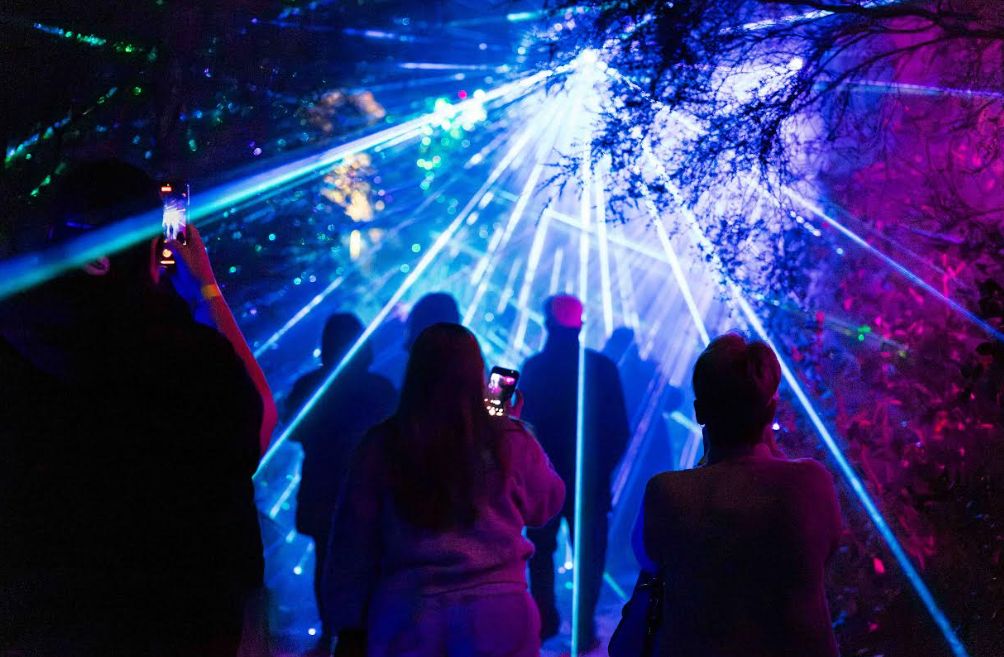
The carefully curated immersive lighting experience is hosted and will run from today - 10 September to 18 April 2026 - enhancing the nighttime options for manuhiri exploring Rotorua. It will then be refreshed and re-launch for a second season from Matariki 2026.
Te Puia project manager for Mārama, Reanne Poutama, says the Whakarewarewa Geothermal Valley natural landscapes are amplified from the depths of darkness and emerge into the world of light, in a way that no-one could have anticipated at the start of the project in a powerful way.
“Mārama has many layers of meaning. From the literal meaning of white light, to moon, to understanding, light and clarity,” Poutama explains.
“The valley is lit in a way that opens up a better understanding of our landscapes and our stories. It has 10 varying scene locations including an illuminated carved sculpture depicting the breath of Pōhutu geyser, light boxes designed by the New Zealand Māori Arts and Crafts Institute tauira (students), and whakairo rākau (wood carvings) by Tohunga Whakairo (master carver) Albert Poai Te Pou.
“There is also a collaboration with artist Maisey Rika whose music is the soundscape to guide the journey.”
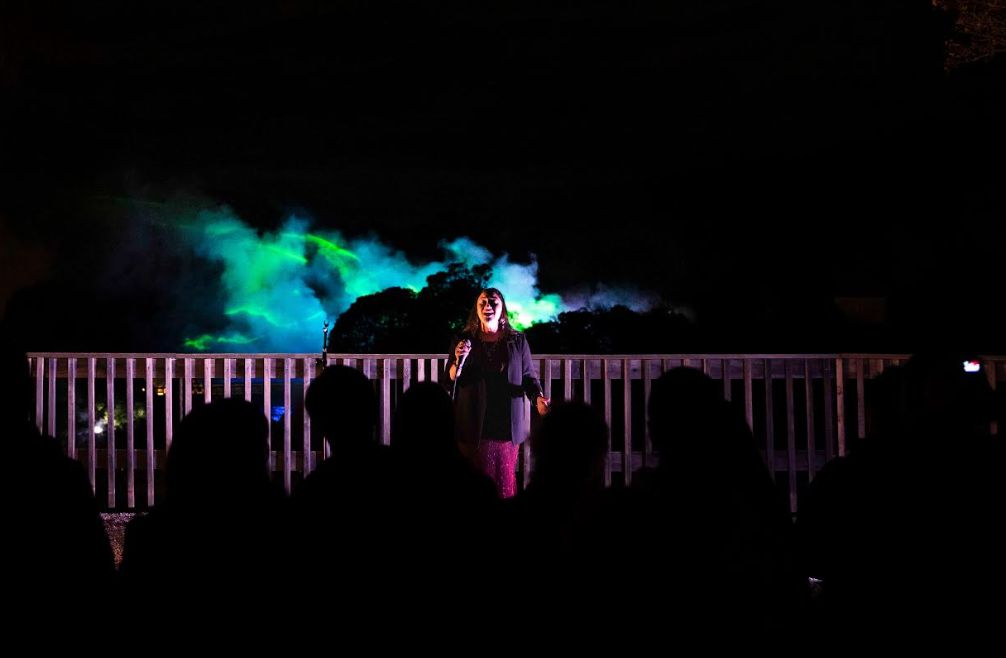
Maisey Rika played two live sets on the launch night with Pōhutu Geyser and the rakaunui (full moon) behind her - the audience were mesmerised.
“What an honour to be able to have my music playing amongst this beautiful taonga and lights,” says Rika.
“I am so grateful that the tono came, because it has brought my mum and I home to this side of us, our Te Arawa, our Tūhourangi side. This is where my nan was brought up - in Whakarewarewa. We’ve been away for so long. It’s really a coming home – ki te ūkaipō – coming back to my mum’s side. It’s an honour.”
Te Puia chief executive Tim Cossar says the organisation always aims to uplift te ahurea Māori (the Māori culture) first and foremost.
“Our connection to te taiao (the environment), our landscape and our connection to te ao Māori is what makes this experience unique,” he explains.
Manuhiri Julie White had the experience for the first time and said she’d never seen the Valley like that before.
“It was beautiful and powerful. I actually also felt quite touched - like seeing the valley in this way was a spiritual moment that sat deeply with me.
Eight-year-old Henry Phillips said “the lights were cool on the river and steam - I even spotted glowing mushrooms and bees. I saw the geyser go off with lasers around it too!”
Poutama shares that there were also terrace food and drink offerings, including mulled wine, horopito hot chocolates, cookies, waffles, cheesecakes, brownies and more.
She says manuhiri should allow around 90-minutes to fully enjoy Mārama and the experience runs Wednesday to Sunday, with gates open from 7:30pm.
Opening times:
Open Wednesday – Sunday each week, with times adjusted to sunset.
From 10 September to 30 November, the experience begins at 7.30pm. Check the website for closing times.
From 1 December to 18 April, the experience begins at 8.30pm. Check the website for closing times.
We recommend wearing sensible footwear for safety and comfort, as well as appropriate clothes for the weather conditions.
About Te Puia | New Zealand Māori Arts and Crafts Institute
Te Puia spans 70 hectares within the historic Te Whakarewarewa Geothermal Valley, on the edge of Rotorua. It is home to the world famous Pōhutu geyser, mud pools, hot springs and silica formations. You will also find the native kiwi bird and the national schools of wood carving, weaving, stone and bone carving. Te Puia has shared these taonga (treasures) with manuhiri (visitors) for more than 170 years and proudly continue that tradition today.
The New Zealand Māori Arts and Crafts Institute Vesting Act 2020 has a purpose to encourage, foster and promote ahurea and toi Māori (culture and Māori arts) of Aotearoa New Zealand. At its core NZMACI is about the protection and transfer of traditional mātauranga Māori knowledge. The Institute has a focus on education, national outreach and global outreach.
 New Zealand College of Midwives: Celebrating Midwives Across Aotearoa This International Day Of The Midwife
 PPTA Te Wehengarua: Building The Secondary Curriculum On Broken Drafts Is A Serious Risk
 Whanganui Regional Museum: Whanganui Makers Bring Textile Traditions To Life During Symposium Weekend
 Palmerston North Hospital Foundation: Fundraising For Publicly-Owned Surgical Robot Hits $2 Million Milestone In Less Than Three Months
 Otago Shore And Land Trust: Hīkoi O Te Taoka - Larger Than Life Hoiho Statues Go To Auction For Charity
 Tertiary Education Union: Historic MECA Negotiations In Polytechnic Sector Begin