
 Scoop has an Ethical Paywall


Free School Lunches A Success Prior To Funding Cuts, Study Finds
The Ka Ora, Ka Ako free school lunch programme improves children’s health and learning, but this year’s funding cuts put those successes at risk.
New Zealand’s free school lunch programme, Ka Ora, Ka Ako, delivers strong benefits for children, families, and communities, according to new research. However, funding was slashed by a third at the start of 2025 and a centralised provider chosen, risking those gains, warn researchers from Waipapa Taumata Rau, University of Auckland.
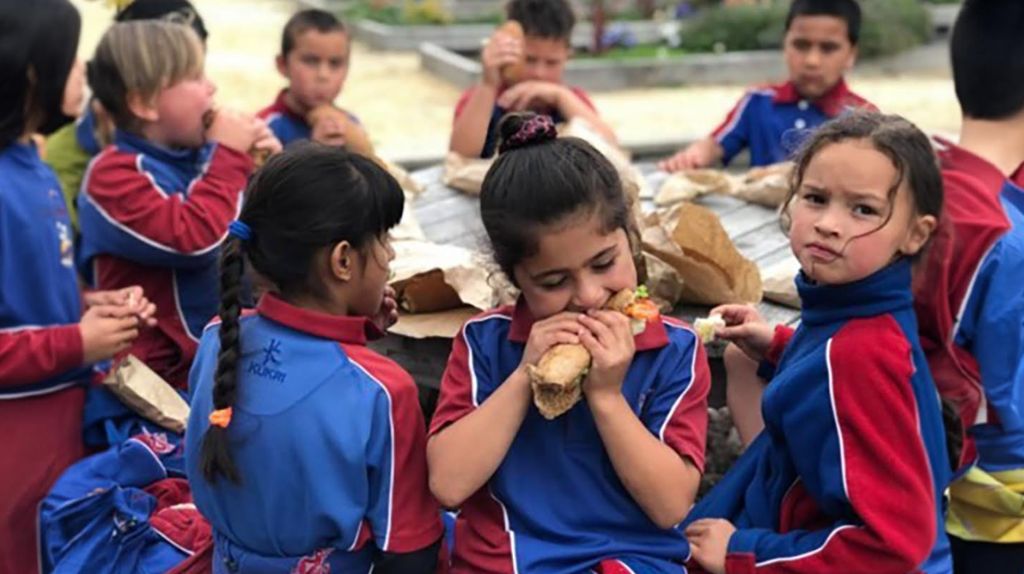
The programme was rolled out in 2020 in response to a spike in food insecurity during the Covid-19 lockdowns. By May 2024, it was reaching more than 230,000 students – about 27 percent of learners – in schools with the highest levels of disadvantage.
The aims of the programme were to reduce hunger, improve nutrition and wellbeing, remove barriers to learning, and support local economies.
Researchers used a method called ‘Value for Investment’ to assess whether the programme is a good use of public money. Unlike traditional cost–benefit studies, Value for Investment looks at more than just costs. It considers health, education, fairness, and community benefits. See BMC Public Health.
The researchers started by meeting with stakeholders to develop the criteria for evaluation. They came up with 21 criteria.
They then drew evidence from other research on Ka Ora, Ka Ako and from similar programmes around the world.
Later, the same group of stakeholders – representing schools, community groups and the ministries of health and education – rated the findings against those criteria.
The study found that Ka Ora, Ka Ako rated very well overall, achieving its original objectives and adding further value:
- Seven areas were rated excellent, including reducing family financial stress and providing good quality lunches.
- Twelve areas were rated good, such as improving health and learning outcomes.
- Only two areas were rated adequate – programme continuity and sustainable food procurement.
- None were rated poor.
A key finding was the programme helped to reduce stigma by making lunches free for all students in participating schools.
However, the researchers warn that the government’s decision to cut the budget by a third in 2025 and introduce a cheaper, centralised delivery model could affect those results especially lunch quality, nutrition, and local economic benefits.

Lead author Carolina Mejía Toro says, “It is important to make school lunches free for every student, not just those identifies as being in higher need. This ensures no child is singled out. Evidence from other programmes reveals that when only some students receive free meals, it can create stigma. Many children may avoid taking lunch even when they need it. This leads to missed nutrition and increased food waste.”
The main recommendations from the study are to keep Ka Ora, Ka Ako universal in the schools where it is offered and make it a permanent part of government budgets.
Researchers also recommend monitoring the new low-cost model to check its impact on food quality and waste.
Health Coalition Aotearoa, a group of public health researchers, has raised concerns that the new model – which it refers to as ‘version 2.0’ – has lost some of the earlier gains, through reduced nutritional quality, smaller portions, and less impact on household food security.
“We need to repeat this Value for Investment research with version 2.0 and take the lessons from both in order to build the optimal version 3.0 for kids, schools, and families,” says co-author
Professor Boyd Swinburn, a public health researcher at the University and co-chair of Health Coalition Aotearoa, says, “Schools are saying that some parents have to provide extra food for children to take to school, which adds a financial burden that had been removed before.”
Other recommendations from the evaluation include strengthening sustainability measures – such as reducing packaging and sourcing more local food – and addressing child poverty to tackle the root causes of food insecurity.
The next step will be a similar evaluation of the current model, where the budget has been cut by a third.
Note:
Value for Investment for Ka Ora, Ka Ako v1.0 (2023/2024)
| CRITERIA | SUBCRITERIA (primary outcomes in BLUE) | ASSESSMENT |
| EFFECTIVENESS | Alleviating hunger at schools | GOOD |
| Healthy eating (lunches are healthy, safe, and high quality; promote healthy eating habits and food culture) | EXCELLENT | |
| Improved diet-related outcomes (mental health, healthy weight, dental health) | GOOD | |
| Reduced financial burden on disadvantaged households | EXCELLENT | |
| Strengthened local economies (local employment at living wage, local and Iwi-centred procurement and distribution) | GOOD | |
| Reduced barriers to education and improved long-term educational outcomes (attendance, classroom engagement, educational attainment, high-school retention, curriculum links including mātauranga Māori, sustainability and nutrition) | GOOD | |
| Improved mana and self-esteem | GOOD | |
| Improved community cohesion (whānau engagement with schools, improved cultural identity through food) | GOOD | |
| Increased food system resilience (% local food in lunches, strong and short supply lines, access to healthy affordable foods) | GOOD | |
| Lunch menus, packaging and operations are sustainable | GOOD | |
| Resources are well managed through procurement/provision/distribution policies and practices | GOOD | |
| Fair balance of cost to govt vs quality of lunches, pay for staff and profit for providers | EXCELLENT | |
| EFFICIENCY | Certainty of continuity of the programme | ADEQUATE |
| Productive delivery (delivering healthy, safe, sufficient, locally-based meals, on time, within budget) | EXCELLENT | |
| Optimal level of food surplus and minimal level of food and packaging waste | GOOD | |
| Efficiencies in design and continuous quality improvement systems in place | EXCELLENT | |
| Systems in place to prioritise local sustainable procurement and meal planning | ADEQUATE | |
| EQUITY | Across schools: the programme resources and targets schools to reach the students most in need | GOOD |
| Within schools: design minimises food poverty stigma | EXCELLENT | |
| Provisions for tailoring to school needs with policies and support systems for smaller schools and small-scale suppliers | EXCELLENT | |
| COST-EFFECTIVENESS | The programme creates more value than it consumes based on break-even analysis of monetisable investments and benefits, and qualitative consideration of intangibles | EXCELLENT |
 Creative New Zealand: Aotearoa Manu Take World Art Stage As 61st Venice Biennale Opens
 Country Music Honours: 2026 Country Music Honours Finalists Announced
 Mana Mokopuna: Children’s Commissioner Welcomes New Youth Mental Health And Suicide Prevention Services In Te Tai Tokerau
 New Zealand Kindergartens: 100-Years On - Investing In Teacher-Led, Quality Early Childhood Education Is Investing In Aotearoa’s Future
 Dry July: Thousands Set To Go Alcohol Free This July As Cancer Diagnoses Continue To Rise Across Aotearoa
 New Zealand College of Midwives: Celebrating Midwives Across Aotearoa This International Day Of The Midwife