
 Scoop has an Ethical Paywall


State Schools Increasingly Consider Becoming Charter Schools

John Gerritsen, Education Correspondent
*This story has been updated to clarify Northland College's position
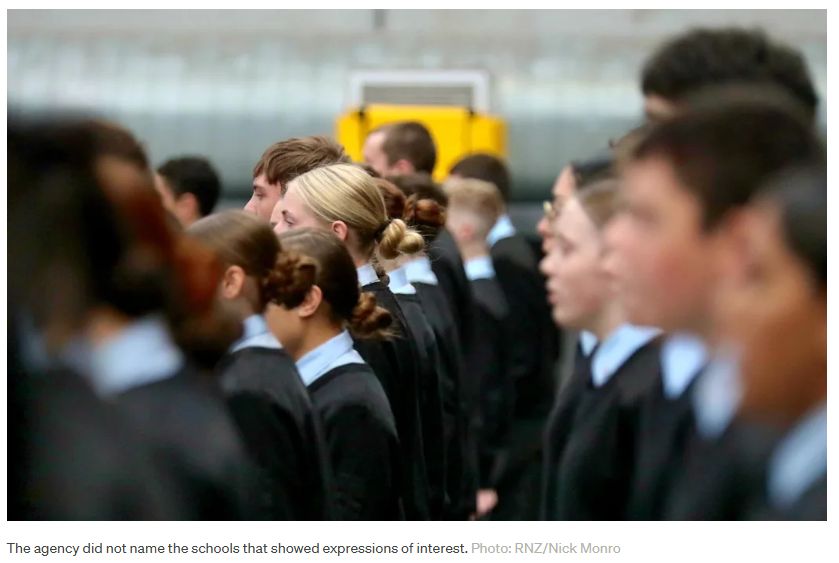
More state and state integrated schools are considering converting to charter school status.
The Charter School Agency said 18 groups had lodged expressions of interest in conversion with three progressing to contract negotiations.
That's up from 12 in September last year with two in negotiations.
The agency did not name the schools, but last year Auckland Muslim integrated school Al-Madinah last year said it had applied, as did Northland College and sponsor Te Rūnanga-Ā-Iwi-O-Ngāpuhi, though the school was later placed under a commissioner. This week Te Rūnanga-Ā-Iwi-O-Ngāpuhi confirmed it was finalising its application for converting Northland College.
Charter School Agency chief executive Sean Teddy said converting state schools to charter schools was a new process and the agency was taking time to get it right.
"For example, we are working with sponsors and school boards to translate existing collective employment agreements into workable and flexible new agreements for school staff. As required by law, these contracts must be no less favourable than existing agreements," he said.
"We are also balancing the Crown's property interests with providing sponsors with fit for purpose facilities while fairly sharing responsibility for maintenance and development."
Teddy said the agency was also balancing funding flexibility to ensure charter schools were not better funded than comparable state schools.
"This all takes time, but it will result in a sustainable network of charter schools with high flexibility and strong accountability for results," he said.
Teddy said schools and potential sponsors were enquiring because they wanted greater flexibility over what and how they taught, how they used their resources, how they structured their governance, and how they could do things differently to better meet the needs of their communities.
RNZ
New Zealand's public broadcaster, providing comprehensive NZ news and current affairs, specialist audio features and documentaries.
Radio New Zealand is a Crown entity established under the Radio New Zealand Act 1995. Radio New Zealand News are vital elements in our programming, providing impartial news and information to New Zealanders every day. Radio New Zealand (RNZ) provides listeners with exciting and independent radio programmes in accordance with the Radio New Zealand Charter.
 Doc Edge Festival: World Press Photo And Doc Edge Comes To Auckland In Landmark Exhibition Merger
 Whakarongorau Aotearoa: International Nurses Day - Healthline Nurses Help 800 New Zealanders A Day
 NZ Psychological Society: Remembering The Past Guides Our Future
  New Zealand Olympic Committee: Motherhood In Focus For Wāhine Toa Graduates Ahead Of Mother's Day
 Early Childhood New Zealand: Budget 2026 Must Protect The Future Of Quality Early Childhood Education
 Creative New Zealand: Aotearoa Manu Take World Art Stage As 61st Venice Biennale Opens