
 Scoop has an Ethical Paywall


The Death Of The Climate Emergency
I’m totally perplexed by the way so many of us seem to have forgotten about the climate emergency.
The current government seems to be completely oblivious, along with much of the mainstream media and a large percentage of the population.
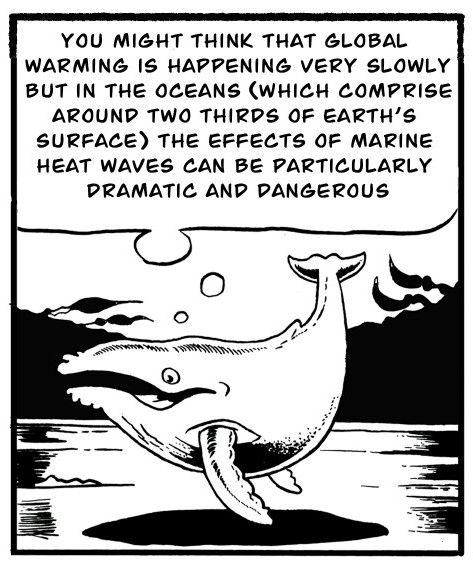
This article is an attempt to try and get people to engage with that giant dead blue whale in the room. It’s still there. It hasn’t gone away and I’m using a blue whale as a metaphor, rather than elephant, because in some parts of the ocean blue whales are literally dying of starvation because of our impacts on the marine ecosystem and every time I think about this I feel sick. We almost wiped them out in the 1960s and now they are under threat again, along with much of the rest of life on this planet, including ourselves.
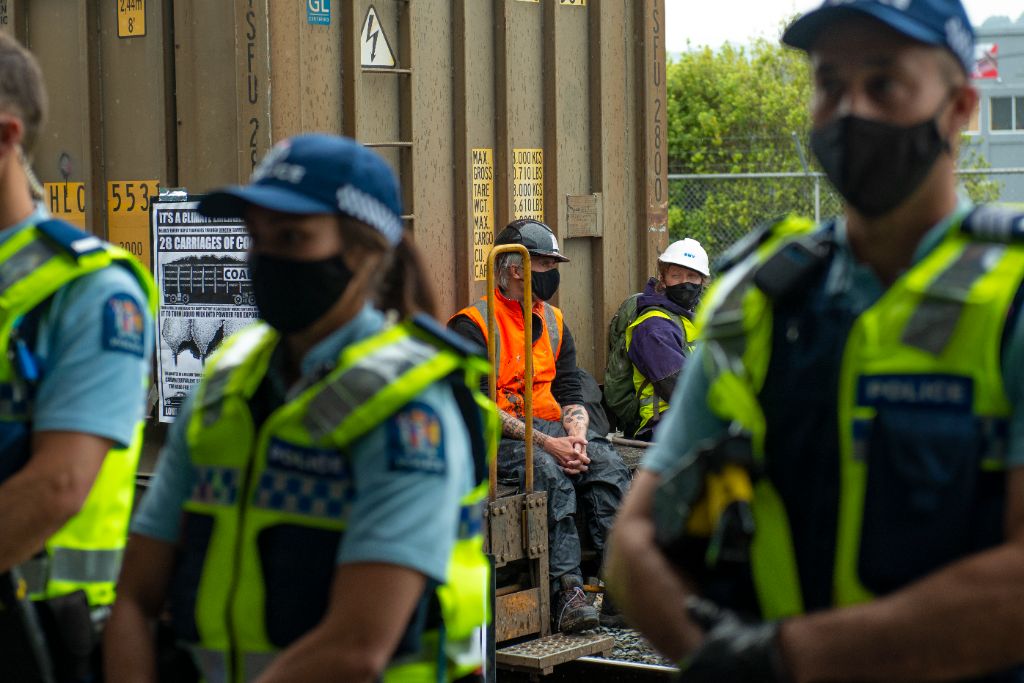
So what is a climate emergency?
No two definitions are the same but basically it’s where a local or civil government publicly acknowledges that climate change is a serious threat to the wellbeing of the country and that the measures taken up to this point are not enough to mitigate the damage.
The first local government declared a climate emergency in 2016 and since then, over 2,100 local governments in 39 countries have made climate emergency declarations as well as around 40 national governments.
Seventeen local councils, covering over three-quarters of the population, have also declared one (along with the government in 2020) but the current coalition government seems to doing all they can to increase emissions by incentivising mining and getting rid of existing emissions reductions legislation and they’ll undoubtedly take us out of the Paris Agreement (where we pledged to reduce emissions by at least 50% by 2030) along with around 200 countries. One reason for this which they seldom mention is because the country will have to stump up some $20 to 30 billion for overseas carbon credits to cover our shortfall.
Nearly every time I try to remind people it’s a climate emergency I get shot to flames by angry old white men on social media, people who either deny the very existence of an emergency or brush it off because “We need the money, you idiot!”. It should be noted that I’m an angry old white man myself, and I don’t like the way these climate science deniers are making it all look so bad!
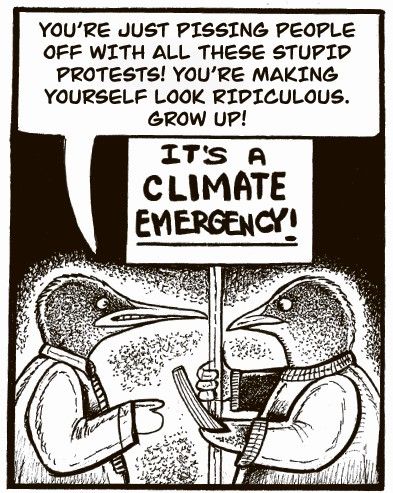
Climate Science Deniers
Climate science deniers seem to fall into five main camps.
Firstly, people who claim that no significant warming is taking place at all. I have to admit that this group is becoming rare. Most people admit it’s getting hotter but say it’s “just natural fluctuations”. Certainly there have been big changes in average global temperatures over the last four billion years but these took place gradually over thousands or millions of years, giving many species the chance to move or adapt. Now, climate change is suddenly happening in real time!
Secondly, people who’ve accepted the climate is changing but claim there isn’t enough proof humans are causing it. What can you say to this? The evidence is absolutely overwhelming but no information is ever good enough to convince a hardened climate sceptic.
Thirdly, people who think that climate change is harmless or could even be beneficial. They often point to the fact that “plants need carbon to grow – you idiot!” However there is evidence that peak carbon sequestration by plants occurred in 2009 and it’s been downhill ever since. There’s also some other studies which show that too much CO2 can actually be detrimental to plant growth. Other people in this group also often say that because carbon dioxide only makes up a tiny part of our atmosphere (currently 426 parts per million) it can’t really be a problem but we all know that sometimes a tiny amount of something can have a huge impact. If you ingested just 30 billionths of a gram of botulism bacteria you could die.
Fourthly, the climate change hoax conspiracy theorists. These people seem to believe climate change is a huge scam being pushed on us by “the elites” to take control of all of earth’s resources by scaring us into giving them even more power. What this group seems to ignore is that we’ve moved into a dystopian period in which a number of the world’s governments, including the United States, New Zealand and Australia, are seemingly pretending climate change doesn’t exist at all and are carrying on like there's no tomorrow. They don't need to create a fake climate crisis to take control of all of our natural resources, they're already doing just fine without one. These conspiracy theorists are often anti-vaxers and all of the rest of that common grab bag of anti-scientific theories. It amazes me that some people suddenly seem to think they know more than the world’s top immunologists and climate scientists after watching a few YouTube videos.
Finally, people who believe the climate situation is an existential threat but it’s simply too late to act now. Many people who accept climate science are also trending this way. This is an extremely dangerous and depressing self-perpetuating idea which inhibits action at all levels and encourages people to act selfishly and live for the moment, rather than struggling to save what we still can!
These sceptics make a lot of noise, particularly on social media, but in fact they’re only a small minority. A number of recent scientific studies have also found that between 80 and 89% of the world’s population want stronger climate action.
Climate crisis deniers often have a tendency to point at their favourite climate sceptic and just one source of evidence (eg. Not all climate scientists agree that humans are causing climate change) to try and make their point, but whenever I follow their advice to “do some research” and have a good look at their sources, I always find that their ‘expert’s aren’t climate scientists at all. They might be some kind of other scientist but expecting a chemist or a physicist to be an expert on climate science is a bit like asking a mechanic to fix your plane. In the rare instance they’ve actually quoted a climate scientist it’s 100% guaranteed this person isn’t active in the field anymore and they’re often they’re of advanced age and the data is decades old.

So – why am I so absolutely certain it is a climate emergency and that we have to start reacting to it like any other emergency and try to find ways to turn off the massive human machine we’ve built which is pouring gasoline onto the dumpster fire of our benighted biosphere?
Climate science deniers often think that if they can find one ‘scientist’ or one piece of data which doesn’t agree with the narrative it’s enough to cast doubt on the whole field. These people are not scientifically trained, they don’t understand the scientific method and they can’t evaluate the validity of experiments or pick good data from bad, let alone interpret it.
I know 100% that we’re in the early stages of the biggest existential threat to ever face humanity and it’s not because of one scientist or one study or after watching a few You Tube videos. It’s because thousands of climate scientists working across a large range of disciplines have absolutely and incontrovertibly proved without any shadow of a doubt that (1) human activities are destabilising our climate science and (2) the situation is getting worse by the day.
Here is just a very small amount of that evidence.
The simple mechanism driving climate change
Many people don’t understand the science driving climate change, but it is well understood.
When the energy from the sun reaches the earth’s surface, some of it is absorbed and this energy radiates upwards in much the same way you can often see heat waves rising from a road in the hot sun. Importantly for us, the bonds between atoms in molecules of greenhouse gasses such as CO2 and methane just happen to vibrate at the same frequency as the waves which come from the infrared energy produced by the sun. When this infrared radiation reflected back up from the earth hits one of these greenhouse gas molecules in the atmosphere much of it is absorbed, before roughly half of this energy is reflected back down towards earth and the rest disappears into space.
It’s estimated that since the beginning of the industrial revolution in 1850, human activities have emitted around 2650 gigatonnes of CO2 with annual emissions of around 42 gigatonnes or 40 billion tonnes a year. There are some unavoidable consequences for pouring all of these emissions into the atmosphere.
Over the last 800,000 years the concentration of atmospheric CO2 has varied between 180 and 280 ppm but since 1850 the concentration of CO2 has now risen from around 280 ppm to more than 410 ppm today. There is absolutely no doubt that this is because of all those fossil fuels we’ve been burning and changes in the way in which we use the land, particularly industrial agricultural activities such as intensive dairy farming, which produces around a quarter of this country’s emissions.
While the main mechanism driving climate change is quite easy to understand, we all know that the weather is in fact, extremely unpredictable and it’s still very difficult to predict ongoing and dynamic interactions of many systems across both air, land and water. Despite all of our technology it’s still a real challenge to predict tomorrow’s weather, let alone next year’s and I think that many people therefore believe that we’ll never be able to control the weather. I think they’re right but we can stop destabilising it even further.
The hottest years on record have all taken place in the last decade
Climate change has already raised the temperature of the Earth by about 1.1 °C since the Industrial Revolution, which began around 1850.
The 10 warmest years in history all occurred in the last 10 years.
The rankings are 2024, 2023, 2016, 2020, 2019, 2017, 2015, 2022, 2018 & 2021 tied.
You can’t fake or spin this data. It’s just the facts.
The average global temperature is currently increasing by 0.1 degrees Celsius every year and we could hit two degrees above the pre-industrial average temperature by the end of the decade!
There have already been several mass extinction events in the history of the earth, most of them caused by global warming, due to “sudden” releases of carbon into the atmosphere, and it only takes an increase of four to five degrees Celsius to cause these kind of cataclysms. The current carbon emissions rate is 10 to 100x faster than during those events and we’re already a quarter of the way there in terms of warming.
The evidence suggests that this will be enough to kill off the rest of the world’s shallow water coral and devastate local fisheries by disrupting ocean currents and storms, floods and forest fires will become increasingly more common and disruptive. As the planet continues to heat up there will be more devastating heat waves killing both humans, plants and animals, the seas will continue to rise and the floods, fires and storms will get worse. Many scientists believe that if we hit four degrees Celsius then all bets are off. Society as we know it may well collapse as we fight it out amongst ourselves for the remaining resources.
Sea level rise
The global average sea level has risen 21 to 24 centimeters since 1880.
In 2023, it set a new record high of 101.4 mm above 1993 levels.
The rate of global sea level rise is accelerating: it has more than doubled from 1.4 millimeters per year throughout most of the twentieth century, to 3.6 millimeters per year between 2006 and 2015.
Increases in floods and storms and fires
The climate is changing extremely quickly, resulting in an increasing number of major storms, fires, floods, etc.
Some recent climate events are-
- Cyclone Sidr in Bangladesh in 2007
- Cyclone Nargis in Myanmar in 2008, which killed 138,366 people
- the 2010 heat wave in Russia (55,736 deaths)
- the 2010 drought in Somalia (258,000 deaths)
- The 2013 floods in India (6,054 victims)
- Typhoon Haiyan in the Philippines in 2013 (7,354 victims)
- The 2015 heat wave in France (3,275 deaths)
- Heat waves across much of Europe in 2022 and 2023 (53,542 and 37,129 deaths respectively)
- and Storm Daniel in Libya, which claimed the lives of 12,352 people
According to a recent study by NASA, extreme events such as floods and droughts are becoming more frequent, longer-lasting and more severe. The same study indicated that such extreme events are becoming more frequent, longer-lasting and more severe, with last year’s figures reaching twice that of the 2003-2020 average. This is frightening!
Effects on animals
More than 40% of insect species are declining and one third are endangered, with an extinction rate eight times faster than that of mammals, birds and reptiles. The total mass of insects is currently falling by around 2.5% a year, suggesting they could vanish within the next century.
Around 40% of amphibians are also threatened with extinction and reptiles aren’t far behind.
The total population of birds in North America has decreased by 2.9 billion (29%) in just 50 years and this is partly due to the rapid decrease in insects. The impacts of climate change on birds are difficult to gauge but many species are declining and/or are under threat of extinction.
Nearly 25% of mammal species are already threatened with extinction and climate change is a particular threat to marine mammals, particularly whales. Furthermore, the first mammal has already become extinct due to climate change. This was the Bramble Cay Melomy, wiped out when the only island it lived on was over run by a combination of sea level rise and a tropical storm in 2016.
In 2019, a study suggested that one million species of plants, insects, birds, mammals, and amphibians were in imminent danger of extinction and that number has since increased.
Satellite evidence and plankton growth
Satellite imagery provided by organisations like NASA shows that the Arctic, Antarctic and Greenland ice sheets are shrinking at an alarming rate and so are many glaciers.
It’s difficult for climate science deniers to refute this evidence because it’s easy to go online where you can scroll through years worth of satellite photos and see the ice disappearing year by year but of course any hardened climate sceptic will tell you the photos are fake and NASA is full of shit because they faked the moon landings. I guess all those satellites are fake as well, which means the internet must be a hoax too!
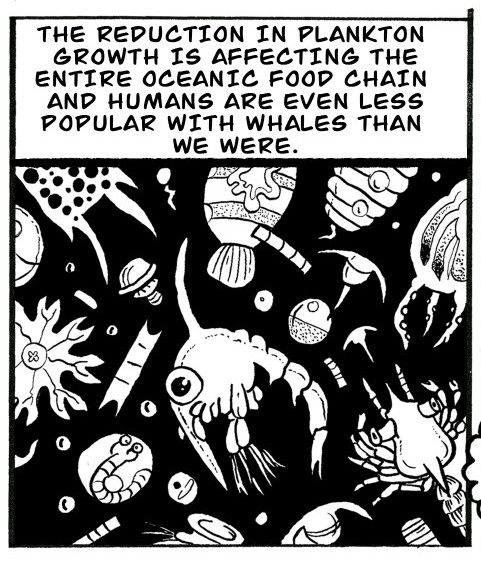
Satellite images also show that plankton, which is the very basis for the ocean’s food chain, is rapidly decreasing all over the world. Diatoms, a common type of plant algae, declined more than one percent per year from 1998 to 2012 globally, so it’s no wonder the whales are starving as the krill they eat relies on plant plankton for their own nutrition.
As the ocean becomes warmer and salinity increases, many planktonic animals can’t cope with these new extreme conditions and many are having trouble building an exo-skeleton robust enough to cope with the increased salinity, as well as being separated from their own food sources by natural barriers called thermoclines. It’s estimated that plant and bacteria-plankton have absorbed an estimated 40 percent of all the carbon dioxide that humans have put into the atmosphere since the Industrial Revolution but this sequestration rate is starting to decrease as plankton numbers continue to fall. There are some species of algae which thrive in a warming ocean but many contain toxic chemicals which have been causing dead fish and other marine creatures to wash ashore in large numbers.
During the winter months in both Antarctica and the Arctic healthy sea ice also provides a safe home for plankton and when the ice melts in summer and there is 24 hour daylight, massive plankton blooms occur, which create a huge abundance of food at the poles which support large local ecosystems. Any plankton which isn’t eaten dies and falls to the bottom of the ocean and the nutrients it contains is carried both north and south by deep underwater currents until these valuable nutrients come to the surface in areas of upwelling, such as the west coast of New Zealand, where they drive important local fisheries. Without more stable temperatures and a healthy amount of ice at the poles, the whole marine ecosystem is currently being thrown into chaos with many long established ocean currents changing directions, with all sorts of impacts on both the weather and those people in the area who rely on seafood for their protein intake.
The consensus on anthropogenic climate change
Somewhere between 97 and 100% of actively publishing climate scientists agree that humans are causing global warming and climate change. If nine out of ten doctors told you something was good for your health, I think most of us would take their advice rather than that of just the one.
This is just some of the overwhelming evidence that there is a climate emergency, and that we are the cause. So why have so many people suddenly become sceptics?
Up until relatively recently the vast majority of people were happy to defer to the expert knowledge of scientists for nearly everything and indeed, our whole society is underpinned by the scientific inventions and applications which drive our modern lives. The smart phone and computers we use every day, the satellites which enable the internet, the planes which take us all over the world, the heat pumps and fridges and ovens and washing machines in our houses. Where would we be without trust in science?
But over the last thirty years a concerted campaign has been mobilised by industrial, political and ideological interests to undermine public trust in climate science in particular and this promotion of climate change denial has been heavily associated with the fossil fuels lobby and ultra conservative think tanks, such as the Atlas Network and ultra-conservative alternative media organisations such as Media Research Center and Breitbart.
More than 90% of the papers which are sceptical of human caused climate change originate from these so-called think tanks.
Things really came to a head during and after the global pandemic when many people were dismayed at the sudden restrictions on their freedom and started to question the established authorities. Instead of this opening their minds to a larger way of looking at the world many people’s views narrowed instead, as they gravitated towards a huge new influx of online right-wing propaganda which was spewed out in gargantuan amounts to question the values of the left, by right-wing oligarchies and their henchmen and a number of progressive science-positive governments were replaced by right-wing and anti-scientific parties or coalitions. Is this sounding at all familiar?
These new governments in places like New Zealand and the United States openly called out the climate emergency as a lie or as a mere distraction, and in the last three years some 40 years of environmental restrictions and climate legislation has been put to the torch. These governments and their backers have created a new and very fertile environment for all sorts of extremists to peddle their fantastic belief systems and enable their vainglorious destruction of the very foundations of scientific credibility on which we have built our civilisation.
Climate data is being suppressed, scientist’s voices are being silenced and even their most conservative recommendations are being ignored.
One slight glimmer of hope is that the International Court of Justice has just delivered its advisory opinion on individual states obligations to tackle climate change, confirming that international law requires that individual states need to protect the climate and their citizens from significant harm. The Secretary General of the United Nations has also urged all states to end use of fossil fuels.
Capitalism, which has always put profits before people, has relied on fossil fuels to power its vast machine from the beginning of the industrial revolution and before that it relied on slavery. It took many years of lobbying and protests to stop humans being used as unpaid machines but we simply don’t have the luxury of time to phase out fossil fuels. Somehow, we need to find some immediate solutions to cut through all of these endless arguments, which have been stalling progress for many years and find a way to work together as a species or we’re all doomed.
Images © Bruce Mahalski, unless noted
 Keith Rankin: Has Sweden Become A De Facto Apartheid Narco State?
 Bruce Mahalski: Change In The Weather #194
 Binoy Kampmark: Dangers To The Fourth Estate - The 2026 World Press Freedom Index
 Richard S. Ehrlich: Strait Of Hormuz Blockades & Thailand's Land Bridge
 Keith Rankin: 'I Am A Semite'
 Binoy Kampmark: Show Me The Money - A Loutish Administration Confronts A Craven Congress