
 Scoop has an Ethical Paywall


Stop Conflating Man With Nature
One of the favorite devices of intellectuals to avoid the fundamental contradiction between nature and man is to conflate past extinction events with the Sixth Extinction humans are presently bringing about.
There are many reasons why smart people deny, blur and explain away the basic difference between the natural world, which unfolds in seamless wholeness, and man, who operates from increasing fragmentation.
Perhaps it’s a ploy to distance themselves from what humans are doing to the Earth by detailing the seeming violence and destructiveness of nature in the distant past. Perhaps it’s a fixed belief in an absolutely random and meaningless universe.
Whatever the motivation, the best example of conflating the human adaptive pattern with nature as a whole that I’ve read is in an essay ostensibly focused on the Permian-Triassic extinction. It occurred about 250 million years ago, when enough lava erupted out of Siberian Traps to cover the lower 48 US states nearly a mile deep.
In the hyperbolic words of the paleontologist Paul Wignall, the protracted re-formation of the Earth’s crust over a huge area produced “a climate of unparalleled malevolence.”
What followed was the greatest mass extinction of all time, wiping out 96% of marine species and 70% of terrestrial animal species.
As Peter Brannen expounds in his essay, “If there is a geologic precedent for what industrial civilisation has been up to in the past few centuries, it is something like the volcanoes of the end-Permian mass extinction.”
He adds, “What is alarming, and why it’s worth talking about the Siberian Traps in the same breath as industrial civilisation, is that even in comparison with those ancient continent-spanning eruptions, what we’re doing now seems to be unique.” Indeed, just not in the way he thinks.
His piece lapses into merging natural and human processes, wrapping his comparison between natural and man-made CO2 overloading in a florid, anthropocentric description of the post-Permian Earth.
For example, the result of the Siberian Traps was “widespread mercury poisoning, and toxic fluorine and chlorine gas, which would have been familiar to suffocating soldiers in the first world war trenches.”
And: “Most importantly – and most unfortunately, for life – billowing out of the Earth in the biggest catastrophe in history was a planet-deranging amount of carbon dioxide.”
Though he camouflages the intention and goal of his think piece, Brannen shows his hand: “While ours is a sturdy planet, resilient to all manner of unthinkable insults to which it is regularly subjected, once every 50-100m years, something truly very, very bad happens.”
“These are the major mass extinctions when conditions on Earth’s surface conspire to become so vile everywhere that they exceed the adaptive capacity of almost all complex life.”
The use of the loaded, condemnatory words and phrases jumps out in the long piece. Homo sapiens, on the other hand, comes off quite well in this conflated scenario. “By comparison, the devastation wreaked by humans on the rest of the living world is relatively mild, perhaps clocking in less than 10%.”
The extravagant language evinces a troubling mingling of human destructiveness with natural events. And the writer reveals his basic view of life when he speaks of “a roiling, utterly indifferent planetary drama.” That belies a worldview based on a belief in the cosmic and terrestrial insignificance of life.
Indeed, applying language like “planet-deranging,” “destroying the world,” “unparalleled malevolence,” and “the oceans didn’t have a chance in hell” to nature are a rock-ribbed atheist’s descriptions of man’s present, and prediction of humankind’s future.
What is the intention for such blatant unawareness of the fundamental difference between the way man operates and the way nature unfolds?
Commingling nature’s past upheavals with man’s present planetary destructiveness, the piece reads like the scientific rationale for a nihilist’s manifesto.
It amounts to an extraordinary refusal to ask humankind’s basic existential question: How can a sentient species, which emerged through the same evolutionary processes as all other life, be fragmenting the Earth all to hell, when life develops through unbroken wholeness?
An indifference to man’s malevolence, and the tectonic confusion of describing natural events, however disruptive to life in the past, as “unparalleled malevolence,” represents an eruption of spiritual vacuity and philosophical incuriosity.
To be fair, Brannen half-heartedly concludes by saying, “Unfortunately, the rate at which humans are now injecting CO2 into the oceans and atmosphere today far surpasses the planet’s ability to keep pace. We are now at the initial stages of a system failure. If we keep at it for much longer, we might see what actual failure really means.”
Fortunately, the author doesn’t sink into the misanthropy that so many privileged people in the west do today. Misanthropes pin their perverse hopes on Homo sap’s self-extinction, thereby opening the space for the Earth to be restored and perhaps a truly intelligent species to emerge. Of course, that’s wishful thinking of the most diabolical sort.
The previous upheavals that wiped out 75% of life (the definition of a mass extinction) opened up new pathways for life. It was part of a cosmic and terrestrial process that eventually produced the most complex organ on Earth – the human brain (potentially for the better but to this point for the worse).
Paradoxically, the fact that the evolution of the human brain has been worse for the Earth attests to its spiritual and social potential.
Awareness is intrinsic to the universe, and the human brain is the only brain on this planet with the capacity for silent awareness of the immanent cosmic mind. A true civilisation and just global order flow from that source.
Neuronal evolution through random processes eventually developed an tremendously complex brain with as many neurons as stars in the Milky Way. However the very adaptation and exaptation that gave us the potential for cosmic awareness – symbolic thought—became a tremendous impediment to it.
Another writer thinking on the horrifying scale of man-made extinctions asks, “Against the backdrop of extinction and destruction, can tales of hope, joy, absurdity and scientific marvel provide the fuel for humanity to confront and reverse the extinction crisis?”
Sadly, the answer is no. Telling “tales of hope and joy” is an absurdly insufficient response to the crisis of human consciousness. Stories have their place, but, in themselves, they change nothing.
The prescription, “for every tale of destruction, we can weave a tale of hope, regeneration and joy,” is a placebo that few are able to swallow anymore. We cannot counterbalance man’s destructiveness with “tales of hope” anymore than we can prevent oil and gas from being extracted from under the ground and sea by remonstrating oil execs to cap their drills.
Another leading progressive thinker insists, “More than anything, we need media outlets not beholden to the fossil fuel companies; outlets that are prepared, despite the many financial and legal hazards, to resist this lucrative death cult.”
Projecting the “ruthless and deadly force” of man onto nature, or externalising it into fossil fuel transnational corporations, however much they warrant condemnation, just won’t cut it. More than anything, we need to ignite a psychological revolution within human consciousness. That’s what is required to end man’s rapaciousness.
Because when it comes down to it, as it has, there is no difference between the individual who delves to the core of consciousness within himself and herself and brings insight there, and igniting insight at the common core of human consciousness itself.
Martin LeFevre
Martin LeFevre - Meditations
Scoop Contributor
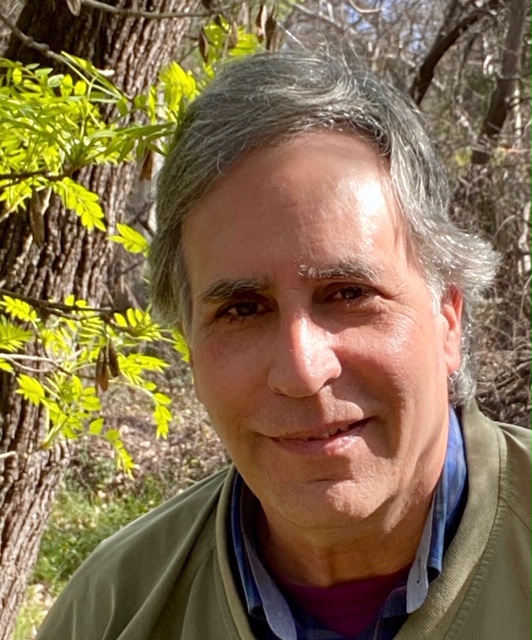
Martin LeFevre is a contemplative and philosopher.
His sui generis “Meditations” explore spiritual, philosophical and political questions relating to the polycrisis facing humanity.
lefevremartin77@gmail
 Binoy Kampmark: Ted Turner - The Devil Behind Cable News
 Keith Rankin: Clipping The Ticket; Solving Hormuz, In Context
 Ian Powell: Inhumanity Of US Economic Sanctions Against Cuba – Infant Mortality And Starvation; Time To End NZ’s Silence
 Ramzy Baroud: Subjects Of Empire - Breaking The Cycle Of Arab Dependency On US Elections
 Peter Dunne: Dunne's Weekly - The Pragmatic Food For Fuel Deal With Singapore
 Eugene Doyle: After Israel’s Brutal Attack On Kiwis, Our Government Does Nothing