
 Scoop has an Ethical Paywall


Losing And Gaining Proprioception
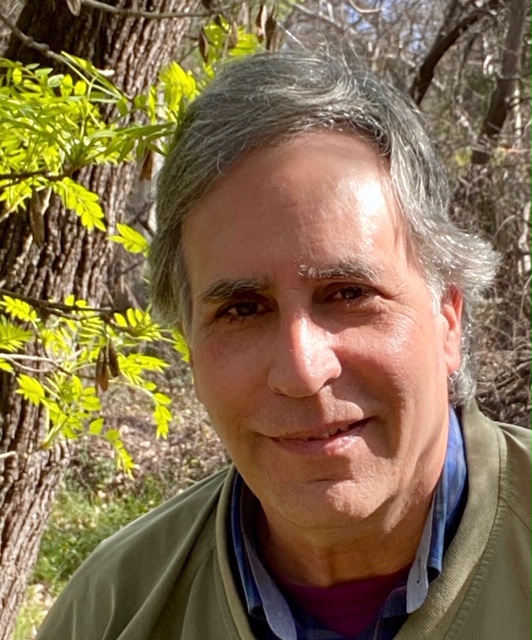
For the first time in seven years, I’m able to walk again without pain. The cliché, “you don’t realise what you have until you lose it” couldn’t apply more aptly than to losing the ability to walk normally.
We are bipedal creatures, and how someone walks is the first thing we notice about a person at a distance. We learn to walk before we talk, and a child’s first steps, around a year old, are celebrated and photographed with great fanfare.
Congenital dysplasia caught up with me, and I had to have both hips replaced. Eight years ago I was still doing sprint workouts, and able to hike and walk for miles, but before my second hip was replaced, I couldn’t walk around the block even with hiking poles.
The cartilage, synovial fluid and labrum in my hip joints had deteriorated rapidly, and things went from periodically painful jolts of pain from bone spurs to bone-on-bone excruciation and achiness.
Healthy and fit all my life, I learned what it means to be seen as disabled. No matter how healthy you may otherwise be, you’re seen as infirm if you can’t walk with a firm step.
Humans were predatory primates for hundreds of thousands of years before we became settled agriculturalists, much less digital head cases. Bipedalism enabled us to scan and cover long distances, and opposable thumbs enabled us to grasp tools and extract plants. Few people walk without earbuds anymore, and the primary use of thumbs now seems to be typing texts on cell phones.
When lions or wolves hunt, they look for any sign of weakness or infirmity in the gait of prey, and focus on that animal to take down. Subconsciously, humans do the same thing in a social context I’ve observed. Before meeting face-to-face, we gage each other by our gait.
An important thing my orthopedic surgeon didn’t tell me about is a significant loss of proprioception, the body’s internal sense of its position and movement. Close your eyes and hold your arm out; you know exactly where it is because of tiny sensors called mechanoreceptors in your joints.
The hip joint capsule and surrounding soft tissues contain thousands of these receptors, which send continuous information to the brain about the body’s position and movement. Obviously when a titanium “stem” and hard plastic socket replaces the ball and socket joint the proprioceptors are wiped out.
Physical balance was never my strong suit, so I’d practice standing on one leg with my eyes closed even as a young man, and continued to do so as I grew older. Falling is one of the great dangers as we age, often due to loss of proprioception, and many older people don’t recover from a bad fall that breaks a hip.
After the second hip was removed, I could stand and walk short distances right away without pain, but if I closed my eyes, I became dizzy and unsteady. The body and brain had lost the most important mechanoreceptors for standing and walking, the proprioceptors in the hips.
With balance exercises and time, the body and brain develop other pathways, and proprioception and balance can usually be restored. Happily, I’m walking again, albeit with rubber-tipped hiking poles for now.
We have not, as humans, evolved to be proprioceptively aware of the movement of thought. The chattering mind may bother us when we’re trying to go to sleep, but otherwise thought is subconsciously taken as a given, and we’re no more conscious of the movement of thought than a person without “mobility issues” is walking.
In that respect, awareness of the movement of thought may be analogous to bipedalism. Walking on two legs also involved complex anatomical adaptations that became automatic, and of which we are only aware when we can no longer walk without pain and difficulty.
The destructiveness and disorder of man has made it necessary to be proprioceptively aware of the movement of thought within us. But can we feel the movement of thought physically in the same way a self-aware person feels an emotion like anger or affection in the body?
Though there’s a lot of exaggerated philosophical and neuroscientific mystery about how physical processes in the brain give rise to subjective experiences (the supposedly “hard problem of consciousness”), clearly thought is a mechanical process that produces the illusion of a separate self, with its vaunted feeling of subjectivity.
Given that’s true, the proprioception of thought means that the reactions of the self, which emanate from conditioning and socialization, are no longer automatic, but are felt in the same dispassionate way emotions can be felt. In doing so, we’re no longer caught in the net of thought.
AI is likely to supersede human cognitive functions, which have heretofore defined us as humans and enabled us to be the dominant species on Earth (to the detriment of the animals with which we share this planet). But it’s also true that the overstated emphasis on the “hard problem of consciousness” has given rise to the silliness of AI sentience.
Both the emergence of AI, and the fragmentation of the Earth, is compelling us at long last to be clear on what it means to be a human being.
Certainly it means the integration of the body, mind, emotions and brain. That entails the movement of thought not taken as a given in human life, but is attended to so there are spaces and silences for insight and understanding to grow.
The way ahead for the human being is not through intellect and knowledge, but by fully awakening the brain’s latent capacity for insight. And insight arises from the spaces between thoughts, and ultimately from the silence beyond all thought and knowledge.
We can be proprioceptively aware of the movement of thought in the same way we can be consciously and enjoyably aware while walking, the oldest human activity.
Martin LeFevre
Martin LeFevre - Meditations
Scoop Contributor
Martin LeFevre is a contemplative and philosopher.
His sui generis “Meditations” explore spiritual, philosophical and political questions relating to the polycrisis facing humanity.
lefevremartin77@gmail
 Binoy Kampmark: Ted Turner - The Devil Behind Cable News
 Keith Rankin: Clipping The Ticket; Solving Hormuz, In Context
 Ian Powell: Inhumanity Of US Economic Sanctions Against Cuba – Infant Mortality And Starvation; Time To End NZ’s Silence
 Ramzy Baroud: Subjects Of Empire - Breaking The Cycle Of Arab Dependency On US Elections
 Peter Dunne: Dunne's Weekly - The Pragmatic Food For Fuel Deal With Singapore
 Eugene Doyle: After Israel’s Brutal Attack On Kiwis, Our Government Does Nothing