
 Scoop has an Ethical Paywall


What’s The Difference Between Private Management Of Public Hospitals And A ‘Perfumed Turd’?
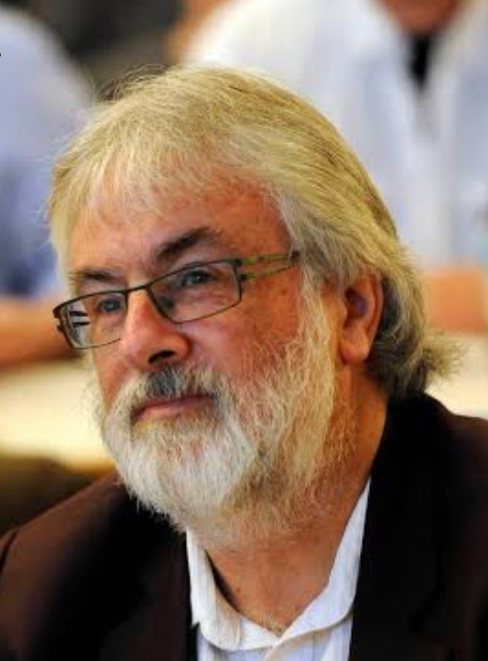
I am a panellist on Radio New Zealand’s The Panel ably run by Wallace Chapman. It is an early evening programme (6-7pm), Monday to Friday.
Each programme involves two co-panellists selected from a long list who discuss varying issues of the moment. Give or take, I’m generally on about six times a year. It is an interesting experience which I enjoy.
But I also occasionally appear as an interviewed ‘expert’ on one of the issues being discussed, usually as a health commentator. The latest such occasion was 12 November.
Context
The subject was British multinational company Serco picking up on Health New Zealand’s (Te Whatu Ora) publicly expressed interest of public private partnerships (PPPs) to build or rebuild public hospitals. Serco immodestly pitched a message that it was the right horse for this course.
This was covered in a very good investigative article by journalist David Williams in the online daily Newsroom (7 November): Serco sniffs profit maximisation in building and operating hospitals.
In March Minister of Health Simeon Brown had made a pitch to an infrastructure investment summit in Auckland for increased private company involvement in health infrastructure, specifically hospitals.
This including saying that:
Patients are not focused on who owns the hospital where they will receive their surgery. They just want – and rightly expect – to receive their care in a quality, fit-for-purpose building.
It didn’t take long for Serco to sniff the opportunity for profit-maximisation in Aotearoa New Zealand’s health system. Andrew Head, the Sydney-based chief executive of Serco Asia Pacific was also at the summit.
Williams investigative journalism reported that Head had written to Brown in July requesting a meeting (which was held on 14 August).
In his ‘perfumed’ letter Head said that “It was great to meet you in March” and that he was keen to “build on the discussions we commenced earlier this year.”
In his pitch for Serco to be a potential partner in hospital builds and rebuilds a confident Head added that:
We are committed to working in partnership with government agencies to deliver outcomes that are safe, effective, and community focused. As Minister for Health looking to deliver more services to patients more efficiently, I would value the opportunity to share Serco’s experience in delivering operation partnerships overseas, including in healthcare.
After advising the health minister that Serco was “uniquely” positioned to “play an integral role advancing solutions to develop the health infrastructure required to meet growing demand,” Further, he asserted (some might say boasted):
I believe Serco’s experience could be of great value to the New Zealand Government looking to deliver better public services in a historically challenging area, more efficiently with private-sector know-how.
Williams also noted that a British parliamentary committee 12 years ago attacked Serco’s out-of-hours GP service in Cornwall, England, as substandard. It accused the multinational of falsifying figures.
Serco’s initiative summarised in a soundbite
When I appeared in my capacity as a health commentator on The Panel (12 November) and was asked what I thought of Serco’s initiative, for better or worse, I thought I would begin with a soundbite before moving on to a more measured response.
My initial soundbite response was that Serco’s proposal resembled a perfumed turd and that no how much people tried to buff a turd they could never get it to shine.
On the one hand, it immediately got the audience’s reception. On the other hand, it may have distracted from the measured follow-up I wanted. Readers can be the judge of that: Serco promoting a perfumed turd. [My session with The Panel is around halfway into this link]
My ‘measured follow-up’ included responding to a point raised by one of the co-panellists.
This was the need to explore alternatives such as PPPs or other forms of private company leadership because of growing health demand and costs meant that the current system wasn’t working.
My response was that there was already strong evidence that PPPs and other forms of private management were not part of the solution. In fact, they had led to worse outcomes.
I referred to the detrimental experience of the National Health Service (NHS) in England where successive governments (Conservative and Labour) had imposed PPPs and their predecessors (Private Finance Initiatives).
This included drawing upon a personal experience many years ago of visiting an NHS Trust public hospital in Birmingham that was being managed by a private company.
What struck me was that the new chief executive was an experienced and competent senior manager in public hospitals, including Hawke’s Bay, who I happened to know.
She was an excellent appointment, but her experience was in the public system, not in a private company.
Despite her calibre, however, the inevitable tension between a private company focussed on profiteering and a public hospital whose focus was elsewhere (patient care) was too much and the arrangement didn’t last very long.
I also referred to Australia where private management/PPPs have been used much less but have proved to be very expensive (Melbourne) and some had to abandoned (Adelaide and Sydney).
Finally, I referred to the closest Aotearoa has come to a PPP in the public health system. This was the rebuild of the Buller health centre in Westport.
When the West Coast DHB senior management did the true costings in 2017 they revealed that the annual operating costs of running a PPP health centre were around 10% more than what they would have otherwise been.
This was due to the profiteering need of the private partner. Consequently, with a change of government in late 2017, the PPP wasn’t proceeded with.
So why a ‘perfumed turd’
The whole premise of public private partnerships is that the private partner needs to have confidence that it can extract sufficient profiteering out of the design, construction and operation of the building or rebuilding of a public hospital.
This is why private profiteers prefer ‘greensites’ (start afresh on a new site) rather than ‘brownsites’ (rebuilding on or around existing hospital sites).
Through design and construction in the first instance profitability is greater in the former compared with the latter.
Following the earthquake devastation in Christchurch in 2011, then health minister Tony Ryall was pushing for a PPP for the rebuild. Prospective private partners were interested if a new hospital was build on a ‘greensite’ (in Harewood near Christchurch airport).
However, after an at times acrimonious ‘behind closed doors’ struggle, Canterbury DHB through its senior management supported by key health professional staff were able to win the argument that the ‘brownsite’ option was more practical including cost effective.
Consequently the interest of potential private partners disappeared. The profiteering incentive had dissipated.
In his above-mentioned article David Williams quoted my column published by Newsroom in June. I was critical of Simeon Brown’s intention to use through outsourcing (privatisation) for elective (planned) surgery. I said:
It is becoming increasingly clear that Government funding decisions are strongly oriented towards the for-profit private health sector rather than addressing the critical needs of our health system.
Another way of expressing this is to recast the infamous statement around the 1950s by General Motors in the context of its overseas expansion including into central America. It argued that ‘what is good for General Motors is good for America’.
In the context of the Government’s approach to private profiteering in the public health system this could be reworked to ‘what is good for private company profits is good for the public health system’.
So what is the difference between PPPs and private management of public hospitals and a ‘perfumed turd’? Somewhere between very, very little and none at all.
The turd is what it is (unable to be shined); the perfume is the rhetoric used by Serco and other aspiring private profiteers to provide the rationalisation for ideological predisposed governments.
Ian Powell
Otaihanga Second Opinion is a regular health systems blog in New Zealand.
Ian Powell is the editor of the health systems blog 'Otaihanga Second Opinion.' He is also a columnist for New Zealand Doctor, occasional columnist for the Sunday Star Times, and contributor to the Victoria University hosted Democracy Project. For over 30 years , until December 2019, he was the Executive Director of Association of Salaried Medical Specialists, the union representing senior doctors and dentists in New Zealand.
 Keith Rankin: Clipping The Ticket; Solving Hormuz, In Context
 Ian Powell: Inhumanity Of US Economic Sanctions Against Cuba – Infant Mortality And Starvation; Time To End NZ’s Silence
 Ramzy Baroud: Subjects Of Empire - Breaking The Cycle Of Arab Dependency On US Elections
 Peter Dunne: Dunne's Weekly - The Pragmatic Food For Fuel Deal With Singapore
 Eugene Doyle: After Israel’s Brutal Attack On Kiwis, Our Government Does Nothing
 Keith Rankin: Has Sweden Become A De Facto Apartheid Narco State?