
 Scoop has an Ethical Paywall


Kohima Drive: A Street That Remembers A Distant War
There are streets you pass without noticing—and then there are streets that quietly hold history beneath their asphalt. Kohima Drive, tucked into the leafy slopes of Khandallah in Wellington, belongs firmly to the latter. At first glance, it is an unassuming residential road, winding through one of the capital’s most peaceful suburbs. But its name carries the echo of a battle fought half a world away, in the misty hills of Northeast India.
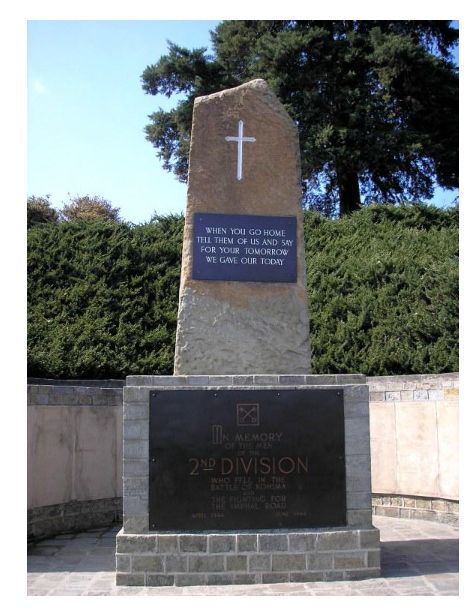
The story begins in April 1944, at a place called Kohima—then a small hill town, today the capital of Nagaland. What unfolded there between 4 April and 22 June 1944 would become one of the most decisive moments of the Second World War in Asia. The Battle of Kohima marked the turning point of the Japanese U-Go offensive into British India, a campaign that had threatened to push deep into the subcontinent.
The fighting was brutal, intimate, and relentless. The Japanese forces attempted to seize the Kohima ridge, a strategic high ground overlooking the vital road to Imphal, where British and Indian troops were besieged. For nearly two weeks in early April, a small and outnumbered garrison held its ground under extraordinary pressure. By mid-April, relief forces broke through. What followed was a prolonged struggle that eventually forced the Japanese retreat—an outcome that shifted the momentum of the war in this theatre.
Today, the most poignant reminder of that battle lies in the Kohima War Cemetery. There, among neat rows of graves—1,082 of them belonging to British soldiers—stands one of the most moving epitaphs of the war: “When you go home, tell them of us and say, for your tomorrow, we gave our today.” It is a line that transcends geography, linking distant landscapes through memory and sacrifice.
And this is where Kohima Drive in Wellington finds its meaning.
Unlike earlier streets in New Zealand cities—names like Madras or Calcutta, rooted in the trade routes and imperial geography of the 19th century—Kohima Drive belongs to a later wave of naming. Established in the late 1940s, it reflects a more reflective impulse: commemoration rather than cartography. These names were chosen not for their economic connections, but for their emotional and historical weight. They were meant to remember.
The contrast is striking. In India, the name “Kohima” itself is ancient, derived from “Kewhira,” associated with the Kewhi flowers that bloom in the surrounding hills, and tied deeply to the heritage of the Angami Naga people. In Wellington, however, Kohima is not a place of origin but of remembrance—a name transplanted across oceans to honour a moment in time.
For many New Zealand families, that moment is not abstract history. It is personal.
New Zealand’s connection to Kohima was written largely in the skies above Burma and India. Hundreds of New Zealanders served in Royal Air Force squadrons during this campaign, supporting what came to be known as the “Forgotten 14th Army.” Their role was crucial. Flying aircraft like the Dakota transport planes, they carried out dangerous missions to supply troops cut off at Kohima and Imphal—dropping food, ammunition, and medical supplies into embattled zones.
Others flew Hurricanes, Spitfires, and Beaufighters, providing ground support in treacherous conditions. For these pilots and crew, the war in this region was not only strategically vital but physically punishing—fought in dense jungle, under monsoon rains, and against a determined enemy.
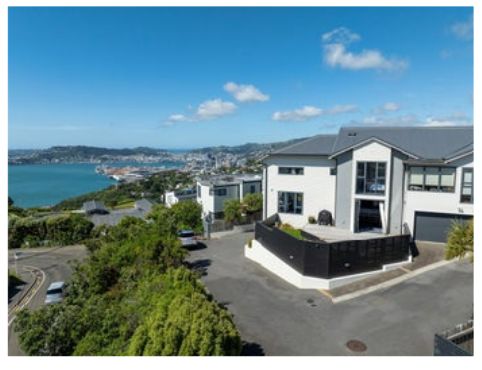
So when you stand on Kohima Drive today, looking out over Wellington Harbour, you are also, in a sense, standing at a crossroads of memory. For some, the name may recall a grandfather who flew sorties over Burma; for others, a great-uncle who never returned. The street becomes more than a location—it becomes a quiet act of remembrance woven into everyday life.
There is something profoundly human about this layering of histories. A quiet suburban road in New Zealand carries the name of a distant Indian hillside, itself named for flowers that bloom in the mountains. Between them lies a story of war, endurance, and connection—of how global events find their way into local landscapes.
Kohima Drive does not announce its history loudly. It doesn’t need to. Its significance lies in its quiet persistence—a reminder that even the most ordinary places can carry extraordinary stories, if we only pause long enough to listen.
 Eugene Doyle: After Israel’s Brutal Attack On Kiwis, Our Government Does Nothing
 Keith Rankin: Has Sweden Become A De Facto Apartheid Narco State?
 Bruce Mahalski: Change In The Weather #194
 Binoy Kampmark: Dangers To The Fourth Estate - The 2026 World Press Freedom Index
 Richard S. Ehrlich: Strait Of Hormuz Blockades & Thailand's Land Bridge
 Keith Rankin: 'I Am A Semite'