
 Scoop has an Ethical Paywall


Understanding Cuba's Health System Benefits New Zealand
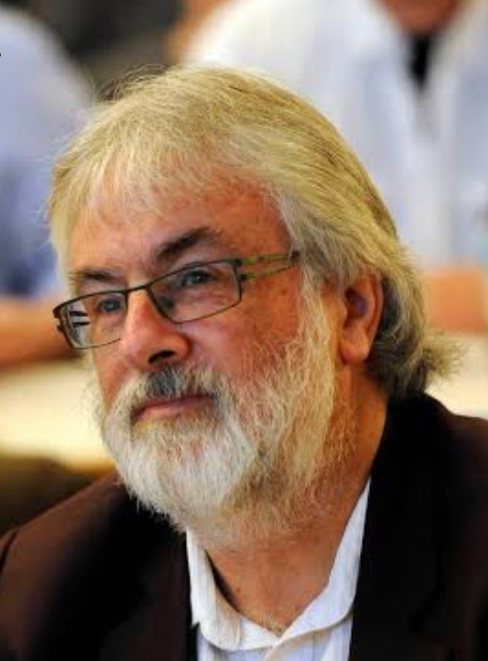
In the last few months of my employment as Executive Director of the Association of Salaried Medical Specialists in 2019, I was asked by many members what I would be doing once I finished work.
My response was that while I wasn’t sure, I would be having a long break in and around the Caribbean, including a fortnight in Cuba.
What surprised me was the number of members who had such a high opinion of its health system. Some of them had also visited Cuba and some knew of its international medical missions.
I had several meetings on the Caribbean’s largest island which included discussing its health system and visiting a community health centre in Havana. I learnt much about its underlying principles and functioning.
The health systems of Cuba and Aotearoa New Zealand have two main shared features. First, while not identical, the basic structures for healthcare provision are similar.
Second, with qualifications, both systems are universal and based on the premise that healthcare is a public good, not a commodity for trade or purchase. The Cuban qualification was that this was since 1959 in Cuba (1938 in New Zealand).
The New Zealand qualification was that there was a shift away from this premise in the mid to late 1990s. It is becoming increasingly clear that this shift is also the current government’s direction of travel.
Aspirations
To fully understand Cuba’s health system it is first important to understand the aspirations of the Cuban Revolution in 1959 as reflected in the country’s most recent Constitution (2019).
On 17 March I spoke to a meeting in Christchurch organised by ‘New Zealanders for a Democratic Economy’ on this subject: Cuba’s health system in context of its constitution. [Please note the error; I am incorrectly described as a doctor; a misunderstanding I’ve had to put up with for over three decades]
I subsequently levered of this address to discuss, in my Political Bytes blog (see link at end of this post), the United States’ escalating over 60-year economic warfare against Cuba in the context of its Constitution.
The Constitution’s preamble begins with:
We the people of Cuba, inspired by the heroism and patriotism of those that fought for a free, independent, sovereign, and democratic homeland of social justice and human solidarity, forged through the sacrifice of our ancestors…
These ancestors began with indigenous peoples and slaves. On Cuba’s political foundations the Constitution states:
Cuba is a democratic, independent and sovereign, organised by all and for the good of all….founded by the labor, dignity, humanism and ethic of its citizens for the enjoyment of liberty, equity, justice, and equality, solidarity, and individual and collective well-being and prosperity.
What particularly struck me was the emphasis on being “organised by all and for the good of all” and concluding with the responsibility for “collective well-being and prosperity.” This is significant in terms of the purpose of Cuba’s health system.
Also significant for the health system is what the Constitution says about the economic foundation:
…Cuba is governed by a socialist economic system based on ownership by all people of the fundamental means of production as the primary form of property as well as the planned direction of the economy, which considers, regulates and monitors the economy according to the interests of the society.
In this case what struck me, in terms of the health system, is the responsibility of government to consider, regulate and monitor the economy “…according to the interests of the society.”
There is a strong emphasis in the Cuban economy on social welfare programmes. These include providing subsidised education, healthcare, and food to its citizens.
The Constitution is particularly strong on healthcare. Specifically:
- All citizens have the right to life, physical and moral integrity, justice, security and peace, health, education, culture, recreation, sports and to their holistic development;
- public health is a right of all people. The state is responsible for guaranteeing access at all levels and free of charge;
- the state guarantees the right of Cubans to a healthy home; and
- the state is responsible for ensuring that all Cubans have the right to a healthy and adequate diet.
Three things stand out from the above; the express responsibility for the state to ensure an accessible quality health system, the emphasis on health promotion, and recognition of external social determinants of health.
These are all things that New Zealand’s health system does not sufficiently focus on even though, unlike Cuba, the country is not subject to longstanding and escalating economic warfare from the world’s largest economic and military power.
Cuba has invested significantly in its medical doctor workforce leaving more developed and economically unthreatened economies well behind as the following table reveals:
Registered Medical Doctors Per 10,000 People
| Cuba | 94 |
| Sweden | 72 |
| Germany | 46 |
| Australia | 40 |
| New Zealand | 38 |
| Canada | 29 |
| United States | 27 |
What immediately comes to mind from this data is the irony that the aggressor of the above-mentioned observation about the economic warfare is the poorest investor in its medical force whereas the victim of this warfare is the best. Further, the United States is the only listed country without a universal health system.
But what the data demonstrates most powerfully, consistent with the Constitution, is the strikingly high commitment to invest in the medical workforce from the poorest and least economically developed country listed in this table.
To achieve this meant investing over decades in the expansion of it medical schools. But internationalism also features in this investment.
Medical students from several countries, including ironically the United States, receive some or all of their training in these schools.
Given that by their very nature, health systems are labour intensive, this workforce sustainability commitment makes a difference.
Workforce is what makes health systems perform; the workforce also knows how best to improve a health system.
Life expectancy
Workforce sustainability enabled Cuba, with its focus on population health (health promotion) and despite the devastating economic warfare to which it has been subjected, to have an impressive outcome in life expectancy; probably the highest in the Americas (excluding Canada at 82 years).
According to World Bank data Cuba’s life expectancy is 79.5%. Compare this with the 79.4 years of the world’s biggest economy and executor of the economic warfare.
Compare it also with Central America (75.8 years), South America (76.6 years), and the Caribbean (73.4 years). In completely different circumstances New Zealand is 83.1 years.
Vaccines
Way back on 19 July 2020 the Democracy Project published a piece from me on the early stages of Cuba’s response to the Covid-19 pandemic comparing it favourably with New Zealand’s successful approach: Cuba’s impressive fight against Covid-19.
The priority that Cuba gives to healthcare, both preventative and treatment, has led to it becoming a significant biotech powerhouse, including producing its own vaccines.
Lung cancer is an example along with for other diseases. Some of these have been international collaborations, until recently at least sometimes with US institutions.
Its state-run biotech sector is based on specialised institutions with the focus on public health needs rather than profit. ‘Big Pharma’ influence has to keep its distance.
Cuba’s response to the Covid-19 pandemic is further evidence of the foresight of this investment. It developed several Covid-19 vaccine candidates during the pandemic. The three main ones are Soberana 02, Abdala, and Soberana Plus.
In 2021 I published in Otaihanga Second Opinion two posts discussing what Aotearoa could learn from Cuba in respect of vaccines (25 June and 22 July): Manufacture our own vaccines and Doctors call for NZ vaccine development.
Data for 2023 and 2024 confirms that Cuba compares remarkably well with other countries in Covid-19 vaccination rates. Cuba’s rate was 97.7% of its population.
Compare this with, for example, Canada (89.5%), New Zealand (83.8%), the United States (79.1%) and Germany (77.1%).
Overseas Medical Missions
Cuba’s strong investment in medical workforce training and capacity has enabled it to undertake numerous well-received overseas missions beginning, in 1963, to support post-colonial healthcare needs and treat war casualties in Algeria.
Missions have been sent to over 160 countries, mainly in Latin American, Africa and Asia but also Oceania (when reportedly it helped strengthen the pandemic response); even to Italy during the pandemic.
They have been praised for their sustained humanitarian impact, particularly in disaster relief (such as Haiti), Ebola in The Congo, and in the pandemic response.
Cuban health system structures
Seen through the limitation of a structural lens, Cuba’s health system structures look similar to New Zealand’s. Broadly there are three layers. In the case of Cuba they are:
- Community health centres. These are largely based on family doctors (general practitioners) and nurses providing primary care and health prevention care, and being characterised by a strong neighbourhood focus.
However, they also provide less complex hospital care such as dental surgery and hospital specialist outpatient clinics. The ‘neighbourhood’ of the biggest centres would be similar to our smaller former district health boards (such as Wairarapa) but with greater population density.
- District hospitals providing secondary care (high volume) including surgery, 24/7 acute care, and emergency departments.
- Specialised hospitals providing tertiary care (greater conditions complexity and lower volume numbers).
A doctor talks to a patient in the cardiology room of the Calixto Garcia hospital in Havana on February 12, 2024. Alexey Lopez, a 59-year-old cardiologist who has been working in intensive care at a Havana hospital for 20 years, says he sleeps “a little more peacefully” since he received in February the salary incentives granted by the government to try to retain health workers. Lopez is one of the more than 400,000 doctors, nurses, and technicians who began to benefit from the incentives for this sector, which has been hit by the crisis the island is going through and is a pillar of the revolution. (Photo by YAMIL LAGE / AFP) (Photo by YAMIL LAGE/AFP via Getty Images)
Cuba’s health system has differences, as well as similarities with New Zealand’s system
There are two big differences with New Zealand. First, Cuba’s system is completely not-for-profit. It is all state-provided and no private health system exists even though it has over twice New Zealand’s population.
Second, community health centres go the beyond primary care provided by our general practices. This is a marked contrast notwithstanding the evolving, but uneven, role of general practice somewhat in Cuba’s direction.
What can Aotearoa New Zealand learn from Cuba’s health system
There is an obvious fundament difference between Cuba and Aotearoa. Whereas the former has an explicit socialist economy adapted to Cuban circumstances, the latter has a capitalist economy.
Wealth accumulation drives capitalism as an economic system
Capitalism is an economic system whose prime driver is wealth accumulation. Socialism can include trade and commerce (both of which also functioned under feudalism) but, as the Cuban Constitution discussed above makes clear, wealth accumulation is not the prime driver.
Nevertheless, despite this fundamental difference, there are three practical things that our health system can learn from Cuba’s – the benefits of:
- a sustainable workforce;
- understanding geographically defined populations;
- the value of smaller countries developing their own vaccines, and.
Our system could benefit from recognising the importance of building a sustainable health workforce. So much more public good can be achieved with such a workforce.
It can ensure a strong emphasis on health promotion and health protection. We have much to learn from the focus of Cuba’s community health centres proactivity in, for example, building and maintaining high immunisation rates.
Health workforce investment benefits access to healthcare at a hospital (secondary and tertiary) level; something that is not appreciated by those that presently govern our health system.
Our health system can learn from the benefits of Cuba’s community health centres which have similarities with the type of smaller integrated polyclinics that have been discussed ad-hoc in New Zealand.
Their strength is their strong neighbourhood focus; they know their defined populations well. This is pertinent in the context of both Health New Zealand’s reported but challenging to implement decentralisation push and the role of primary health organisations.
Finally, we should learn from Cuba’s manufacturing of its own vaccines. I previously discussed this in two Otaihanga Second Opinion posts on 28 August 2022 and 31 August 2023 respectively: Learn from Cuba’s vaccine production and Lessons of Cuban health system for New Zealand.
New Zealand should consider developing its own vaccines to be independent of the monopolist and profit-maximisation focus of ‘Big Pharma.
We already produce animal vaccines, and it is advocated by those with relevant credibility such as the Malaghan Institute of Medical Research.
When Dr Bryan Betty was Medical Director of the New Zealand College of General Practitioners Medical Director commented that the ability to produce and develop vaccines independently of overseas pharmaceutical companies must be an “urgent consideration” he was absolutely right.
If Cuba can do it in an environment of longstanding and escalating economic warfare, surely Aotearoa New Zealand can learn from this.
Ian Powell
Otaihanga Second Opinion is a regular health systems blog in New Zealand.
Ian Powell is the editor of the health systems blog 'Otaihanga Second Opinion.' He is also a columnist for New Zealand Doctor, occasional columnist for the Sunday Star Times, and contributor to the Victoria University hosted Democracy Project. For over 30 years , until December 2019, he was the Executive Director of Association of Salaried Medical Specialists, the union representing senior doctors and dentists in New Zealand.
 Peter Dunne: Dunne's Weekly - The Pragmatic Food For Fuel Deal With Singapore
 Eugene Doyle: After Israel’s Brutal Attack On Kiwis, Our Government Does Nothing
 Keith Rankin: Has Sweden Become A De Facto Apartheid Narco State?
 Bruce Mahalski: Change In The Weather #194
 Binoy Kampmark: Dangers To The Fourth Estate - The 2026 World Press Freedom Index
 Richard S. Ehrlich: Strait Of Hormuz Blockades & Thailand's Land Bridge