
 Scoop has an Ethical Paywall


Humans Don't Matter To Cosmic Intelligence
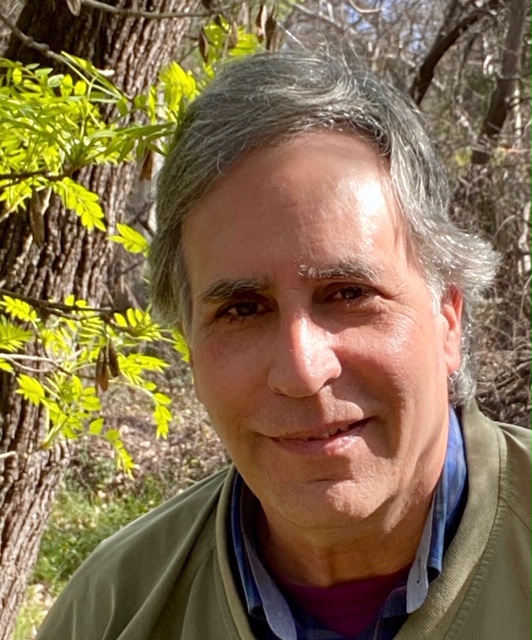
Unless we change and become like little children…
What happens when psychological memory is negated, experience is denied, knowledge is held in abeyance, and time ends? The human brain is then a passage for the inviolate and immeasurable.
If that’s the true meaning of life however, why is transcendence and “bringing the benediction” so difficult and rare for human beings?
Philosophically, it seems a fairly straightforward proposition to effortlessly quiet the mind and thereby allow the brain to perceive and receive the ineffable.
But inwardly, it’s exceptional even for adept meditators to do so, much less be anchored in attention and stillness, as presumably the few fully illumined human beings who have ever lived.
Is it because we don’t see the place of knowledge, and therefore give it primacy? Is it because we don’t see the prison of the known, and therefore let it delimit our lives?
Knowledge is obviously necessary, and beneficial when applied with insight and intelligence. Only human beings can have insight and intelligence however, despite the snake oil the tech lords are selling, insisting that AI will soon surpass humans, and relieve us of the arduous and never-ending work of self-knowing.
Knowledge is one thing, but what is the known? It's the cumulative momentum of the past within the psychological walls of personal and collective memory and experience. It's suffocating the heart and shrinking the mind.
The antidote is to see the earth and people anew every day. But living in terms of the known totally impedes direct perception, stillness and insight.
Something happened some years ago that took me a long time to understand. It’s a memory written on the heart, but it’s still a memory. It's clear that any attempt to repeat it precludes it from happening again.
So though I hesitate to write about things that are beyond words, perhaps something between the lines can be conveyed.
Having grown up in the Great Lake State, where you could hardly go a mile without encountering a river or lake, I feel a pull to be around water at least a couple times a week in California, where it’s dry (increasingly dangerously dry) half the year.
Living at the time in a small, Central Valley town without a river or stream running through it, I'd drive a couple times a week 20 minutes out of town to sit and walk near the Merced River. It’s the same river that runs through Yosemite Valley, home to El Capitan and Half Dome, which was about a two hours drive away.
Without goal or expectation except to enjoy the riverine beauty one fine spring morning, I drove out for a meditation beside the river.
I walked for less than a mile, sat down beside the gently flowing water, and simply passively watched the outer and inner movement, as has been my custom for many years.
On that day, meditation didn’t just quiet the mind; it obliterated memory, self and the known.
There was beauty beyond form, and bliss beyond description. The world receded so far, and memories of the past were wiped so clean that when I stood up I didn’t know where I was, who I was, or how I got there.
It sounds like some kind of mental breakdown, but it was anything but. The Greeks called such a state “aesthetic stasis,” and in the east, where there is (or was) a tradition of valuing what’s often derisively called “mystical experience” in the west, it’s called “samadhi.”
The first time it happened there was fear, because I thought I was losing my mind. But I faced and questioned the fear, and saw that I wasn’t losing my mind, but gaining Mind.
This time it was so intense that it took some minutes to recall the necessary memories – where one was, the route back, and what ‘back’ was.
There was an indescribable presence, and a tremendous feeling of ecstasy. I recall having to think about each step while driving, like you do when you’re first learning how to drive. Functional memories were returning, so there was no fear, though I was changed.
I recalled that I was meeting a group of friends for lunch. We were gathering in a large college cafeteria, and when I walked in, all I saw was a sea of unrecognizable faces.
Recognition, after all, is an integral aspect of the known, and one had left the known completely. There was great curiosity and affection for people, but I wondered how I would recognize my friends.
Just then one of the guys shouted up from the table I was standing next to: “Martin, what the hell are you doing?”
That snapped me back to “reality.” I laughed and replied, ‘Mark, I couldn’t explain it in a hundred years.’ Hopefully it won’t take a hundred years before someone will still have to try.
Though I’ve never read the Bible cover to cover, I later recalled a saying that intrigued me as a boy. Jesus said, “Truly I tell you, unless you change and become like little children, you will never enter the kingdom of heaven.”
The quote, which is one of the few indisputable ones on the New Testament, is usually translated as Jesus teaching his disciples the need for humility and faith. He meant much more than that, and certainly wasn't referring to some imaginary heaven in the afterworld.
I think he meant it quite literally, in a psychological sense to again see with the eyes and heart of a young child.
That's not a nicety; it’s become a necessity to inward survival in the "real world."
Martin LeFevre - Meditations
Scoop Contributor
Martin LeFevre is a contemplative and philosopher.
His sui generis “Meditations” explore spiritual, philosophical and political questions relating to the polycrisis facing humanity.
lefevremartin77@gmail
 Binoy Kampmark: Ted Turner - The Devil Behind Cable News
 Keith Rankin: Clipping The Ticket; Solving Hormuz, In Context
 Ian Powell: Inhumanity Of US Economic Sanctions Against Cuba – Infant Mortality And Starvation; Time To End NZ’s Silence
 Ramzy Baroud: Subjects Of Empire - Breaking The Cycle Of Arab Dependency On US Elections
 Peter Dunne: Dunne's Weekly - The Pragmatic Food For Fuel Deal With Singapore
 Eugene Doyle: After Israel’s Brutal Attack On Kiwis, Our Government Does Nothing