
 Scoop has an Ethical Paywall


On The Rise And Fall Of Hungary’s Viktor Orban
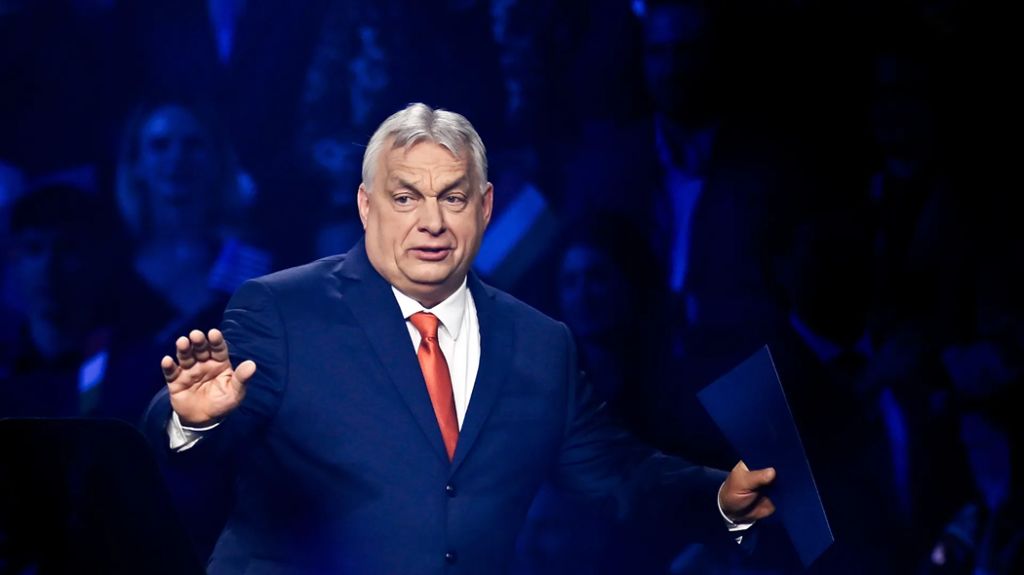
Hungary has made its mark before on the world stage. (Composer: Bela Bartok; ballpoint pen inventor: Laszlo Biro; national dish ; goulash.) Even so, why did Donald Trump, J.D. Vance, Benjamin Netanyahu, and Vladimir Putin work so hard to try and swing the election result in Hungary, a relatively poor country of fewer than ten million people?
Reason being, Hungary’s Viktor Orban had become the global poster child of anti-immigrant, Islamophobic white nationalism. “Europeans,” Orban claimed, “do not want to become peoples of mixed race.” Over the course of his sixteen years in office, Orban tamed the judiciary, muzzled the media, stifled dissent and vastly enriched himself, his family and cronies. For several years, Hungary has been labelled the EU's most corrupt country by Transparency International.
On foreign policy, Orban was Putin’s reliable attack dog against NATO and the European Union in general, and against EU aid to Ukraine in particular. One of the first fruits of Orban’s defeat last Sunday will be the release of circa 90 billion euros of EU aid to Ukraine held up until now, by Hungary’s veto.
In the dying weeks of his attempt to win a fifth term of office, Orban’s foreign friends rallied in behind him. In the US, Tucker Carlson had turned Orban into a MAGA hero, as a lonely outpost of virtue amidst the decadence of old Europe. Benjamin Netanyahu endorsed Orban as a champion “of our Judeo-Christian heritage.” Netanyahu’s son Gaspar is a convert to (and minister in ) a small Christian Zionist sect based in Hungary.
Heading into the last week of the campaign, J.D. Vance flew in to Budapest and openly urged Hungarians to re-elect Orban. Weirdly, he blasted the EU at the same time for “meddling” in the election. Desperately, Vance conjured up the spirit of St Stephen, the first Hungarian king and posed this question to voters:
“Do you bend the knee to tyranny or do you proudly stand with Saint Stephen and choose a real leader this weekend?”
According to Vance, “a small band of radicals” and Brussels bureaucrats were “trying to manage the decline of the greatest civilisation in the world...They “reject mothers and motherhood, fathers and fatherhood. ” Vance also attacked “gender care” and likened “end of life planning” to “institutional murder.”
In the end, none of these high profile friends could save Orban’s bacon. If anything, being embraced by the Trump/Netanyahu axis that has just plunged the global economy into crisis, probably did Orban more harm than good. Younger voters seemed to rally behind Orban’s opponent, Peter Magyar.
A former member of Orban’s party, Magyar has called for better relations with the EU and NATO, and voiced his support for Europe’s liberal brand of social democracy.
Orban’s early success
To understand the problems Hungary will now be facing, it seems necessary to understand why he kept on being re-elected. On taking office in 2010 in the shadow of the GFC, Orban had inherited an economy that had been chronically in crisis. Unemployment for instance, had sky-rocketed in the wake of an austerity programme imposed by the IMF and EU. As Bloomberg News reported in 2018:
[Orban] moved decisively to clean up the country's finances, slash the budget deficit from 5.3 percent in 2011 to 2.4 percent in 2012 ....and pay off the debts to the EU and the IMF, cutting the share of foreign currency-denominated debt.
How did he do it, initially?
Orban nationalized Hungary's private pension funds and raided their cash stash. He introduced a flat 15 percent income tax (which greatly improved collection) and raised value-added tax to 27 percent, the highest rate in the EU. He imposed special taxes on sectors dominated by foreign-owned companies -- energy, utilities, finance, telecoms, retail and media -- taxing revenue and assets, not profits, to make optimization unfeasible. And he re-nationalized some key firms to sell them on to Hungarian investors, often to his friends and allies.
In those initial years of Orban’s rule, his popularity was a no-brainer. Reportedly, Hungary had lost one third of its jobs during its transition from Soviet rule, well above Poland’s 20% and the Czech Republic’s 10 %. In the process, the share of wages had fallen to well below half of the country’s output. Foreign firms had been given tax breaks, at the public’s expense:
...Key industries were dominated by foreign firms that exercised oligopolistic power and paid far less taxes than Hungarian businesses: The pharmaceutical sector, for example, had an 18 percent effective tax rate in 2010, while the average local mid-sized business paid 52 percent.
Initially, and with an influx of EU funds, Orban enjoyed some success in turning things around. Ordinary Hungarians did well:
The income tax cut and generous tax breaks for families with two or more children, funded by the special sectoral taxes... and the reduction of interest on foreign debt, drove up net real wages by 36 percent between 2010 and 2017. The economy only grew by 16 percent in real terms over the same period. The government has also spent extra revenues on generous social benefits like free schoolbooks and lunches.
In short, at the height of his popularity, Orban was functioning like a right wing version of Hugo Chavez in Venezuela, except buoyed up by EU funds rather than by oil receipts:
Helped by a favourable economic cycle and by a massive public works program that gave work to many long-term unemployed in Hungary's poor rural areas, unemployment dropped faster than in other eastern European countries.
Alas, those glossy numbers have since faded, particularly after Covid, and since the war in Ukraine began. By raiding the pension funds to repay the country’s debt, Orban has left many older Hungarians with no defence in hard times, and with next to nothing on which to retire.
Many of the early job gains in manufacturing had been linked to the fortunes of German car makers – Audi, Mercedes, BMW - now in relative decline. Initially a generous influx of funds from the EU – which at one point provided 4% of the country’s GDP – has since dried up, as Orban’s scapegoating of the EU for the country’s misfortunes became more and more vitriolic.
Other factors: all along, there had been a massive under-funding of all levels of education, culminating in the flight of the best and brightest, away to Hungary’s more dynamic neighbours in eastern Europe. Orban attempted to shift blame onto the influx of cheaper migrant workers.
In short, the glow of initial success has evaporated, and Orban has blamed everyone else for it: from the Brussels bureaucrats to cultural pollution by migrants, and to the diversion of EU aid to Ukraine.
Clearly, the new 45 year old leader, Peter Magyar, faces formidable challenges. These days, Hungary not only has the highest level of public debt in the region:
In 2024, GDP per capita in purchasing power parity terms reached 77% of the EU average – with only Slovakia, Latvia, Greece, and Bulgaria recording weaker results. Alongside this, the country had the lowest level of actual individual consumption per capita in the entire European Union (72% of the EU average, also in PPP terms). This indicates a limited redistribution of the benefits of economic growth to households, and co-relates with both persistently high inflation and the low share of wages in GDP.
Magyar is about to inherit an economy that’s mired deep in stagflation. Hungary is also in no shape to cope with the impact of the Iran war, and with the high energy prices and supply chain blockages created by Orban’s good friends, Trump and Netanyahu. Magyar’s honeymoon is likely to be short lived.
Footnote One: Another big loser this week has been J. D. Vance who got given two impossible jobs by his boss: get Orban re-elected, and get Iran to surrender in less than 24 hours. Both times, Vance failed. Trump has no time for losers.
Footnote Two: If nothing else, the US willingness to support Orban to the bitter end is a sign of how in Europe, Trump acts purely as a Putin proxy, body and soul. Undermine the EU, weaken NATO? Destroy the trans-Atlantic alliance? Force Ukraine into making territorial concessions to Russia? Lift the sanctions on trade in Russian oil? Trump has done all of that and more to further the interests of Vladimir Putin, and the US has received absolutely nothing in return.
Footnote Three: Although Orban was the global figurehead of Christian ethno-nationalism, his defeat doesn’t signify any sea change in far right political fortunes elsewhere. As Trump has shown, far right populists thrive as the leaders of protest movements, and have little interest or competence in the tasks of governing.
Brazil excepted, right wing governments are now in power across South America, even in Chile. Hopefully, this will be the right’s high water mark, because those governments will now have to deliver. Blaming others works for only so long, as Orban has just shown.
The other St Stephens
One of the Grateful Dead’s early live performance staples – alongside “Dark Star” – was a song called ‘St Stephen.” Not Hungary’s king celebrated by J.D. Vance, but the Christian martyr stoned to death for criticising the Jewish religious elites. St Paul – then known as Saul of Tarsus - was said to be approvingly present at the execution.
Nor that the song deals with any of that. In fact, it appears to conflate the martyr with Stephen Gaskin, a writer, educator and counter cultural activist in the Bay Area at the time.
 Binoy Kampmark: Show Me The Money - A Loutish Administration Confronts A Craven Congress
 Ian Powell: Do Wellington Floods, Climate Change And Wealth Accumulation Equal “Suicidal Capitalism”?
 Ramzy Baroud: The Pendulum Swings - The Slow Death Of Europe’s Pro-Israel Consensus
 Dr Nasim: Poem From Gaza - Her Smile
 Keith Rankin: New Zealand's Dependence - Wheat, Rice, Fuel, Ships
 Peter Dunne: Dunne's Weekly - Luxon/Peters Spat Just Part Of Peters' Ongoing Plan