
 Scoop has an Ethical Paywall


On The Government’s Zombie Shuffle Into A Fuel Crisis
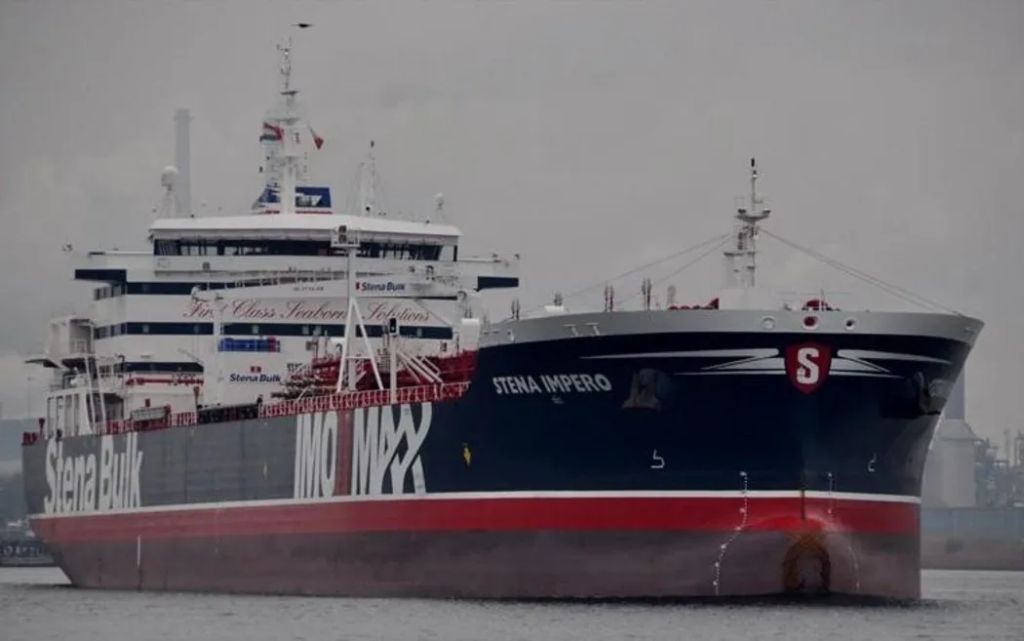
The US rationale for the blockade/entire war is that Iran must never, ever be allowed to have a nuclear weapon and that Iran has always refused to give up that goal. As US President Donald Trump claimed in February’s State of the Union address, two days before attacking Iran:
We are in negotiations with them. They want to make a deal, but we haven’t heard those secret words, “We will never have a nuclear weapon.”
Yesterday, Treasury Secretary Scott Bessent told the BBC much the same thing: “Bessent said the conflict was to eliminate the threat of Iranian nuclear strikes on Western capitals.”
In fact, Iran has told the US over and over and over again that it is willing to give up nuclear weapons - in exchange for relief from the trade sanctions that have been impoverished the Iranian people. In 2003, the late Supreme Leader Ali Khamenei issued a fatwa to the effect that nuclear weapons were not compatible with Islam.
Unlike Israel, Iran has signed the Nuclear Non-Proliferation Treaty that requires the signatories to forego nuclear weapons. Over 10 years ago, Iran also signed the JCPOA deal with the five permanent members of the Security Council (the US, France, the UK, Russia and China). As Slate’s Fred Kaplan recently explained, under this deal – ripped up by Trump and described by him as the “worst deal ever” – Iran had made significant commitments to restrict its enrichment of uranium to levels well below the level required to make a nuclear weapon:
[Iran] opened its nuclear facilities to a strict regime of international inspections, eliminated 97% of its highly enriched uranium stockpile, and committed to not enriching that mineral above 3.75% (the level necessary to produce electricity, but not nuclear weapons), in exchange for relief from international sanctions.
But wait, there’s more. Last year, Iran was offering similar terms to forego nuclear weapons when Israel and the US began bombing the country right in the middle of the negotiations. In February of this year, Iran made a similar offer yet again. As a sign of its serious intent, Iran sent experienced negotiators - veterans of the JCPOA process - to its recent talks with the US.
In stark contrast, Trump sent J.D. Vance, his friend the real estate tycoon Steve Witkoff, and Trump’s son-in-law, Jared Kushner. None of them have any background in diplomacy or in the details of the JPCOA. None of them have any knowledge of Iran. Kaplan again:
Back in February, as Trump was preparing for war, Iranian negotiators put forth a very favorable proposal. Among other sacrifices, it would have restricted their uranium enrichment to 1.5 percent purity. (Weapons-grade enrichment is 90 percent pure. They currently have about 1,000 pounds of uranium enriched to 60 percent.) Kushner and Witkoff didn’t understand the significance of Iran’s proposal. In any case, Trump was insisting on zero enrichment. The talks were due to continue the following week; Trump and Israel’s Prime Minister Benjamin Netanyahu launched a surprise attack on a Saturday.
Keep in mind that those JCPOA negotiations in 2015 took 15 months to complete. During the abortive ceasefire talks last weekend in Islamabad, the US team led by J.D. Vance walked out after 21 hours, unwilling even to stay overnight. Once again, Vance claimed that Iran had refused to drop its pursuit of nuclear weapons. In fact, as Kaplan says, what Iran was refusing to surrender was their “inalienable right” – protected by Article Four of the Nuclear Non-Proliferation Treaty that Iran had signed - to peaceful uses of the atom. Such as the enriching of uranium to the purity required to generate electricity for civilian uses.
Even so, Iran also reportedly offered to postpone any enrichment at all for a further five years. The US demanded 20 years and complete surrender over the Strait of Hormuz, and then walked out. Iran had still been willing to negotiate. Here’s how the Australian ABC network reported on the recent talks breakdown:
\While Iran's nuclear ambitions had always been a focus of US war aims, the expectations surrounding the Islamabad summit had been more for a first-principles path to negotiation and/or some temporary accommodations on both sides.
Unfortunately, Trump doesn’t appear to have the attention span required to pursue the gradual path of mutual concessions required to achieve a lasting outcome. While the talks were taking place, Trump was reportedly attending an Ultimate Fighting Championship match in Florida with Secretary of State Marco Rubio. ABC’s Laura Tingle, again:
Iranian Foreign Minister Abbas Araghchi claimed that the talks in Islamabad had come within "inches" of a memorandum of understanding but at that moment "we encountered maximalism, shifting goalposts, and blockade". There was widespread speculation that this late shift was the result of an intervention by Trump himself.
For argument’s sake though, lets assume that Iran is hellbent on obtaining sufficient amounts of highly enriched uranium to make a bomb. If that was the case, a US blockade of the Strait of Hormuz wouldn’t stop it. As a glance at the map will reveal, Iran has a border on the Caspian Sea, far from the Strait of Hormuz – and so does Russia, and so does Turkmenistan, which has just concluded an energy deal with China.
Meaning: Iran would have no trouble importing enriched nuclear fuel if it so desired, and there are plenty of places in its vast interior in which it could hide it. The US also knows this. For that reason, the whole issue of uranium enrichment and nuclear weaponry serves mainly to enable posturing on both sides of these talks. At best, the nuclear bogey should provide room for some give and take while the more intractable issues – e.g. who will manage the Strait of Hormuz long term – offer little prospect of movement.
Footnote One: Pub quiz question: who gave Iran its first nuclear reactor? Nope, not Russia, or China. The correct answer is the United States. The Americans gave one to the Shah in 1967 which he used for medical research, and the US offered to build him more to generate electricity for civilian use, using imported enriched fuel.
Footnote Two: Ironically, the ceasefire peace talks were being held in Pakistan, which is a nuclear power. So is India. So is North Korea. Israel possesses dozens of nuclear warheads, even though there are religious fanatics within the regime who seem genocidally intent on denying the right of Palestinians to exist. In 2023, an Israeli Cabinet even raised the option of using a nuclear weapon on Gaza. Yet the West remains solely fixated upon Iran.
So much so that the US is willing to capsize the global economy to ensure that Iran never, ever gains the same weapon that Israel, India, Pakistan, North Korea, Russia, China, France, Britain and the United States already possess. Thanks to this very selective morality, the West keeps on giving the mullahs every reason to believe that – just like North Korea – obtaining a nuclear weapon may be the country’s only effective deterrence against American/Israeli aggression.
So far, Iran’s repeated efforts to reach a peaceful compromise have been rejected. Even if, as being rumoured, negotiations do resume, the basic problem is that Donald Trump has no concept of diplomacy being a tactical endeavour that involves concessions by both sides.
Footnote Three: The best recent backgrounder on Iran’s long history on the nuclear issue is this excellent article in the Spanish newspaper, El Pais.
Tip-toeing into the fuel apocalypse
One of the surest ways of generating panic is to deny a crisis exists until it is right upon us. That seems to be the approach of the Luxon administration. For the second time in a row, the MBIE report back shows our fuel stocks are decreasing. Six weeks into the war, we still have no meaningful details as to how the serious stages of fuel shortages will be managed.
The contrast with the Ardern government’s pro-active management of the Covid crisis could hardly be more stark. Rather than lead and co-ordinate the response – e.g. by asking the country’s 20 leading firms to identify ways to conserve energy, as South Korea’s leaders did five weeks ago – our current government is still “listening” to business.
Thank goodness this dithering coalition crew were not in charge during the pandemic. Because then too, National would have sat on its hands, focus grouped its options, and prioritised “listening “ to a business sector that would have wanted to kept on trading even while people were dropping like flies. As widely noted yesterday, the government’s strategy seems to be : “do nothing, and then freak out.”
For the record, as of last Sunday either in country, or on ships located within our EEZ, this country had 36.9 days supply of petrol, 31.6 days supply of diesel, and 31.3 days supply of jet fuel. There is now a de facto “double blockade” (by both the US and Iran) in effect in the Strait of Hormuz. Yet there is still an eery complacency to the wording in the latest MBIE fuel stocks update:
.... Some countries have closed their export facilities, more vessels are using Singapore as their primary loading hub - leading to congestion and delays. The fuel companies have confirmed that supply chains continue to operate, although these types of delays are likely to become more common. Fuel stocks naturally rise and fall each week as fuel is used, and new shipments arrive. Current fuel levels are broadly in line with normal levels before recent global disruptions, and fuel supply remains normal.
Right. It is as if there hasn’t been a war at all. In similar vein on this page, MBIE says that six criteria “would lead to a ministerial assessment meeting.” Wow. Six criteria that would lead government ministers to convene a meeting to assess how they might implement a response, the details of which they still haven’t worked out, six weeks into this war.
One of those MBIE criteria includes “any significant policy changes in Australia”. Across the Tasman do they know that, before doing anything, we’ll be relying on them to tell us what they’ve done, should things start to get dicey? Maybe not. For the past few days, PM Anthony Albanese has been flying around Asian capitals (a) trying to ensure Australia maintains its usual access to fuel and fertiliser, while also (b) negotiating face to face the country’s urgent access to non-traditional sources of these essentials. Meanwhile here at home, Christopher Luxon has his hand cupped to his ear, waiting for someone to tell him what to do.
Footnote One: New Zealand gets 80% of its refined fuel from Singapore and South Korea. Even MBIE has noted that Singapore has begun to experience congestion-related delays. Over the past month, South Korea’s diplomats have been working overtime to be seen as “non-hostile” by Iran. This has been undertaken to earn South Korea privileged treatment in the Strait of Hormuz, but that is exactly the kind of tanker traffic that the US has vowed to intercept and punish with its own blockade.
Unfortunately, our government’s claim that business as usual will continue for the foreseeable is now bordering on delusional.
Gary Stewart Again
Long time readers will be aware that every few years, this column tries to evangelise about the uniquely gifted/cursed country singer Gary Stewart (1944-2003). A Werewolf article called “Somewhere in Time” (available here) tried to tell his life story. That article drew extensively on a late 1980s “Whatever Happened To Gary Stewart?” profile in the Village Voice written by Jimmy McDonough, author of the definitive Neil Young biography, Shakey.
Well, this month McDonough published a 544 page book about Gary Stewart, called I Am From The Honky Tonks. McDonough has drawn on his long ago encounters with Stewart – who throws a knife at the author in the first few lines of the book - and from more recent interviews with family, friends, fellow musicians and anyone else that McDonough could find who had crossed paths with Stewart along his doomed trajectory.
Without further ado, here are a few Stewart tracks. As far as I know, “Silver Cloud” was never formally recorded. This footage comes from a television interview that’s worth listening to, even though most of the poorly shot footage is unwatchable. But we did get this:
Just after releasing Blood On The Tracks at the end of his ten year relationship with Sara Lownds, Bob Dylan came across Stewart’s “Ten Years of This.” Reportedly, Dylan not only played it incessantly but when on tour in Florida years later with Tom Petty, Dylan is said to visited Stewart in his trailer home, and thanked him.
Here’s the song that had first (and briefly) put him on the map.
“I’ve got this drinkin’’ thing/to keeps from thinking things/like where you’ve been, who you’ve been with/what you’ve done..”
Finally, if you’ve got this far...for better and for worse the song on which Stewart most nakedly told his own story was “Honky Tonk Man” from 1981. By this time, his wavering vibrato, self-loathing and other mannerisms had got completely out of control, but these are the extremes that endeared him to the fans who stuck by him. Not that he ever wanted them around.
 Bruce Mahalski: Change In The Weather #195
 Keith Rankin: Haemorrhagic Plague?
 Eugene Doyle: Did The NZ Prime Minister Just Commit Treason?
 Binoy Kampmark: Ted Turner - The Devil Behind Cable News
 Keith Rankin: Clipping The Ticket; Solving Hormuz, In Context
 Ian Powell: Inhumanity Of US Economic Sanctions Against Cuba – Infant Mortality And Starvation; Time To End NZ’s Silence