
 Scoop has an Ethical Paywall


Hidden Waiting List Exposed; Unmet Health Need Unreported
‘Doing God’s work’ is an interesting expression, Usually it refers to performing acts that are virtuous, altruistic, or, in a religious sense, aligned with divine will.
Often it is attributed to doing difficult or unpaid work that directly benefits others or society, and making a profound positive difference in people’s lives.
However, I believe the expression can be adapted to apply to more secular circumstances including exposing, whether unpaid or paid, questionable practices that are contrary to the common good [Disclosure: I am an atheist].
I have no idea whether experienced Stuff journalist Nikki Macdonald is religious or not. But regardless she has done ‘God’s work’ with her thorough exposure of a hidden waiting list that Health New Zealand (Te Whatu Ora) is not reporting.
Her extensive exposure was published in The Post (9 May): Inside the hidden waiting list. What she is exposing is a big part of unmet patient need that is hidden from the public.
Macdonald’s paywalled article includes examples of the serious harm done to affected hidden patients who are on an unofficial hidden unreported ‘list’ while they wait hoping to get on the official reported waiting list. During this wait their health conditions further deteriorate.
But, as important as this is and as well Macdonald brings these experiences to the fore, this is not the focus of this post.
Ethically scandalous unmet health need
Instead my purpose is something that I would call ethically scandalous. That is, Health New Zealand (Te Whatu Ora) tracks its official targets for hospital specialist assessment and surgery waits; but it does not track those general practitioner referred patients who are declined access to their needed first specialist assessments.
None of this is new to those working in the health system including doctors, nurses, and managers. It is part of why many doctors and others have been advocating for governments to measure the level of unmet patient need.
Nikki Macdonald begins her article with a sobering but revealing example of how this situation leads to increasing patient harm. She cites the experience of Porirua general practitioner Bryan Betty.
After three previous rejections and after two years of worsening symptoms, his fourth submitted referral to see an ear, nose and throat specialist, led to his patient finally being accepted.
However, only the fourth referral will appear in published waiting list data. The three earlier rejected referrals won’t be.
How the referral system works
It is important to understand what these referrals are. They occur when GPs assess that a patient’s medical condition requires further investigation from a hospital specialist.
In other words, more specialised diagnosis is required before what treatment (including surgery) if at all, is appropriate. The GP referral is for what is called a ‘First Specialist Assessment’ (FSA). However, acceptance depends on whether the relevant specialist can perform the FSA.
It is claimed that this decision is made on clinical grounds; that is, has the patient met the ‘clinical threshold’ for accessing an FSA.
However, this is misleading because the GP has already assessed that further hospital specialist investigation (FSA) is clinically required.
Rather than determined by a clinical threshold, access to an FSA is determined by a fiscal threshold that itself is determined by the level of workforce shortages.
In turn this depends on whether the Government, through Health New Zealand, sufficiently invests in the necessary workforce capacity to meet this particular unmet patient need.
The scope for a ‘clinical threshold’ is confined to within the limits set by the fiscal threshold.
A ‘cunning plan’ somewhat more ‘cunning’ than those emanating from the Baldrick character has been devised to make the health target for FSA access less difficult to achieve.
Instead of applying this health target from the GP’s referral for the FSA, its scope is restricted to when the referral meets the FSA’s fiscal (rather than clinical) threshold. It is only then that the target’s clock starts ticking.
A snapshot
Although, regrettably, Health New Zealand does not track GP referral rejections, it is doable. A few former district health boards which, minus their governance boards and decision-making authorities, are now unempowered districts of the national body, did track them and still do.
Nikki Macdonald reports, aided and abetted by her Official Information Act inquiry, that they provide a useful snapshot of unmet need.
In five districts alone (Nelson Marlborough, West Coast, Canterbury, South Canterbury and Southern) there were 66,575 GP referrals declined for FSAs in 2025.
These rejected referrals included more than 6,000 children who are symptomatic of an explosion of neuro-developmental problems that have seen paediatric waiting lists double since 2019.
A traumatising experience
Nikki Macdonald reports the above-mentioned Dr Betty (also the chair of the national body of Primary Health Organisations, General Practice New Zealand) as saying that:
… being told you’re not bad enough to even get onto an assessment waiting list is distressing for patients. And it leaves already stretched GPs trying to manage escalating pain or problems they don’t have the time, expertise, or funding for.
Further, this time in his own words:
It can be really quite traumatising for the patient, and for family as well, who may have to end up providing more support. And it can actually be really demanding on the GP.
For Dr Betty, the bigger problem is that, as long as those rejections remain untracked, there is no true picture of how many people actually need hospital specialist diagnosis. He adds:
That becomes really, really important, because if we don’t know the amount of patients who are not even getting to see a specialist, then we don’t know the size of what we call unmet need in the community. Therefore, how can we plan ahead in terms of the amount of services we actually need to deliver care to the country?
[Note: Recently Dr Betty was appointed to the board of Health New Zealand commencing in July. A good decision that will be interesting to observe how it pans out!]
An attempt at transparency
An interesting revelation by Nikki Macdonald was the recognition in 2016 by then National health minister Jonathan Coleman (himself a general practitioner) of the importance of tracking this hidden waiting list. Dr Coleman deserves credit for putting his ethics as a GP before politics.
Arguing transparency he announced a National Patient Flow Project to track referral declines, and their reasons. However, it was disestablished in 2018 on the purported ground of complexity and then decommissioned in 2025.
This issue has been researched by Professor Robin Gauld at Australia’s Bond University (previously at Otago University). Macdonald quotes him as saying:
It is astonishing that there’s still no capacity to collect and report data centrally.
If you’re not a high enough priority, you’ll be rejected and sent back to your GP for ongoing management, which in our work, we found is often beyond the scope of GPs. So it’s actually really worrying.
He was able to find that, in 2018, 11.6% of FSAs were declined. By 2022 this proportion had increased to 13.9%.
Chris Hoffman is the national president of the Orthopaedic Association. With surgical precision he observes that:
It’s tough … What we’re doing is trying to see the people who are most desperate in need, and make those people who can wait continue to wait. And clearly that’s highly frustrating, if continuing to wait means you continue to be in pain, particularly if you’re unable to work, if you’ve got people that are reliant upon you, either as a caregiver or a provider of financial support. So it puts huge pressure on.
Mapua GP Andre Bonny is reported calling for greater clarity about what waiting lists look like.
He also brings an additional dimension into the discussion – how many patients are not enrolled with a doctor, and how many GPs don’t even bother to refer for conditions they know will be rejected. In his words:
The biggest factor for me, is the declines that don’t even get referred, because everybody knows it’s a complete waste of time. And there’s no measure on that.
[Disclosure: I may be one of these patients with my knee]
A symptom of a whole health system under strain
Nikki Macdonald does describe commendable innovative process improvement initiatives to help address the issues highlighted by the hidden GP referral waiting list.
Appropriately these initiatives are clinically led by health professionals, which is where sustainable health system improvements primarily come from.
However, it is difficult to expect too much from health professionals suffering from fatigue and burnout due to extensive workforce shortage caused by health system leadership neglect.
Further, these initiatives mitigate rather than solve the problem. This is like somewhat bending the rising curve of unmet health need rather than reversing it.
Macdonald includes a timely concise observation from Lyttelton GP Ben Hudson. It serves as an effective summing up of the hidden unreported list of those denied access to an essential further investigation by a hospital specialist.
Dr Hudson is also the medical director of the Canterbury based Primary Health Organisation Pegasus Health and a senior lecturer at Otago University in the Christchurch Clinical School. He is known for his expertise in pain management and risk communication.
He does this summing up by way of an effective understatement when saying that declined referrals from general practitioners are “a symptom of a whole system under strain”.
In recognition of this sympton, why not have an official reported health target for general practitioner referrals for further investigation?
While I’m at it, why not also have an official health target for reducing unmet health need.
These would be targets that would be genuinely doing God’s work!
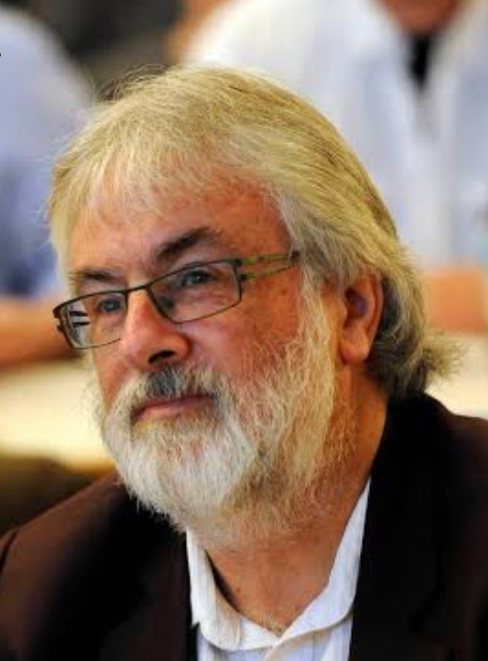
Ian Powell
Otaihanga Second Opinion is a regular health systems blog in New Zealand.
Ian Powell is the editor of the health systems blog 'Otaihanga Second Opinion.' He is also a columnist for New Zealand Doctor, occasional columnist for the Sunday Star Times, and contributor to the Victoria University hosted Democracy Project. For over 30 years , until December 2019, he was the Executive Director of Association of Salaried Medical Specialists, the union representing senior doctors and dentists in New Zealand.
 Ramzy Baroud: The Assault On A French Nun And The Forgotten Story Of Palestinian Christians
 Frances Palmer: Defending Values In A Volatile World
 Peter Dunne: Dunne's Weekly - Waititi Correct, But Unlikely To Get His Wish
 Keith Rankin: Does The United States Have A Debt Problem That Needs Fixing?
 Bruce Mahalski: Change In The Weather #195
 Keith Rankin: Haemorrhagic Plague?