
 Scoop has an Ethical Paywall


Climate Change Commission Report Urges 'Decisive' Action As Major Risks Loom

Kate Newton , Climate Change Correspondent
Urgent, decisive action is needed on how communities will pay for the costs of adapting to climate change, a major new report says.
Climate-driven severe weather events were already causing "long-lasting hurt, grief and fear", and tens of thousands more people would likely be exposed to hazards by 2050, the Climate Change Commission said.
However, there were "extreme" shortfalls in policy to address some of the biggest risks, including vital decisions about how to fund and guide adaptation and relocation.
Commission chief executive Jo Hendy said that had left the country in "react and recover" mode where too much money was spent cleaning up after events, instead of on proactive measures to limit damage and build community resilience.
The commission's National Climate Change Risk Assessment, released on Thursday, identified what it said were the 10 biggest risks to the country from climate change.
Threats to buildings, road and rail, and water infrastructure are all on the list, but it also includes social and community wellbeing, emergency management, funding and decision-making.
The country's "degraded" water infrastructure would be at extreme risk by 2050, hundreds of thousands of buildings were already exposed to coastal or inland flooding hazards, and the current emergency management system "lacks the capacity or capability to deal with significant, complex, widespread events impacting multiple regions at once".
The report repeatedly highlighted the lack of clarity about how climate adaptation would happen and who would pay for it.
That was especially true for communities that needed to move, in whole or part.
"The need for guidance and funding options for communities to work together on planned relocation is urgent," the report said.
Successive governments had failed to find a way forward, it said.
The current government's National Adaptation Framework, published late last year, did not even address displacement of people or communities.
"Neither is it clear about how action led by communities or local government can be funded."
Legislation the government promised last year, that would require councils to develop adaptation plans for high-risk areas, had not yet made it to Parliament, the report noted.
Councils and communities that had proactively developed their own plans also had no way to progress.
"Some councils are building adaptation plans with communities that set out what would work in the local context, but these cannot be put into action without additional funding."
Others had developed possible funding solutions, but needed central government assistance or a legal mandate to go ahead.
"Many councils lack the funding or borrowing capacity to directly implement the changes they have identified," the report said. "This delays resilience building and increases future costs."
There were "high human and financial costs when people are forced to move", and uncertainty about a community's future could erode people's sense of safety and belonging.
The prospect of relocation might be a necessary solution in some places, but could "break relationships, divide communities and undermine trust in institutions".
Well-planned and managed relocation could reduce those risks but that required "long lead times', the commission said. "It is important to start as soon as possible."
In pressing for urgent action, the commission was aware of cost-of-living pressures and constraints on government budgets, Hendy said.
"The point is that we're actually already paying ...every time we react."
The choice was not between funding climate resilience or paying for other things the country needed, she said.
"The choice is whether we stay paying to clean up the same disruption over and over again, or we move to actually put that money into building resilience."
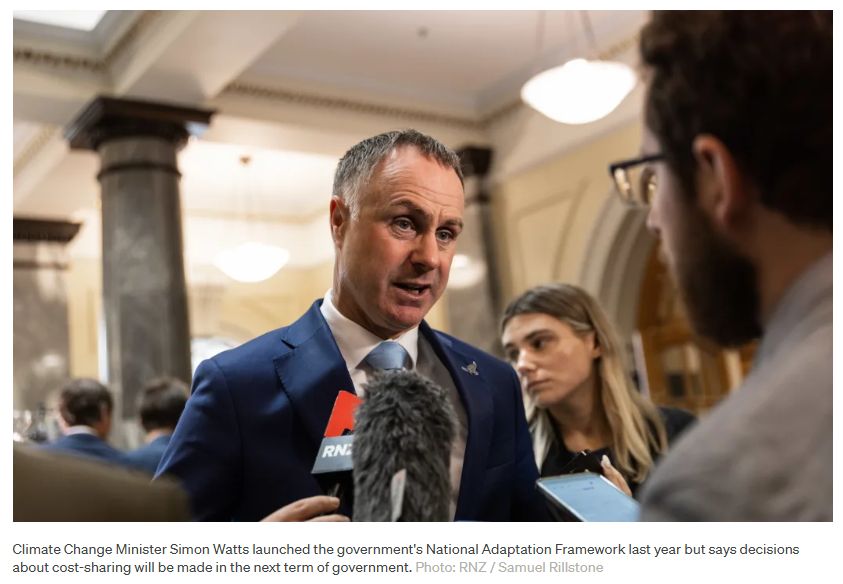
Climate Change Minister Simon Watts has said that decisions about cost-sharing will not be made until the next term of government.
An expert working group commissioned by the previous government published a lengthy report in August 2023, that set out how planned relocation could take place, including suggested levels of compensation.
However, its report came too late to be picked up by the previous government.
In 2025, an independent reference group commissioned by the current government recommended handing over adaptation planning to local councils. It did not spell out cost-sharing arrangements, but said adaptation measures should largely be "beneficiary-pays", and compensation limited to hardship support.
The extremes New Zealand will face
Since the first national climate change risk assessment was published by the Ministry for the Environment in 2020, the 2023 North Island severe weather events had become the most severe and destructive in recent history, the new assessment said.
"This was demonstrated again in the summer of 2026, when a string of extreme events occurred over four weeks, with loss of life and widespread distress and damage from Banks Peninsula to the Far North."
Hendy said there was now "much more lived experience" of climate-related extreme weather.
"People are experiencing increasing disruption from storms and floods right now, and that's really ramped up."
The latest climate projections showed that weather extremes of all kinds would continue to increase in intensity and frequency throughout this century, the report said.
"This includes extreme rainfall (and the inland flooding and landslips that result), very hot days and high winds, drought and wildfires, and sea-level rise and coastal inundation (flooding)."
The number of people exposed to coastal flooding could rise from 32,000 to about 50,000 by 2050, and 94,000 by 2090 if little was done to limit global warming.
The rainiest days are projected to be five percent wetter by 2050, and up to 10 percent wetter by 2090. That would increase the risk of inland flooding and landslips, affecting thousands more people, buildings and pieces of infrastructure.
Already, 793,000 people were exposed to inland flooding. Up to 107,000 more people would be exposed by 2090, depending on how fast the climate warmed.
By 2090, 1.5 million people could experience an extra 10 very hot days (above 30°C) every year, with risks for human health.
Recent research has highlighted an increased risk of stroke, among other health conditions, as extreme heat from climate change increases.
Drier, hotter conditions in some regions would also mean large amounts of production land would be drier by 2050, and wildfires were increasing in both number and scale, the assessment said.
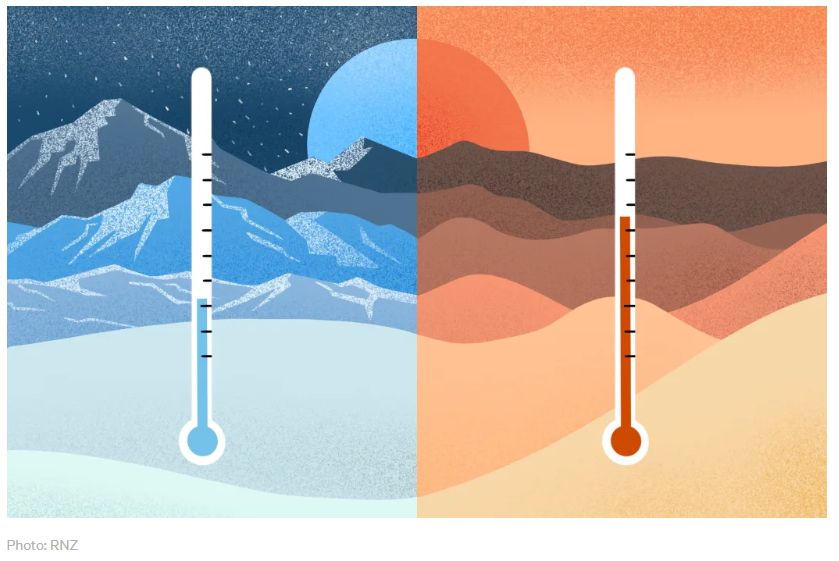
It also highlighted the risk of compounding climate hazards - such more intense rainfall and sea-level rise combining to increase the frequency and severity of coastal flooding.
Although the report focused on adapting to risks, it was crucial not to lose sight of the other part of the climate change response, Hendy said - limiting New Zealand's greenhouse gas emissions.
"It really is in our best interests to support and contribute to global efforts to curb emissions, to stop the problem getting significantly worse."
"There's actually only so far we can adapt our way out of this," she said.
"While we don't directly control global emissions ... we should be doing what we can to help make that happen."
The 10 biggest risks
Overall, the assessment identified 37 different climate-related risks to New Zealand.
It chose 10 as the most significant because of the effect they were already having, or would soon have, on people, and because they were risks where addressing them soon could have a big influence.
The report also focused on the way risks affected each other and "cascade through", Hendy said.
"For example, when a slip closes a road then services can't get in to fix the powerlines and communication towers."
Many of the risks had the potential to affect the wider economy, she said.
"When you look at roads, they are the networks that keep people connected and goods flowing."
Water infrastructure
Climate change would put pressure on "every part of this system", the Commission said.
Infrastructure was already degraded and under strain, meaning this would be the first risk to reach an "extreme severity level" - within 25 years.
"Drinking water pipelines are exposed to river and surface flooding, and drinking water supplies face increasing stress from drought, declining water quality, and higher temperatures. Rising seas, coastal flooding and more frequent and intense rainfall events threaten wastewater and stormwater networks."
The 'Local Water Done Well' reforms underway "present an important opportunity to plan for and embed resilience to climate hazards", the report said.
Buildings
Approximately 556,000 buildings are already exposed to inland flooding. The financial implications were "far-reaching", the commission said.
On top of that, most buildings in New Zealand had not been designed with higher temperatures in mind. "Under future climate conditions, this could make them at times unliveable, posing acute health risks."
Poorer households would find it hard to strengthen their homes, voluntarily relocate or afford higher insurance costs. "Insurance retreat appears to have already started for some properties at high risk."
The National Adaptation Framework sent important signals, but many measures were at the early stages and were not translating into practical action.
Road and rail networks
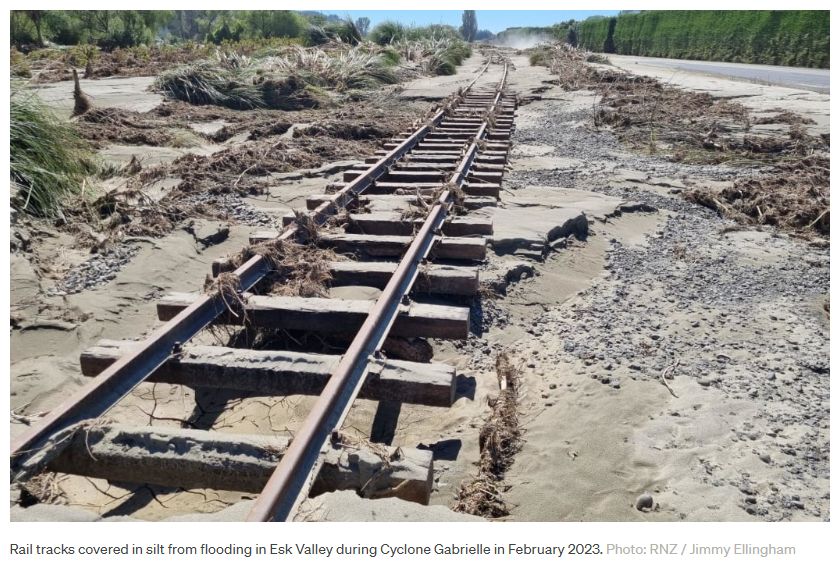
A quarter of roads and a third of rail lines are exposed to surface, coastal and river flooding - putting them at risk of both short-term disruption and long-lasting damage, the commission said.
Extreme heat could soften asphalt, create potholes, and buckle bridges and railway lines.
"Climate change is expected to reduce the reliability and service levels of road and rail networks in a variety of ways, from more frequent closures, delays, and speed restrictions to higher maintenance and repair costs, and more frequent emergency works," it said.
"The consequences are especially severe for rural and isolated areas, where alternative routes are limited and sometimes non-existent."
Social and community wellbeing
This was one of the most significant risks "because of the high human and financial costs when people are forced to move, and when climate-related distress, grief, discontent and uncertainty go unchecked," the commission said.
Uncertainty about housing and livelihoods could erode people's sense of safety and belonging. The prospect of relocation might be a necessary solution, but it "can break relationships, divide communities and undermine trust in institutions".
Planning and managing relocation well, and working together with the affected communities, could help reduce those effects. The need to set up national guidance and funding options for communities was "urgent".
"It takes a long time to set up processes that fairly address all needs, and there are communities already trying to navigate these choices."
Emergency management
Strong emergency management will save lives and livelihoods, the report said. However, the current system "lacks the capacity or capability to deal with significant, complex, widespread events impacting multiple regions at once".
The government had introduced an Emergency Management Bill in December 2025 and an Emergency Management System Improvement Plan, it noted. "These ongoing reforms are promising, though it is too soon to tell how successful they will be."
Local response networks such as coastal and riverside marae were themselves vulnerable to climate change. Some communities had strengthened their own responses, the report said - highlighting the example of Ngātiwai in Northland, which had equipped its marae with solar, petrol generators and satellite internet.
Ngā mea hirahira o te ao Māori - risks in the Māori world
For Māori, climate change was not just a physical or economic problem, the report said.
Many sites of cultural significance were now highly exposed to climate hazards, while extreme weather and more gradual environmental changes were affecting taonga species, habitats, and harvesting practices.
Climate change was also compounding structural inequalities - many at-risk locations had higher Māori populations, and the incidence of heat-affected health conditions like respiratory and cardiovascular disease was higher.
Ecosystems and biodiversity
"Increasing land and marine temperatures change the environmental conditions species live in, while extreme weather events and wildfire cause shocks to ecosystems," the report said.
Under more severe scenarios, the combined effects of climate change and existing pressures could, within decades, "push some systems past a point where they can recover".
"These changes could disrupt food production, increase damage from extreme weather and impact health and wellbeing."
Forestry
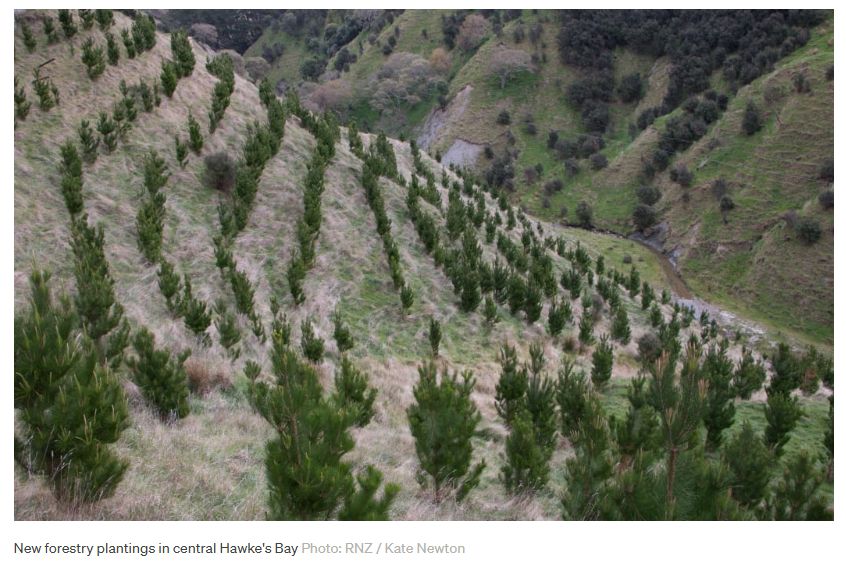
Planting trees was "central" to New Zealand's current plan to reach net zero emissions. However, extreme weather, drought, wildfire, and new pests and disease could all threaten this strategy, along with the economic benefits from forestry.
"Damage to these forests reduces not only their capacity to absorb carbon dioxide and the sector's economic contribution, but also exposes waterways and downstream communities to devastating sediment and debris flows," the report said.
There was no coordinated government and industry approach to directly address climate risks.
Central and local government funding
Climate change was putting growing pressure on central and local government finances, the report said.
Climate disasters such as Cyclone Gabrielle were costly and hard to budget for. They could also affect government revenue because of their wider economic effects. At a local level, many councils had constrained budgets or had reached their debt limits.
Since 2010, 97 percent of government expenditure on natural hazards had been on responding to and recovering from disasters, with just three percent spent on things that reduced risk and increased resilience.
The government's National Adaptation Framework signalled that costs would be "shared across society and over time", the commission said.
"While helpful for the government to signal this, the National Adaptation Framework does not include detail of when or how decisions will be made around how costs will be shared."
Decision-making and delivery
"The demands of climate change are putting Aotearoa New Zealand's ability to plan, decide and act together under increasing pressure," the report warned.
Decision-makers needed to "drive forward" on adapting to climate change. "Delays leave the country facing spiralling costs - including for central and local government - without effective ways of planning and acting together. Decisive action is needed now."
The consequences of failing to manage the overall climate response would land hardest on people who were already the most exposed, the commission said.
"This can be the people who live in areas that get hammered by the weather events that are becoming more frequent and more intense - especially the areas with smaller, rural councils with lower rates income. Or it can be population groups where the impacts are disproportionate, such as for iwi/Māori."
'Ones to watch'
As well as the 10 most significant risks, the commission also highlighted agriculture and horticulture as "ones to watch".
"These risks were rated at minor severity at present, but they are expected to move to major by 2050," the assessment said.
"This step change is anticipated because drought and extreme weather events are expected to affect both horticultural crop yields and feed supplies for livestock, the impacts from soil erosion and coastal inundation on the pastoral sector may become irreversible, increased temperature extremes and pest pressure could substantially affect yields, and the increased frequency of extreme events will shorten recovery periods in both sectors."
The government now has two years to develop a national adaptation plan that responds to the risks raised by the report.
The commission will provide its progress review on the current adaptation plan, adopted in 2022, later this year.
RNZ
New Zealand's public broadcaster, providing comprehensive NZ news and current affairs, specialist audio features and documentaries.
Radio New Zealand is a Crown entity established under the Radio New Zealand Act 1995. Radio New Zealand News are vital elements in our programming, providing impartial news and information to New Zealanders every day. Radio New Zealand (RNZ) provides listeners with exciting and independent radio programmes in accordance with the Radio New Zealand Charter.
 Gordon Campbell: On The Political Panic Over Immigration
 Greenpeace: New Climate Report Yet More Reason To Reduce Dairy Herd
 Better Public Media: Opposing Plans To Scrap The BSA
 Internal Affairs: Citizenship Test For Citizenship By Grant Applicants From Late 2027
 Dayenu: Condemning Use Of Government Funding For Extremist Report On Antisemitism
 PSA: Councils Must Work With Unions And Communities In Fast-Track Reform
 Tauranga City Council: Mauao Restoration Work Has Begun

