
 Scoop has an Ethical Paywall


Anglo Eastern Commitment To Seafarer's Welfare
Anglo Eastern Reinforces its Commitment to Seafarer's Welfare
First corporate ship manager member of International Committee on Seafarer's Welfare
25 October 2007: Anglo Eastern Group today reinforced its commitment to the care of its pool of over 10,000 professional crewmembers by becoming the first ship manager to take out corporate associate membership of the International Committee on Seafarer's Welfare (ICSW).
Through its global network of 16 offices Anglo Eastern is actively involved in management of ships & crews, training and technical services. Today's announcement builds on groundbreaking work undertaken by Anglo Eastern and the ICSW in December 2006 when Anglo Eastern hosted the second international pilot of the Ship Welfare Visitor Training Course (SWVC) at its Mumbai training facility. Anglo Eastern has committed to allowing the ICSW to use its training facilities for seafarers' welfare courses, access to the Anglo Eastern network of contacts, dialogue with seafarers' employed on ships managed by Anglo Eastern and development of joint projects. In his message agreeing Anglo Eastern's membership of the ICSW Capt. Pradeep Chawla highlighted the proactive role the company intends take by stating "The ICSW and Anglo Eastern share a common goal of happy, healthy, well trained and highly motivated seafarers. Let’s start discussing the projects we can do together".
Mr. Andrew Elliott, ICSW Operations Manager, commented "One of the many benefits of this agreement will be the direct input from a major ship management company, helping the ICSW to refine its activities and meet seafarers' needs in a more effective manner." Mr. Elliott continued: "The ICSW needs input from a wide range of ship owners and managers to ensure its products and services remain relevant when decreasing turn around times, increasingly remote ports, and more demanding port security are changing the way in which seafarers' needs are met."
-Ends-
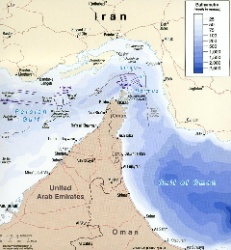 UN News: Uncertainty Continues Over Safety In The Strait Of Hormuz
 Australian Museum: Celebrate Sir David Attenborough's 100th Birthday With The Australian Museum
 Clean Shipping Coalition: Shipping - IMO’s Net Zero Framework Progresses But ENGOs Slam Unnecessary Delay
 Gena Wolfrath, IMI: Understanding News Fatigue—and How To Stay Informed Without Overload
 Access Now: A Statement To Our Community About Why RightsCon 2026 Will Not Take Place In Zambia
 Climate Action Network: Santa Marta Plants The Seeds Of A Fossil-Free Future - Civil Society Will Hold Governments To Account