
 Scoop has an Ethical Paywall


Sarawak’s State Level Conference Against Mega-Dams
Save Sarawak’s Rivers Network
(SAVE
Rivers)
&
Sarawak’s State Level Conference Against
Mega-Dams
16th to 18th February 2012
Wealthy but
underdeveloped
Sarawak is the most
undeveloped state in Malaysia; it lacks infrastructure and
basic amenities compared to the West Malaysian states. But
Sarawak is arguably Malaysia’s wealthiest state; that is
in as far as natural resources are concerned. As an example
of this, timber from Sarawak has been contributing a major
share to the Malaysian economy for the past couple of
decades. However the billions of dollars earned from this
industry, is contributing very little in the long term
improvement of the living standard of the locals; it does
not seem to be contributing towards building good
infrastructure in Sarawak, which should at least be at par
with the states in West Malaysia or the neighboring East
Malaysian state, Sabah. But now, after about 30 years of the
reckless timber exploitation and which was later quickly
followed with the grabbing of Native Customary Right land
(NCR) for oil palm plantations, the government is launching
a programme of building mega-dams for Hydro Electric Power
Generation (HEP). With the construction of dams for the HEP,
there is a very real danger of total inhalation of
Sarawak’s vast natural habitat, rich heritage and the
relocation of the population and posing formidable challenge
to the natives’ way of life.
Bakun
HEP
In 1986, the Malaysian government gave
approval for the construction of a major dam to be built at
Bakun in Balui, the upper part of the Rejang River in
Sarawak. Bakun dam is the biggest in South East Asia; it has
flooded an area of 60,000 Ha, a land area as big as
Singapore Island. A concrete rock filled dam was built at
205 M high. It is the biggest dam of its kind in Asia
outside of China. After years of delays and change of
ownership the cost of construction doubled. The first
turbine for the Hydro Electric Power in Bakun was
commissioned and running only towards the end of 2011 or 25
years after the approval. The anti graft watchdog,
Transparency International termed the Bakun dam one of the
world’s “Monuments of Corruption”. However, even
before the Bakun HEP at the Balui river is on full load
operation, another dam is already under construction at
Murum, on the Balui, upstream of Bakun dam. Murum is the
first of the 12 dams which the government is building in
Sarawak which is supposed to be completed by 2020.
The
River & the people
The rivers have always
played a major part in the livelihood of the people in
Sarawak and that is why there are a lot of settlements and
villages located along the rivers in the state. The
construction of mega-dams will diffidently have adverse and
irreversible impact on the livelihood Sarawak’s people.
Since the focus of having the HEP is theoretically for
powering industries and factories in the urban areas, it is
not for the benefit of the people who have to sacrifice in
order to make ways for it. The projects will eventually be
impoverishing rather than enriching the population who are
resettled to give way for the dams. Those who are worst
affected by the HEP projects will be the indigenous
population who are also the minorities in the state and who
are unique to the state and not found anywhere else in the
world. The people affected are generally called Dayaks
comprising the Ibans, Bidayuhs and the Orang Ulu groups. The
term Orang Ulu refers to a group of indigenous who are
Sarawak ethnics. One of the racial communities in the Orang
Ulu group is the Penan, the last nomadic group who roam the
rainforest of Borneo. Most of the indigenous people living
in the rural villages are generally poor. They are
traditional subsistence farmers or shifting cultivators,
people who for generations have relied heavily on the land
and the forest for their livelihood. The construction of
mega-dams will unavoidably force the population to move out
from their traditional land, which is a significant part of
their heritage and lifeline.
The dam will destroy a
unique culture
In the normal Orang Ulu villages, even
the very structures of the longhouses are traditional in
nature, reflecting the social structure of the communities
and thus keeping them united. With their social structure,
order and solidarity is possible in each community. These
social structures have been keeping the Orang Ulu in general
like the Kenyah and Kayan, together from time immemorial,
enabling them to face famines, wars, epidemics and natural
tragedies. These structures are delicate and are now facing
a lot of challenges from modern lifestyle and globalization.
Mass relocation of the people will no doubt spell the end of
the traditional social structure. This has been one aspect
of the Malaysian scene which contributes unity and harmony
through cultural uniqueness of the nation.
The original
home is the real home
In a traditional
Kenyah or Kayan community, each longhouse normally comprises
a group of people who are of the same dialect and custom.
For the Kenyah they could be Lepo Tau, Badeng, Lepo Agak,
Jamuk, Long Sebatu, Uma Kelep, Lepo Kulit etc. For the Kayan
they could be Uma Baluvuh, Uma Pu, Uma Bawang etc. The
people of each dialect have, from generation to generation,
their bonds to each other making it possible for them to
live with a family like attitude towards one another. Even
in the face of the present large rural-urban migration the
Kenyah and Kayan consider their ancestral villages as their
real home. For them towns and cities are work places. Most
of them maintain their houses in their ancestral villages,
along the Baram or Belaga rivers and they normally go back
home on festive occasions like Pusau Anak, Petakau Anak,
Christmas or Suen. Relocating the people to make way for
these mega-dams will pose a direct challenge to this bond
that is part of their social structure.
Anxiety over
dams
The construction of dams inevitably
raise a lot of justifiable anxiety, some of which are the
environmental concerns relating to them which include the
destruction of numerous endemic plants and animal’s
species. In constructing the dams, there is a definite,
unavoidable and massive ecological damage resulting from the
deforestation and flooding of thousands of square kilometers
of natural tropical rainforest. The threat from the dams
collapsing is also very real, since upstream sedimentation
could shorten the useful lifespan of the dam. Another
tradeoff is the health issues, such as increase in diseases
like shistosomiasis and malaria which are real. The
viability of large dams is also nowadays increasingly called
into question in light of climate change, which undermines
the water supply to the large dams.
Native Customary
Right Land (NCR) in view of the dams
At
the moment, one of the problematic issues between the
Sarawak state government and the Sarawak natives is the
interpretation of the law concerning the Native Customary
Right (NCR) land. The government’s interpretation of what
NCR is, does not comply with the natives’ custom. But the
natives’ custom was recognized by the Sarawak’s
government under British colony and the Sarawak’s Rajah
Government which governed before the British and that law is
still binding. In spite of losing cases after cases of land
disputes resulting from this interpretation, the present
Sarawak state government continues to lease out the land
which are claimed by the natives to various big plantation
developers, claiming that the land belongs to the state. As
a result there are hundreds of court cases resulting from
land claims; a lot of them are still not resolved. The
proposed construction of these dams will no doubt exacerbate
the situation.
Compensation made and promises not kept
for the relocated
In the case for the
people who were relocated to make way for the Bakun dam,
they were given three acres of land per family, as part of
the compensation. There it was a case which brought change
from bad to worst. Rather than an improvement to the
standard of living for the people, when at one time they
were able to cultivate, plant, harvest, gather, hunt, fish
freely in their vast NCR which is recognized by the
Malaysian court, now they have a piece of land which is just
a negligible size compared to their former land. So after
the relocation they could not maintain the same way of life
since the three acres land is inadequate and insufficient
for economic purpose, to cultivate even as subsistent
farmers in the rural areas. Due to this reason there is a
large migration to towns and plantations where a lot of them
end up as unskilled or semi-skilled laborers.
In view of
these facts I would say that the construction of the dams
will not bring development to the people directly affected
but it does bring severe and permanent damages to the whole
environment and the community at large.
Mega-dams don’t benefit the
people
Development for the people must be
for the immediate and above all, long term good of all the
people and not just a few, who own shares in power
generation and big corporations. Sustainable development
should not result in negative environment impact or major
and harmful irreversible bad consequences. Sarawak needs
development and I believe that the people in the rural areas
all want to have better living standard but building
mega-dams will destroy the rivers and submerge the very land
which the people need for development. When looking at the
available power generated after Bakun dam and Murum dams are
fully on line building more mega-dams will not benefit the
general population of Sarawak or Malaysia as a whole.
Approach in building the proposed mega-dams is
unethical and immoral
When any major projects in
general are proposed, every opinion voiced, especially by
the affected communities must be heard. The affected people
must be able to determine their own future and know exactly
where they are standing protected by a legally endorsed,
internationally recognized process before any major move is
made. No one can speak for another person in this type of
major decision making. It does not matter if those who talk
are the headmen of the community or influential politicians,
unilateral decision must be avoided. No coercion or bullying
is to be employed, when the decision has a permanent and
destructive effect. At the moment, not many of the
indigenous communities are aware that they are affected
directly or indirectly by these dams. They are not properly
informed and consulted. So looking at the proposed
construction of the 12 dams there is a lack of compliance to
mandatory or natural civility, where humane and even basic
requirements should be met. All these requirements are spelt
out in the United Nation Declaration on the Rights of
Indigenous Peoples (UNDRIP).The UNDRIP is meticulous in this
aspect and Malaysia is a signatory of the document. Instead
of being open and responsible, the proponent of the dam
seems to play hide and seek with those affected. From the
secretive approach they are taking, no one could be blamed
for thinking that the proponents of the dam have something
to hide. There are plenty of humane and viable ways to
achieve development so that the end result will be a win-win
situation when everybody and the nation could
wins.
Formation of Save Sarawak’s Rivers Network
(SAVE Rivers)
At the moment, there is no
coordinated effort by the indigenous communities and civil
societies to campaign against the construction of these
destructive mega-dam projects. Therefore there is an urgent
need to initiate a state, national and international
campaign against these mega-dams. Having this in mind a
group of us, concerned individuals and a few Non
Governmental Organizations (NGO) have decide to start a
network of those who are against the mega-dams. We had our
first meeting in October 2011. The network is called the
Save Sarawak’s Rivers Network (or in short: SAVE Rivers)
and I am the chairman for the steering committee. Beside the
steering committee we aim at extending the network further
to include more of those who can support the cause,
especially from those who are directly affected.
The
objectives of the network are:
(1) Campaigning
against the construction of mega-dams
(2) Gathering all
affected communities and concerned individuals or NGOs to
work together as a team
(3) Building up network for easy
communication, gathering and relaying of
information
(4) Sharing or disseminating information
concerning the destructive nature or adverse effects of
mega-dams
(5) Supporting activities or event opposing the
construction of mega-dams
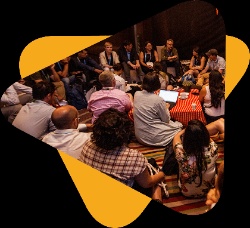
Last year we started with the campaign from a booth set up in Marudi during the Baram Regatta. This was closely followed with a dinner organize in Miri for fellowship and to create awareness.
Our first project this year is a state wide conference on the impact of mega-dams which will be held as follows:
(1) Registration at Telang Usan Hotel Miri and opening session for participants: 5 pm on 16th February
(2) It will begin with a sharing session after dinner at 7.00 pm on 16th February (You will be informed of the venue)
(3) The conference will be full day on Friday 17th to 18th February. (You will be informed of the venue)
(4) Actual venue for the conference proper will be made known to the participants at the registration desk
(5) Delegates at the conference will be from various places in Sarawak, especially from the proposed dams localities
(6) There are 8 speakers who will be presenting papers at the conference. All of them are knowledgably individuals, professionals, University professors, environmentalists, human right groups including a speaker from Suhakam, the government instituted, Malaysian Human Right Organization.
At the conference we expect to come up with resolutions and fine tune our approach. The highlight of the conference is the resolution which will spell the course of action to be initiated for stopping the construction of mega-dams.
To date, the Conference Secretariat has started receiving registrations via phone calls and the email from various places in Sarawak. From these respond we are confident to draw interest from the people affected. As we have limited resources and room, the conference will be on “first come first served” basis. Those who need further information can contact me, Peter Kallang on my hand phone,– 013 833 1104 or contact Mr. Mark Bujang on 014 877 6685.
Best Regards,
Peter
Kallang
Chairman of SAVE Rivers
Chairman of Persatuan
Kenyah Miri (PKM)
Chairman of Orang Ulu National
Association (OUNA -
Miri)
ENDS
 Clean Shipping Coalition: Shipping - IMO’s Net Zero Framework Progresses But ENGOs Slam Unnecessary Delay
 Gena Wolfrath, IMI: Understanding News Fatigue—and How To Stay Informed Without Overload
 Access Now: A Statement To Our Community About Why RightsCon 2026 Will Not Take Place In Zambia
 Climate Action Network: Santa Marta Plants The Seeds Of A Fossil-Free Future - Civil Society Will Hold Governments To Account
 Human Rights Measurement Initiative: Joint Statement On The Cancellation Of RightsCon 2026
  UN News: From Hormuz To Lebanon, Crisis Reverberates Through Trade Routes, Upending Humanitarian Networks