
 Scoop has an Ethical Paywall


Peru’s Amnesty Law Breaches International Human Rights Obligations, UN Experts Warn
Geneva, 26 August 2025
UN human rights experts* are appalled by the promulgation of an amnesty law for security forces for crimes committed in 1980-2000 on 13 August 2025 in Peru.
“This legislation breaches international standards by granting amnesty to members of the Armed Forces, the Peruvian National Police and Self-Defense Committees that are denounced, under investigation or prosecution for crimes committed between 1980 and 2000 and whose conviction verdicts are not final, as well as to individuals over 70 years of age who have already been convicted of such crimes.”
“International standards bar the application of amnesties or pardons to crimes against humanity and other gross human rights violations, including enforced disappearances. Such measures indeed create an unacceptable form of impunity and undermine decades of progress toward justice, truth, and reparations for victims,” the experts warned.
Law N° 32419 entered into force on 14 August 2025, violating international law, including the Declaration on the Protection of All Persons from Enforced Disappearance, the International Convention for the Protection of All Persons from Enforced Disappearance, which the country ratified on 26 September 2012, the Updated Set of principles for the protection and promotion of human rights through action to combat impunity, and Peru’s obligations under the American Convention on Human Rights, ratified on 27 July 1977.
This came a year after the approval of Law No. 32107 of 9 August 2024, which introduced a statute of limitations for war crimes and crimes against humanity committed prior to 1 July 2002.
The experts reiterated that the non-applicability of statutory limitations to crimes against humanity is a peremptory norm of international law from which no derogation is permitted.
“The State must urgently reverse these setbacks in Peru’s pursuit of justice and reconciliation, and fully comply with its international obligation to investigate, prosecute and punish gross human rights violations and crimes under international law committed during the internal armed conflict, including enforced disappearances,” the experts said.
Amnesties, statutes of limitations and analogous legal concepts shall not restrict the right of access to justice of the victims of these crimes.
The experts also called on Peru to ensure that the widespread or systematic practice of enforced disappearance is fully recognised — in law and in practice — as a crime against humanity under international law. “Peru must guarantee that its legislation and policies reflect the continuing nature of enforced disappearances, and that the search for victims and investigations continue until the truth about their fate and whereabouts is fully established,” they added.
The experts recalled that their position is consistent with earlier concerns raised by the Committee on Enforced Disappearances in its June 2024 warning and its 2025 concluding observations, and by the Working Group on Enforced or Involuntary Disappearances, together with the Special Rapporteur on the promotion of truth, justice, reparation and guarantees of non-recurrence and the Special Rapporteur on extrajudicial, summary or arbitrary executions in their statement dated 14 June 2024.
The experts are in contact with the Government of Peru in this regard and wish to reiterate its willingness to assist by providing technical assistance and cooperation in clarifying cases of enforced disappearance and preventing their occurrence.
*The experts:
- The Committee on Enforced Disappearances (in accordance with rule 48 of the Committee's Rules of Procedure and the Addis Ababa Guidelines on the independence and impartiality of members of human rights treaty bodies, Ms Carmen Rosa Villa-Quintana does not join this statement).
- Gabriella Citroni (Chair-Rapporteur), Grażyna Baranowska (Vice-Chair), Ana Lorena Delgadillo Pérez, Aua Baldé and Mohammed Al-Obaidi, Working Group on Enforced or Involuntary Disappearances
- Bernard Duhaime, Special Rapporteur on the promotion of truth, justice, reparation and guarantees of non-recurrence
- Morris Tidball-Binz, Special Rapporteur on extrajudicial, summary, or arbitrary executions
Background:
The
Committee
on Enforced Disappearances monitors the
adherence of States parties to the International
Convention for the Protection of All Persons from Enforced
Disappearance, which has been ratified
by 77
States to date. The Committee is
composed of 10
members who are independent human rights
experts from around the world, serving in their personal
capacity and not as representatives of States
parties.
Special Rapporteurs/Independent Experts/Working Groups are independent human rights experts appointed by the United Nations Human Rights Council. Together, these experts are referred to as the Special Procedures of the Human Rights Council. Special Procedures experts work on a voluntary basis; they are not UN staff and do not receive a salary for their work. While the UN Human Rights office acts as the secretariat for Special Procedures, the experts serve in their individual capacity and are independent fromany government or organization, including OHCHR and the UN. Any views or opinions presented are solely those of the author and do not necessarily represent those of the UN or OHCHR.
Country-specific observations and recommendations by the UN human rights mechanisms, including the special procedures, the treaty bodies and the Universal Periodic Review, can be found on the Universal Human Rights Index https://uhri.ohchr.org/en/
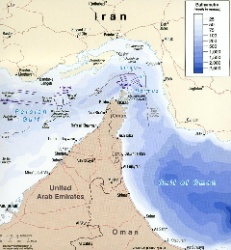 UN News: Uncertainty Continues Over Safety In The Strait Of Hormuz
 Australian Museum: Celebrate Sir David Attenborough's 100th Birthday With The Australian Museum
 Clean Shipping Coalition: Shipping - IMO’s Net Zero Framework Progresses But ENGOs Slam Unnecessary Delay
 Gena Wolfrath, IMI: Understanding News Fatigue—and How To Stay Informed Without Overload
 Access Now: A Statement To Our Community About Why RightsCon 2026 Will Not Take Place In Zambia
 Climate Action Network: Santa Marta Plants The Seeds Of A Fossil-Free Future - Civil Society Will Hold Governments To Account