
 Scoop has an Ethical Paywall


PIANGO Network Launches Minimum Standards On Community-Led Adaptation And Climate-Induced Relocation
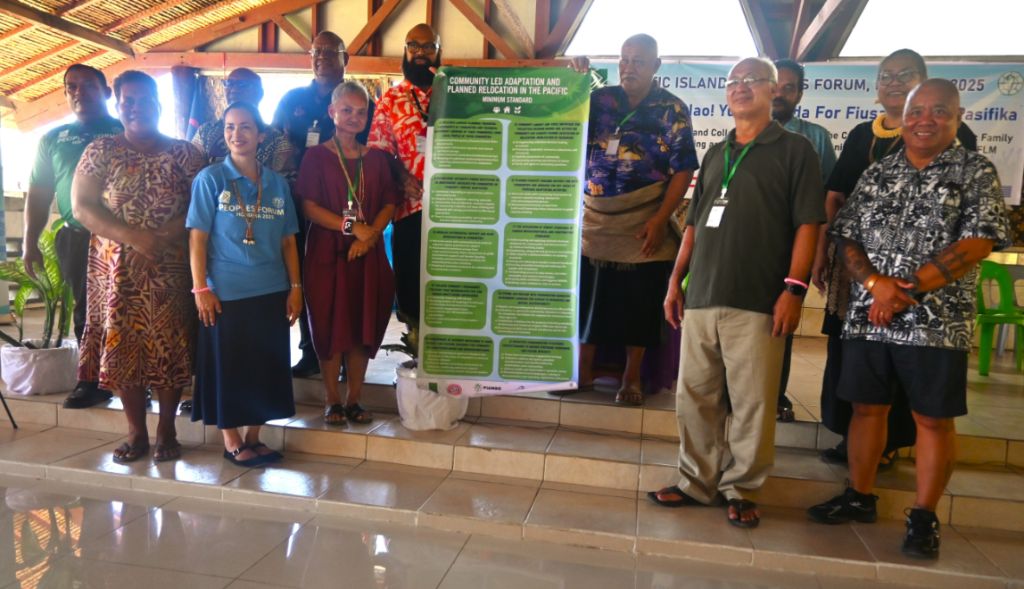
Chairpersons and representatives of 11 national NGO umbrella bodies today launched the Minimum Standards on Community-Led Adaptation and Climate-Induced Relocation in Honiara, Solomon Islands.
The participating organisations included Payuta Inc. of Guam, Marshall Islands Council of NGOs, Belau Association of NGOs of Palau, Samoa Umbrella of NGOs, Civil Society Forum of Tonga, FSM Association of NGOs (Federated States of Micronesia), Development Services Exchange (Solomon Islands), Vanuatu Association of NGOs, Fiji Council of Social Services, Niue Island United Association of NGOs, and the Marianna Association of NGOs(Northern Mariannas).
The organisations are affiliated to and act as national liaison units (NLUs) for the Pacific Islands Association of NGOs (PIANGO).
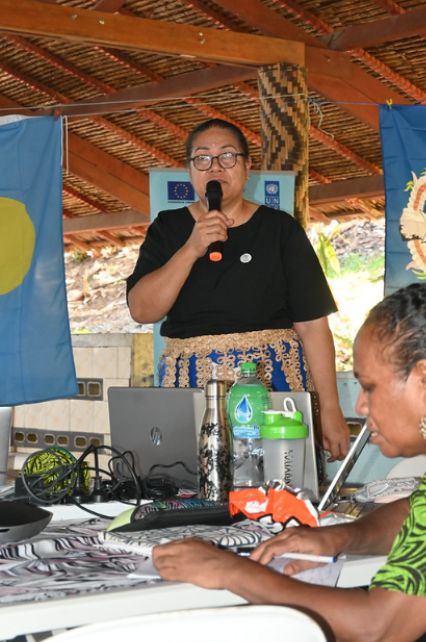
“When the curtains closed at the Pacific People’s Forum in Nuku’alofa last year, Pacific civil society released the Maamaloa Reflections—a communique born out of a week of deep talanoa on climate change, resilience, and our shared future,” said FCOSS Executive Director, Vani Catanasiga.
“The stories of Tongan communities recovering after the 2021 Hunga Tonga-Hunga Ha’apai tsunami inspired us all. And it was fitting that these reflections were grounded at Maamaloa—a place that has long symbolised knowledge, refuge, and empowerment for our Pacific people.”
She explained that nine action points emerged from the Maamaloa Reflections.
“Among them was the validation of the FCOSS–CSFT initiated regional minimum standards for community-led adaptation and planned relocation—a recognition that our communities must remain at the centre of decisions about their future,” Catanasiga said.
PIANGO Executive Director, Emeline Ilolahia, echoed this call for community leadership.
“When solutions are left only to government, they often become political. But when communities are part of the planning – and even invited to lead – their culture and kinship systems bring out strengths that ensure relocation is dignified and orderly. This is why the Minimum Standards are necessary,” Ilolahia said.
The Minimum Standards highlight inclusive land use planning, community agency and decision-making, and the role of independent advocates to safeguard community interests. They also call for capacity building, regular psychosocial and GEDSI support, and robust infrastructural standards tailored to Pacific realities.
Other key elements include tailored community engagement strategies, strong partnerships with government agencies, advisory mechanisms involving youth and diaspora experts, and proactive communication strategies to ensure transparency and integrity.
 Colin Greer & Reynard Loki, IMI: Criminalizing Childhood - When The Justice System Fails America’s Youth
 Global Sumud Flotilla: Saif Abukeshek & Thiago Ávila Released - Victory For International Mobilization; A Reminder Of Who Remains Behind
  Aotearoa Delegation of the Global Sumud Flotilla: The Global Sumud Flotilla Remains Undeterred As Over 30 Boats Depart For Türkiye
 UN Special Procedures - Human Rights: Israel Must Immediately Release Gaza-Bound Flotilla Activists, Say UN Experts
 IPMSDL: Condemn The Killing Of Children, Bombing In Manipur, And Violent Repression Of People’s Protests
 Médecins Sans Frontières: Three Years On, Outbreaks Everywhere - MSF Urges Boost To Sudan’s Vaccination Programs