
 Scoop has an Ethical Paywall


“What Are We Going To Do With So Much Water?” Addressing Water Security In The Remotest Atolls Of The Marshall Islands
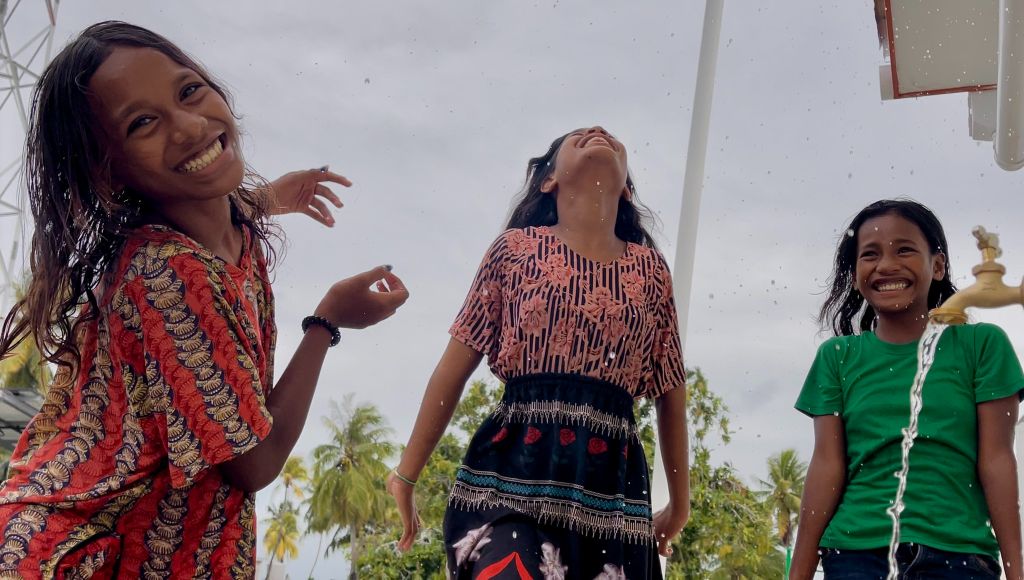
The question came unexpectedly, in the middle of a celebration.
The community had gathered beneath the sun for the blessing of a new water tank, speeches from leaders, prayers of thanks, and the familiar moment when everyone grows shy just as the camera appears. Then a voice from the crowd asked what no one had thought to ask before - not about the ocean surrounding them, but about safe water to drink.
“What are we going to do with so much water?”
In islands surrounded by ocean, water is everywhere — but safe drinking water is not.
For generations, water scarcity has shaped daily life across the outer atolls of the Republic of the Marshall Islands. With no rivers or freshwater lakes, families have relied almost entirely on rainwater, carefully stored, carefully rationed, and never taken for granted.
During prolonged dry periods, when rainwater runs low, communities can face acute shortages, sometimes overnight. When droughts came, or when king tides push salt into fragile groundwater supplies, access to safe drinking water becomes even more uncertain.
In Utrik, water is planned days ahead. Laundry is done every few days, not by routine but by necessity. Standing beside a basin of soaking clothes, a woman managing water for her household explains:
“Every three days, we do the laundry. We have to plan ahead because water isn’t always available.”
Women carried the heaviest burden. Managing household water fell largely to them, fetching it, storing it, and deciding how it will be used. Less water meant fewer baths, disrupted routines, and difficult choices that affected health, schooling, and livelihoods. For the elderly, people with disabilities, and low-income households, the risks were even greater.
In another household, as rice is prepared for the day, another woman carefully measures what can be used.
“We eat rice every day, so we need water to wash and cook it. We also use water for boiling fish or making soups. But we use only what’s necessary. We never use well water for cooking unless we have no other choice.”
In atoll communities, well water is often brackish and worsens during drought. ACWA upgrades aim to improve its quality over time.
Climate change has only intensified these pressures.
That is the reality the Access to Climate-Resilient Water in the Marshall Islands (ACWA) project set out to change, not by importing solutions, but by working with communities to design ones that fit their lives, their islands, and their future.
From the start, ACWA placed communities at the centre of decision-making. Traditional leaders, women’s groups, youth representatives, and people with disabilities were involved through consultations, technical surveys, and community meetings that respected local protocols and priorities. Rather than assuming a one-size-fits-all approach, each atoll helped shape its own water investment plan.
One of the project’s most visible changes came through an unexpected innovation: flat-pack modular water tanks. Lightweight, durable, and resistant to the corrosive marine environment, the tanks can be transported easily to remote islands and assembled on site — often by trained community members themselves.
For communities accustomed to infrastructure that arrives late, breaks quickly, or cannot be repaired locally, this mattered.
But ACWA’s impact goes beyond infrastructure. It strengthens resilience by providing communities with reliable water storage systems that serve as a critical buffer during droughts and climate shocks.
Across the atolls, Community Water Committees now play a central role in managing and maintaining local systems. Women make up nearly half of all participants and beneficiaries, reflecting both their leadership in water management and the project’s commitment to inclusion. Training programmes have equipped women and youth with skills in climate adaptation, water safety, and disaster preparedness, enabling them to act as mentors in their home communities.
Today, upgraded rainwater harvesting systems connected to community buildings provide reliable access to safe water for thousands of people. In the longer term, new storage capacity is designed to meet the needs of future generations, strengthening resilience to the droughts and saltwater intrusion that climate change will continue to bring.
Which brings the story back to that question, asked in celebration and half in disbelief:
What will we do with so much water?
For families in Utrik, it is a question that signals something new — not just security, but new hope and opportunities: water for gardens, for small businesses, for healthier homes, and for stronger communities.
In the Marshall Islands, water security is no longer just about surviving the next dry season. It is about imagining what becomes possible when communities have the resources — and the voice — to shape their own future.
 Aotearoa Delegation of the Global Sumud Flotilla: The Global Sumud Flotilla Remains Undeterred As Over 30 Boats Depart For Türkiye
 UN Special Procedures - Human Rights: Israel Must Immediately Release Gaza-Bound Flotilla Activists, Say UN Experts
 IPMSDL: Condemn The Killing Of Children, Bombing In Manipur, And Violent Repression Of People’s Protests
 Médecins Sans Frontières: Three Years On, Outbreaks Everywhere - MSF Urges Boost To Sudan’s Vaccination Programs
 UN News: Uncertainty Continues Over Safety In The Strait Of Hormuz
 Australian Museum: Celebrate Sir David Attenborough's 100th Birthday With The Australian Museum