
 Scoop has an Ethical Paywall


Intensifying Water Competition Highlights The Need For Stronger Water Tenure Governance In Asia And The Pacific
Bangkok, 08 May 2026. Increasing demands for water are placing growing pressure on food security, livelihoods and ecosystem sustainability worldwide. In Asia and the Pacific, these pressures are particularly pronounced, as demand from agriculture, cities and industry continues to rise, while climate change is increasing rainfall variability and the frequency and intensity of droughts and floods.
Agriculture remains the largest water user in the region. In several countries, it accounts for more than 90 percent of total water withdrawals, including Afghanistan and Nepal at around 98 percent, Viet Nam at 95 percent, Bhutan at 94 percent, Timor-Leste at 91 percent and Thailand at 90 percent, according to 2023 data from the Food and Agriculture Organization of the United Nations (FAO) AQUASTAT database. At the same time, population growth, urbanization and economic development continue to intensify pressure on water resources.
In this context, equitable and sustainable water tenure governance plays a critical role in effective water resources management and sustaining food security. Clear, inclusive and evidencebased arrangements that define who can access water, under what conditions and for what purposes support informed water allocation decisions, particularly during periods of water scarcity. Strengthened water tenure governance can help reduce conflict among competing users, enhance transparency and accountability, and contribute to climate resilience and sustainable agrifood systems.
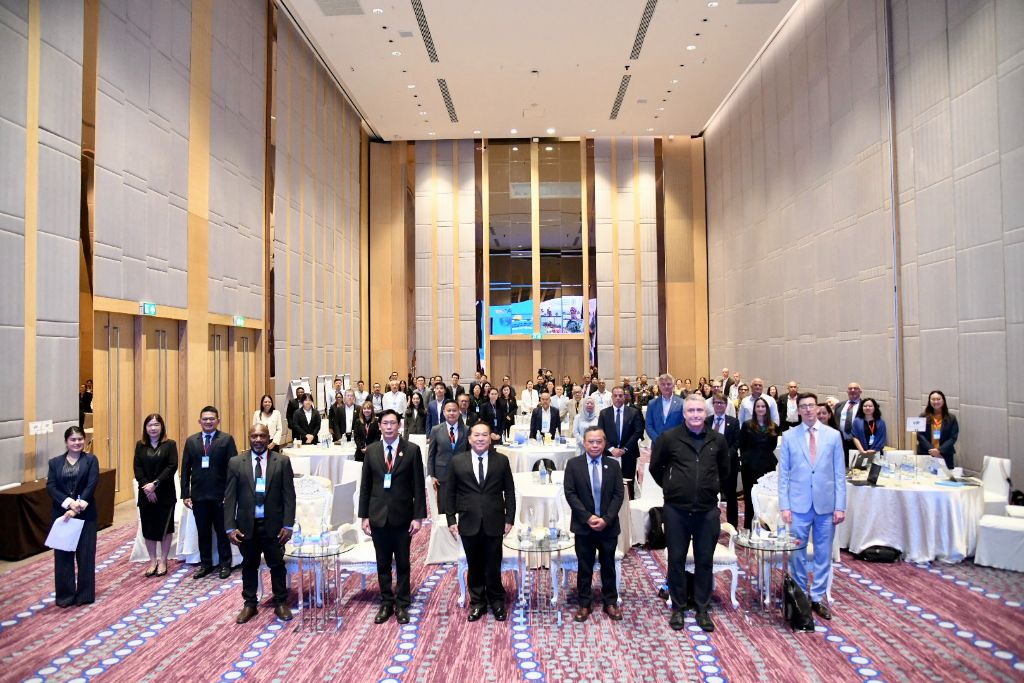
To address these issues, FAO, together with Thailand’s Office of the National Water Resources (ONWR) and the Global Water Partnership Southeast Asia (GWPSEA), and with support from the Government of Germany, convened the Regional Dialogue on Water Tenure for Asia and the Pacific on 6–7 May 2026 in Bangkok, with inperson and online participation.
Building on inputs from the National Dialogue on Water Tenure held in Thailand in March 2026, the two-day Regional Dialogue brought together over 150 participants from over 20 Asia-Pacific countries, representing government agencies, water user organizations, civil society, research and academic institutions, international organizations and development partners.
Participants exchanged experiences on how the governance of water tenure arrangements influence access to water for agriculture, fisheries and other uses, particularly under conditions of water scarcity.
Discussions highlighted the importance of grounding water allocation decisions in robust evidence on water access and use, especially during droughts and periods of stress, and explored how improved water tenure governance can support broader objectives, including climate resilience, gender equality and youth engagement. Participants emphasized the need for meaningful cooperation across sectors and levels of governance to address competing water demands and to support inclusive and resilient agrifood systems.
In his opening remarks, Director of the Department of Water Resources in Vanuatu, Erickson Sammy said: “Water tenure can support more equitable water allocation, reduce conflicts, and ensure vulnerable groups are not left behind.”
This outlook was echoed in a panel of national perspectives on water tenure policies, where Ahmad Rafay Alam, an environmental lawyer from Pakistan, noted that, “In the time of a climate crisis, a water tenure approach can improve the understanding that downstream regions have certain rights over upstream regions, bringing certainty and reducing conflict in Pakistan.”
The Regional Dialogue contributes to FAO’s Global Dialogue on Water Tenure and to the development of Principles of the Responsible Governance of Water Tenure, a global framework intended to support countries in strengthening water tenure policies and practices. Insights from Asia and the Pacific will be integrated with feedback from dialogues in other regions, helping ensure that the Principles reflect diverse contexts and realities.
 Aotearoa Delegation of the Global Sumud Flotilla: The Global Sumud Flotilla Remains Undeterred As Over 30 Boats Depart For Türkiye
 UN Special Procedures - Human Rights: Israel Must Immediately Release Gaza-Bound Flotilla Activists, Say UN Experts
 IPMSDL: Condemn The Killing Of Children, Bombing In Manipur, And Violent Repression Of People’s Protests
 Médecins Sans Frontières: Three Years On, Outbreaks Everywhere - MSF Urges Boost To Sudan’s Vaccination Programs
 UN News: Uncertainty Continues Over Safety In The Strait Of Hormuz
 Australian Museum: Celebrate Sir David Attenborough's 100th Birthday With The Australian Museum