
 Scoop has an Ethical Paywall


Paul G. Buchanan: A Door Cracks Open in the Little Red Dot
A Word From Afar: A Door Cracks Open in the Little Red Dot
A Word From Afar is a regular column that analyses political/strategic/international interest.
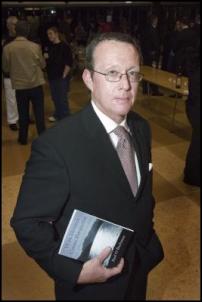 On May 7 2011, 2.5 million Singaporeans (out of a
total population of 5 million) go to the polls. As a one
party-dominant authoritarian state, the outcome is already
assured--the People's Action Party that has held power since
1959 will win. By gerrymandering electoral districts (which
has led to uncontested walkover rates of 50 percent) and
placing limits on opposition party rights to public
expression and assembly outside of the two week campaign
season (to include prohibitions on holding rallies and
distributing flyers, posters or pamphlets, which has
resulted in numerous defamation suits against and arrests of
opposition figures over the years--the last in 2010 for a
violation of the "no public assembly of more than 5 people
without a Police permit" law), the PAP might match the 66
percent of the vote garnered in 2006 (a drop from the 73
percent received in 2001). It will retain its majority
hold of the (recently expanded) 87-member parliament. But
there is political change blowing in the hot and humid
Singaporean breeze, which is as much the result of
generational and social change as it is of opposition
renewal and PAP sclerosis. Although it will retain power
this time, none of the trends auger well for the
PAP.
On May 7 2011, 2.5 million Singaporeans (out of a
total population of 5 million) go to the polls. As a one
party-dominant authoritarian state, the outcome is already
assured--the People's Action Party that has held power since
1959 will win. By gerrymandering electoral districts (which
has led to uncontested walkover rates of 50 percent) and
placing limits on opposition party rights to public
expression and assembly outside of the two week campaign
season (to include prohibitions on holding rallies and
distributing flyers, posters or pamphlets, which has
resulted in numerous defamation suits against and arrests of
opposition figures over the years--the last in 2010 for a
violation of the "no public assembly of more than 5 people
without a Police permit" law), the PAP might match the 66
percent of the vote garnered in 2006 (a drop from the 73
percent received in 2001). It will retain its majority
hold of the (recently expanded) 87-member parliament. But
there is political change blowing in the hot and humid
Singaporean breeze, which is as much the result of
generational and social change as it is of opposition
renewal and PAP sclerosis. Although it will retain power
this time, none of the trends auger well for the
PAP.
Taking 25 years as the generational baseline, Singapore is in its third generation since gaining political autonomy from the Malay Federation in 1959 (independence came with its expulsion from the Federation in 1965). Led by 87-year old Lee Kwan Yew, the first generation of PAP leaders ruled with tight control until 1990, in an era when Singapore's image as an austere and puritanical authoritarian state was forged. The second generation of hand-picked successors, who began the slow process of political and social liberalization and orchestrated the emergence of the country as a major transportation, logistics and financial hub, is singing its political swan song today. This year's election marks the transition to the third generation of political leadership and not all has gone as planned for the PAP.
Voting is mandatory in Singapore. Yet spoiled ballots and non-voters amounted to nearly 10 percent of the 2006 electorate. In other words, the signs of discontent were already present five years ago. This year there has been a resurgence of political opposition led by the Workers Party, the Reform Party and the Singapore Democratic Party. In marked contrast to previous elections, 82 of the 87 parliamentary seats will be contested. Among the ranks of the opposition are defectors from the PAP, former government-sponsored overseas scholars (who usually pay their scholarship debt by returning to assume bureaucratic positions and joining the PAP), former Internal Security Act detainees (the ISA allows for the indefinite detention of suspects without charge and some of the current opposition candidates have spent long periods in confinement) and political exiles.
Most of the new
candidates are in their mid 20s to mid 40s, thereby
representing a coming of age for their generation of free
thinkers. In response, the PAP has trotted out the usually
ensemble of former bureaucrats and politicized retired
military officers, interspersed with a handful of younger
neophytes (including one whose qualifications for office
apparently are that she is the wife of the Prime Minister's
executive assistant and has a penchant for shopping--the
latter being Singapore's national pastime). What is most
revealing is that the PAP is no longer able to hide its
internal divisions, with leading officials, Ministers and
even the Minister Mentor (how's that for a title?) Lee Kwan
Yew himself openly disagreeing about issues of politics,
policy and social construction. Sensing a shift in the
public mood, some PAP candidates have withdrawn from the
election. All of this underscores something that the
Minister Mentor said last year: that the PAP must rejuvenate
or stagnate, and that democracy would only come when the PAP
proved incapable of responding to public expectations as a
result of its stagnation.
The trouble for the PAP is that
the elections have come too quickly for a major
re-generation of its cadres, which in a talent-thin
environment such as Singapore (owing to its population size,
as anyone who looks beyond the front benches of the New
Zealand parliament will understand), means that the moment
of political reckoning has come much sooner than the 25
years Lee Kwan Yew envisioned.
Even worse for the PAP, although the government controls all of the mainstream media in Singapore, including the Straits Times and the telecommunications giant MediaCorp, it has been unable to staunch the flow of internet criticism of its personnel and policies, or the grassroots mobilization of support for the opposition. Much concern has been voiced about increasing inefficiencies in public services, the high cost of living, the loss of white collar jobs to foreigners, and the government's astronomical pay scales (the Prime Minister--Lee Kwan Yew's son--is paid S$4.5 million per/year, senior ministers make S$3 million and parliamentary backbenchers start at S$150,000. In fact according to the Economist, Singapore has the second highest ratio of political leader's pay to the country's GDP per person, with the average salary of US$2,183,516).
In the face of what looks to be the possibility of losing previously safe seats amid an unprecedented wave of electoral contestation, the PAP has resorted to fear-mongering, focusing on the tired old canards of economic insecurity, Malay sedition, jihadist terrorism, unskilled foreign workers from the sub-continent and mainland China bringing crime and stealing local jobs, and gay rights (homosexuality is illegal in Singapore but as part of the social liberalization process enforcement of sodomy laws has been weak and episodic over the last decade. This has been a major concern of social conservatives, including the very large number of ethnic Chinese Christians found on the island who are a core PAP constituency). Is speaks ominously of hidden agendas and questions why the opposition would seek to take control of government (apparently failing to recognize that the purpose of political parties include competing for the authority to govern or at least influence government policy). Yet the more it raises the specter of Singapore returning to its polyglot swampland brothel and opium den past, the more the PAP is ridiculed for being out of touch with the wants and needs of contemporary Singaporeans.
This means that this election and its aftermath will constitute a critical juncture in Singaporean history. It will set the stage for the next critical juncture, which will be the occasion and aftermath of Lee Kwan Yew's death.
The notion of critical juncture is important and needs explaining. Using economics-derived path dependency analysis (in which human behavior is "locked in" by past institutional practice the more that practice is routinised over time), critical junctures are historical moments when decisive choices are made within given institutional parameters that set the future course of events (the most common used analogies are the "fork in the road" and “tree branch” motifs). Because of its internal divisions, Lee Kwan Yew's death will be the moment when the knives come out within the PAP, with moderate reformists and liberalizers pitted against hard-line status quo defenders in what could wind up as a splitting of the party. Since the hard-line elements constitute the bulk of the deadwood and sclerotic elements within the PAP, it is quite possible, given the outcome of this election, that reformists will gain control of the party and move to accommodate moderate opposition views in a grand coalition strategy designed to help preserve their hold on power after 2016.
But that is precisely why this election constitutes a pre-conditioning critical juncture that will set the stage for the next one. Processes of authoritarian regime liberalization tend to be "two-steps forward, one step backwards" affairs. The regime opens a little, the opposition pushes further than what is acceptable to the regime, and the regime pushes back. Confronted with a rising tide of opposition success and grassroots mobilizations against one-party rule that cannot be contained with selective application of the ISA and the usual use of defamation and non-assembly laws, the PAP regime will therefore be forced to opt for one of two paths: repress or reform. Its previous preferred strategy of cooptation will no longer work.
This is important to consider because the reformists constitute a minority of the current PAP leadership. The PAP status quo--many of who have held their sinecures for more than a decade--control the levers of government and retain the loyalty of the armed forces (which have internal security and regime protection as well as external defense roles). Thus, even if there are internal tensions within the armed forces between "professional" and "political" officers (the former focused on the technical merits of soldiering and the latter concerned with career advancement via political linkages), and its leadership sclerosis is profound, the PAP can, if it wants to, halt the process of social and political opening any time it wishes. Because it still has a reservoir of support in the so-called (ethnic Chinese) "heartland," the regime can push back without incurring major backlash.
This is not to say that there will not be any. Singaporeans are largely a passive and conformist society, so a move to repress or politically back-peddle will not be met with mass demonstrations akin to those of the Middle East today or Latin America in the past. But even if they acquiesce to the retrogression, the third generation of Singaporean voters will not consent to a return to the days of canings for jaywalking and imprisonment or bankruptcy for reasonable (unarmed) dissent. Instead, they will engage in passive resistance and low-level protests with increased grassroots mobilization over the internet, including social media and other hard-to-filter communications vehicles. Since Singapore is an extremely "wired" society that depends on its telecommunications capabilities for much of its daily business, Chinese-style censorship will be very hard to maintain even though the government controls the telecommunications duopoly through which all internet access is filtered (I will not digress into the reaction of foreign actors to any such retrogression but suffice it to say that it will not be entirely supportive).
This means that the PAP is staring at the beginning of the end in this election. The opposition has organized, mobilized and taken advantage of the limited political space afforded to it by the manipulated electoral system. The PAP has reacted slowly and awkwardly to the opposition's energetic display. It therefore sits on the horns of a dilemma: accept that power sharing is inevitable over the short term and rotation in government office is quite possible within a few years (or at least much sooner than expected), or use its election victory to reassert its political supremacy, by force if necessary, over pretenders to its throne. That will influence the context in which the power struggles following Lew Kuan Yew's death will occur, which in turn will determine whether or not the slow process of authoritarian liberalization will continue or be halted. At that point the moment of truth will have arrived for a country struggling with its identity as a modern bridge between East and West.
Paul G. Buchanan is the founder of Buchanan Strategic Advisors, Ltd., a New Zealand based political risk and market intelligence consultancy. From 2008 to 2011 he was a Visiting Associate Professor of Political Science at the National University of Singapore. An earlier version of this essay was published at Kiwipolitico
- ALSO
Previously:
- Paul G. Buchanan - A Word From Afar - Assessing Middle Eastern “transitions:” A Skeptic’s View In Four Parts
- Paul G. Buchanan - A Word From Afar - New Zealand’s Coming Melian Dilemma
- Paul G. Buchanan - A Word From Afar - New Zealand and the Responsibility to Protect in Afghanistan
- Paul G. Buchanan - A Word From Afar - All For Being Against--but is Being All Against Enough?
- Paul G. Buchanan - A Word From Afar - A
Corporate Makeover For The NZSIS - Paul G.
Buchanan - A Word From Afar - Paul
G. Buchanan: Why the NZDF is in Afghanistan - Paul G. Buchanan - A Word From Afar - Paul G. Buchanan: Intelligence Matters Redux: Leashing the Watchdogs
- Paul G. Buchanan - A Word From Afar - Paul G. Buchanan: The Curious Case of Mr. Tucker
- Paul G. Buchanan - Who Benefits from the Gaza Conflict?
- Paul G. Buchanan - Unsynchronised Elections and NZ – US Relations
- Paul G. Buchanan - A Word From Afar - PGB: Selective Amnesia & Historical Revisionism
- Paul G. Buchanan - A Word From Afar - Death Of Neoliberalism, From A New Zealand Angle
- Paul G. Buchanan - A Word From Afar - A Word From Afar: Palin Frames the Race
- Paul G. Buchanan - A Word From Afar - PGB: A Tale of Two Conventions - And Two Americas
- Paul G. Buchanan - A Word From Afar - A Word From Afar: Much ado about Russians
- Paul G. Buchanan - A View From Afar - Paul Buchanan: Morning Clouds on Obama’s Horizon
 Keith Rankin: Clipping The Ticket; Solving Hormuz, In Context
 Ian Powell: Inhumanity Of US Economic Sanctions Against Cuba – Infant Mortality And Starvation; Time To End NZ’s Silence
 Ramzy Baroud: Subjects Of Empire - Breaking The Cycle Of Arab Dependency On US Elections
 Peter Dunne: Dunne's Weekly - The Pragmatic Food For Fuel Deal With Singapore
 Eugene Doyle: After Israel’s Brutal Attack On Kiwis, Our Government Does Nothing
 Keith Rankin: Has Sweden Become A De Facto Apartheid Narco State?