
 Scoop has an Ethical Paywall


Paul G. Buchanan: On Dynastic Succession
On Dynastic Succession
Paul G. Buchanan
6-1-12
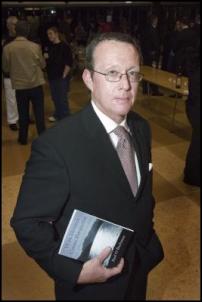 In North Korea, the
death of Kim Jung-il and the rapid ascent of his youngest
son Kim Jung-un to national command leadership highlight the
problems of succession in dynastic regimes, particularly
those of a non-monarchical stripe. Monarchies have history
and tradition to bank on when perpetuating their bloodlines
in power. In authoritarian monarchical variants such as
absolute monarchies and kingdoms the exercise of political
authority is complete and direct, if not by Divine Right. In
democratic variants such as constitutional monarchies royal
power is circumscribed and symbolic. There are also hybrid
systems where royal privilege and power coexist and overlap
with mass-based electoral politics, making for what might be
called "royalist" democracies (such as in Thailand or the
sultanates in Malaysia) In all versions royals are integral
members of the national elite.
In North Korea, the
death of Kim Jung-il and the rapid ascent of his youngest
son Kim Jung-un to national command leadership highlight the
problems of succession in dynastic regimes, particularly
those of a non-monarchical stripe. Monarchies have history
and tradition to bank on when perpetuating their bloodlines
in power. In authoritarian monarchical variants such as
absolute monarchies and kingdoms the exercise of political
authority is complete and direct, if not by Divine Right. In
democratic variants such as constitutional monarchies royal
power is circumscribed and symbolic. There are also hybrid
systems where royal privilege and power coexist and overlap
with mass-based electoral politics, making for what might be
called "royalist" democracies (such as in Thailand or the
sultanates in Malaysia) In all versions royals are integral
members of the national elite.
There are differences between authoritarian and democratic non-monarchical dynastic regimes, and they have to justify themselves in ways other than on tradition. Democratic political dynasties such as the Gandhi's in India, Bhutto’s in Pakistan, Kennedy's in the US or Papandreou's in Greece reproduce the family lineage within the context of political parties inserted in competitive multi-party systems. Their power is exercised via party control and influence reinforced along ideological lines and buttressed by inter-marriage with economic elites. They can come to dominate national politics when in government and their access to national authority is preferential in any event, but they do not have direct control of the state bureaucracy, courts or security apparatus. Dynastic political families in democratic regimes wield their power in a way akin to the political influence of organized crime: discrete, dispersed and diffused rather than immediate and direct.
Non-monarchical authoritarian dynastic regimes exercise direct control over the state apparatus, including the judiciary and security agencies. They attempt to reproduce themselves politically via mass mobilizational parties, and tend to divide into religious and secular variants. Religious variants fuse family bloodlines with clerical authority (say, in the ordained status of fathers, uncles and sons) in pursuit of theological constructions of the proper society. Secular variants mix nationalist and developmentalist rhetoric with charismatic leadership or cults of personality, often with military trappings. In both sub-types of dynastic authoritarian regime the security apparatus is rewarded for its loyalty to the ruling family with increases in size, budget and scope of authority (particularly with regard to internal security). Personal ambitions of family members are often blurred with political objectives, often to the detriment of the latter. There can be hybrids of the non-monarchical type that are religious or secular-dominant, where a controlling dynastic family accommodates the interests of smaller dynasties (this occurs in clan-based societies).
The issue of succession is problematic for all authoritarian regimes but particularly those of non-monarchical dynastic bent. The more institutionalized the non-monarchical authoritarian regime, the less dynastic it tends to be. Institutionalization of the regime provides mechanisms for political reproduction beyond bloodlines. This most often happens through the offices of a political party and a strong central state bureaucracy. Hence, the more personal dynasties fuse family fortunes with institutionalized political reproduction, the better chances they have of holding on to power. Even then, relatively institutionalized non-monarchical authoritarian dynastic rule such as the Assad regime in Syria, Qaddafi regime in Libya, Hussein regime in Iraq, Somoza regime in Nicaragua, Duvalier regime in Haiti or Trujillo regime in the Dominican Republic have proven susceptible to overthrow when their rule proves too pernicious for both national and international constituencies.
Monarchies can also be overthrown (such as that of Shah Mohammad Reza Pahlavi in Iran), although that type of regime change was more prevalent in the 19th century than it is in the 21st. Some modern monarchs have willingly accepted a constitutional status stripped of political power, such as in Spain (after the aborted coup of 1981 known as the "Tejerazo") and more recently in Bhutan (where the last Dragon King voluntarily relinquished absolute status as part of the 2008 Constitutional reform). Other monarchies are under pressure to liberalize, such as in Tonga or (much less so) Brunei.
Prospects for long-term non-monarchical dynastic succession have markedly decreased in modern times. Many non-monarchical dynasties span two generations but few go no further than that. The transition to the grandchildren is the big demarcation point between non-monarchical dynastic wannabes and the real thing.
The key to non-monarchical authoritarian dynastic succession is for the family bloc to embed itself within a technocratic yet compliant non-family political, military and economic circle of influence peddlers, whom together form a symbiotic relationship based on patronage networks in order to govern for mutual benefit. This makes the bloodline dependent on the entourage, but dynastic stability is maintained. The more that they can justify their rule on ideological grounds or in the efficient provision of pubic goods, the more they succeed in securing mass consent to their rule. The Singaporean PAP regime exhibits such traits, although the passage of the Lee dynasty from its founding father to its third generation is increasingly problematic. The Kim regime in North Korea is in reality a military-bureaucratic regime with a dynastic core that has now moved into its third generation leadership (the next six months should tell whether Jung-un will consolidate his position). Its vulnerability is its inability to deliver basic necessities to a large portion of its people, which requires ideologically justified repression and social isolation in order to maintain mass acquiescence to its rule.
Likewise, Hosni Mubarak’s attempt to promote a family lineage within the Egyptian military-bureaucratic regime proved to be an internal catalyst for regime transformation in the face of rising popular unrest based on the gross economic inequalities and relative deprivation associated with his name.
Dynastic authoritarian regimes suffer the same divisions between hard-liners and soft-liners that are common to non-dynastic authoritarians such as the military-bureaucratic regimes of Latin America in the 1960s and 1970s or the South Korean and Taiwanese regimes of the 1970s through the 1990s. These divisions on issues of policy and governance are exacerbated when played out within family circles. For example, intrigues of succession and future policy direction within the House of Saud are legendary, but the same can be said to be true about the current North Korean transition or palace politics in Morocco, Kazakhstan or Kuwait.
The bottom line is that non-monarchical dynastic successions are hard to maintain over time, and increasingly rare. The need for regime continuity is no longer as tied to family fortunes as it once was (even during the Cold War), and the pressures on family-run polities are more myriad and complex than before. With the ongoing fall of dynastic regimes in the Middle East amid the general decline of bloodline influence on political power in most of the integrated world ("integrated world" defined as politically independent and economically inter-dependent countries), what we may be seeing in North Korea is the last of a political sub-species: the non-monarchical dynastic authoritarian regime. No matter what happens to Kim Jung-un, we can be thankful for that.
Paul G. Buchanan is a strategic analyst and commentator on international affairs. An earlier version appeared in www.kiwipolitico.com.
- ALSO
Previously:
- Paul Buchanan: Bainimarama channels Pinochet
- The Unspoken Election Issue
- Public Goods and Private Bads
- The PM And The NZSAS "Mentoring"
- Is NATO No More?
- Leaked Cables Detail Evolution Of Post 9/11 Foreign Policy
- cIn Defence of Cross Border Raids
- Dissecting North Korean Madness
- Explaining the Greek Crisis in Non-Standard Terms
- All For Being Against--but is Being All Against Enough?
- A Corporate Makeover For The NZSIS
- Paul G. Buchanan: Why the NZDF is in Afghanistan
- Paul Buchanan: The Strategic Utility of Terrorism (and why jihadism is losing)
- Paul Buchanan: China on the Horizon (Part 1)
- Paul Buchanan: The Giant’s Rival, Part Two: The US Response (Part 2)
- Paul G. Buchanan: Democracy in NZ - Are We There Yet?
- Paul G. Buchanan: Ebb of the Radical Left Tide in Latin America
- Paul G. Buchanan: Reorganizing (the) Defence?
- Paul G. Buchanan: On Denuclearization
- Paul G. Buchanan: Intelligence Matters Redux: Leashing the Watchdogs
- Paul G. Buchanan: The Curious Case of Mr. Tucker
- Who Benefits from the Gaza Conflict?
- Unsynchronised Elections and NZ – US Relations
- PGB: Selective Amnesia & Historical Revisionism
- Death Of Neoliberalism, From A New Zealand Angle
- A Word From Afar: Palin Frames the Race
- PGB: A Tale of Two Conventions - And Two Americas
- A Word From Afar: Much ado about Russians
- Paul
Buchanan: Morning Clouds on Obama’s Horizon
 Peter Dunne: Dunne's Weekly - Waititi Correct, But Unlikely To Get His Wish
 Keith Rankin: Does The United States Have A Debt Problem That Needs Fixing?
 Bruce Mahalski: Change In The Weather #195
 Keith Rankin: Haemorrhagic Plague?
 Eugene Doyle: Did The NZ Prime Minister Just Commit Treason?
 Binoy Kampmark: Ted Turner - The Devil Behind Cable News