
 Scoop has an Ethical Paywall


Residents asked to look for Alligator Weed
Residents asked to look for Alligator
Weed
Environment Bay of Plenty is appealing to landowners north of Tauranga to keep an eye out for a weed that has the potential to cause major damage to the region’s environment.
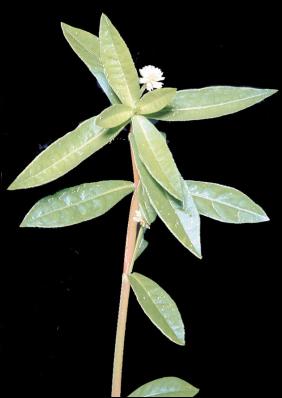
Alligator Weed in flower.
The regional council is already battling two infestations of alligator weed (Alternanthera philoxeroides) discovered on farmland and in an avocado orchard near Katikati last year. Staff also narrowly averted “a potential environmental disaster” when the weed was found growing prolifically in ponds at two western Bay of Plenty wastewater plants, says Environment Bay of Plenty pest plant officer Walter Stahel. Fortunately, it had not yet spread into nearby drains.
However, Mr Stahel is concerned the aquatic plant – which grows on land as well as in water - may be more widespread than initially thought. A specimen displayed at Katikati’s A and P Show on Sunday created a “bit of a stir” with one fairly firm sighting reported by a local resident. “We are pretty sure we have found another infestation and suspect there may be more,” Mr Stahel says.
A native of South America, alligator weed is easily recognised by its white, papery, clover-like flowers. It is a serious problem in waterways in the United State of America, where it forms tangled mats and restricts water flow. Although an aquatic plant, it can also grow on land, where it can damage crops like kumara, squash and maize.
Alligator weed is notoriously difficult to get rid of, especially when it grows on land, because of its extremely deep roots. “Chemicals can’t get far enough down the root to kill the plant. So you have to persevere – and it can take many years,” Mr Stahel says. Because of this, he believes that if the weed becomes established, it will be almost impossible to get rid of it.
Alligator weed is already widespread in Northland and has been discovered in Auckland and the Waikato. The Bay of Plenty hosts a handful of land-based sites, which are now under intensive long-term control programmes.
Mr Stahel asks Katikati residents to report any plants that may look like Alligator Weed. Environment Bay of Plenty will take responsibility for eradication, he says. “It is really important that we catch infestations early,” he says. “So, please, call us if you notice a strange plant. We don’t mind if it turns out to be a false alarm.”
Mr Stahel can be contacted on 0800 ENV BOP
(368
267).
 Gordon Campbell: On How US Courts Are Helping Donald Trump Steal The Mid-Terms
 NZ National Party: Judith Collins’ Valedictory Speech
 Forest And Bird: Government Biodiversity Credit Scheme Welcomed As Opportunity For Restoration
 Office of the Ombudsman: Ombudsman Publishes Findings On Ministry Of Education Sensitive Claims Scheme
 Nelson City Council: Mayor Welcomes Auditor-General Decision Not To Prosecute Councillor
 Johnnie Freeland: Ko Tātou Tātou - Climate Action In Aotearoa Begins With Relationship
 Zero Waste Network Aotearoa: Container Return Scheme Bill Would Double Recycling Rates And Put Money Back In Households


