
 Scoop has an Ethical Paywall


Accessible Suspension Bridge Swings Into Action At Kaitoke Regional Park
The highly anticipated suspension bridge at Kaitoke Regional Park is now open, meaning more visitors can connect with nature at one of our region’s most beloved parks.
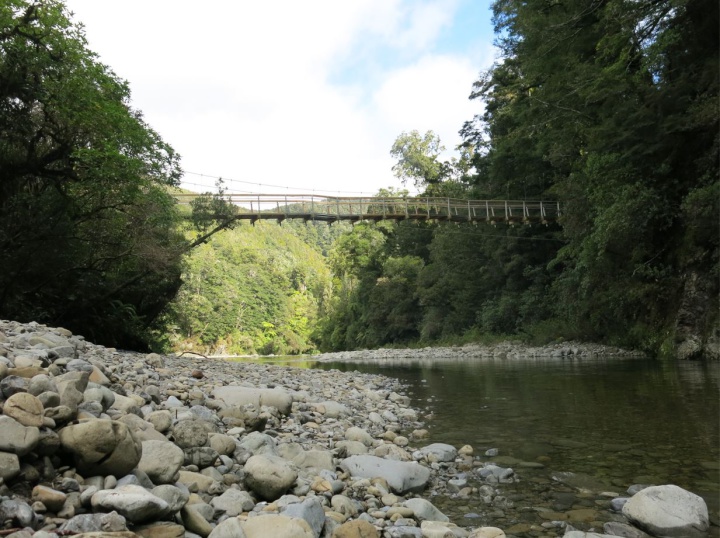
“Having the new bridge means I, like many others with access needs, can finally visit the rain forest on the other side of the Hutt River, something that hasn’t been possible until now,” says Genevieve McLachlan, who helped Greater Wellington ensure the bridge’s design was up to accessibility standards.
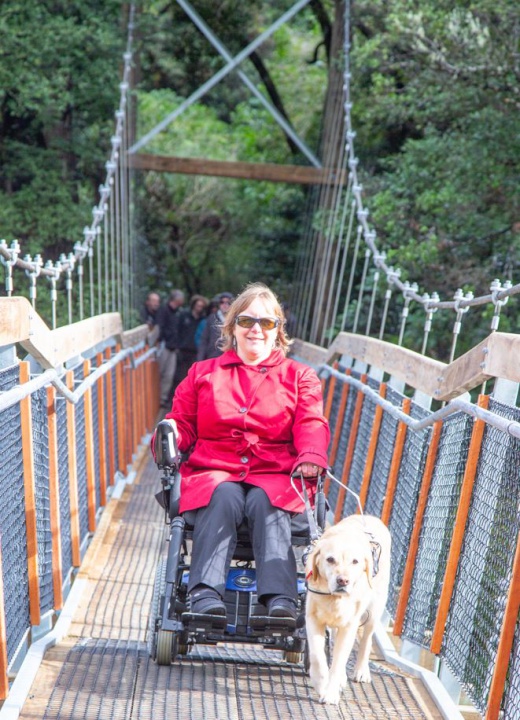
Genevieve McLachlan crosses the new Kaitoke swing bridge for the first time
Genevieve is a contractor for Be. Lab, an organisation which aims to make New Zealand the most accessible nation in the world. To do this, they work with organisations and citizens to enable greater accessibility for all, while redefining the way accessibility is thought about and discussed.
The new bridge makes it easier for the one in four New Zealanders with access needs or disabilities to experience the magnificent natural setting at Kaitoke. The bridge connects a stunning walk that goes through rainforest containing centuries-old rata, rimu, beech and the Hutt River gorge.
“It’s a fantastic outcome for our whole community,” says Greater Wellington Councillor and Upper Hutt local Ros Connelley, “People were a bit gutted when the bridge closed for construction earlier this year because it cut off access to a really well loved track. But everyone was a good sport about it, they understood the old bridge just wasn’t fit for purpose – it wasn’t wide enough to accommodate wheelchairs, prams, or the popularity of the track.”
On busy days, people would have to queue up to cross the bridge.
“The fact the view from the bridge makes for an ideal selfie location didn’t help with getting people across efficiently! Now, people will be able to cross in both directions at one time,” says Cr Connelley.
Genevieve reckons that the bridge is one of the first of its kind in New Zealand.
“When I did the initial research for the design plan review, I couldn’t find any similar bridges in New Zealand,” she says.
Built by Abseil Access, the bridge is a triumph of both engineering and the human spirit. Its unique location required the three-person team to camp overnight in the park for 45 days while construction was completed. When torrential rains fell in June, the team not only worked through the rain, they camped out in it.
The work involved a 15-foot crane truck, a chopper, and four days spent in the river as the team dismantled the old bridge piece by piece.
Once the bridge was officially opened, Genevieve was invited by Greater Wellington to be one of the first people to cross it. She describes it as an amazing experience – if a bit scary.
“Initially I wouldn’t look around but with encouragement, I quickly gained more confidence and looked at the amazing view. I just wanted to stay there. Being able to get into the rain forest on the other side was also amazing. I had no idea of its rich history. I’m looking forward to spending more time there in summer.
“I’d encourage anyone with access needs, whether you’re a parent with a pram, or use mobility equipment, to explore this amazing park and cross the bridge to the rain forest on the other side,” adds Genevieve.
 Gordon Campbell: On Children’s Book Classics - The Moomins
 Johnnie Freeland: Ko Tātou Tātou - Climate Action In Aotearoa Begins With Relationship
 Zero Waste Network Aotearoa: Container Return Scheme Bill Would Double Recycling Rates And Put Money Back In Households
 Wellington City Council: Statement From The Wellington Mayoral Forum On Options For Regional Governance Reform
 MUNZ: TAIC Report On Kaitaki Incident Gives Shocking Picture Of Decline Of NZ Maritime Infrastructure
 Greenpeace: New Climate Report Yet More Reason To Reduce Dairy Herd
 Better Public Media: Opposing Plans To Scrap The BSA


