
 Scoop has an Ethical Paywall


Warmer Than Usual Weather Ahead, Wetter In North And East, As La Niña Signals Strengthen
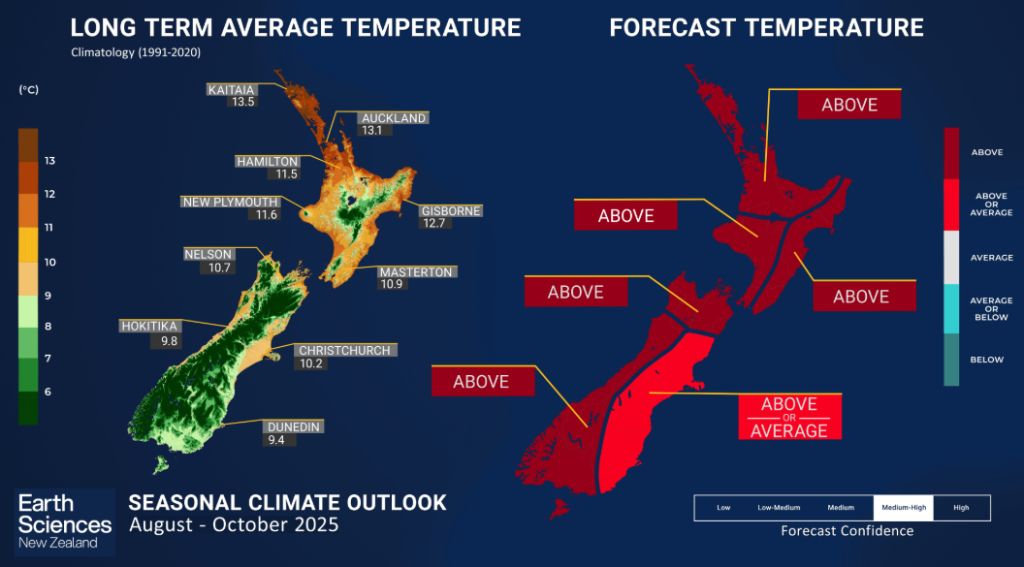
Earth Sciences New Zealand (formerly NIWA) Seasonal Outlook Climate August to October 2025 suggests warm, damp weather, with La Niña’s possible return.
Parts of New Zealand are likely to experience more wet, warm weather over the next three-month period, with shifting ocean conditions hinting at a possible return to La Niña by the end of the year, according to the latest Earth Sciences New Zealand (formerly NIWA) Seasonal Climate Outlook for August to October 2025.
More frequent northeasterly to easterly air flows are expected over the next three months as winter turns into spring, says meteorologist Chris Brandolino, principal scientist at Earth Sciences New Zealand. "The likelihood of tropical and subtropical systems influencing New Zealand remains elevated, and this is associated with an increased risk of heavy rainfall events, including those linked to atmospheric rivers, and flooding."
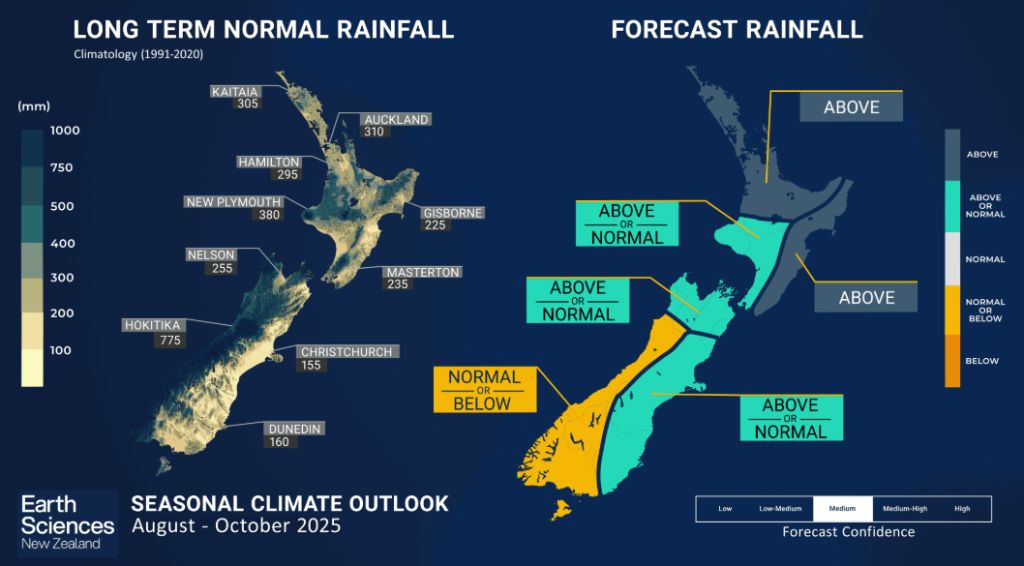
Above normal rainfall is expected in the north and east of the North Island. "These anticipated rainfall patterns are driven by circulation anomalies that heighten the risk of heavy rainfall events in the north and east of the North Island. Conversely, a shift toward more persistent easterly flow anomalies is expected as the season progresses, increasing the likelihood of dry conditions in the southwest of the South Island."
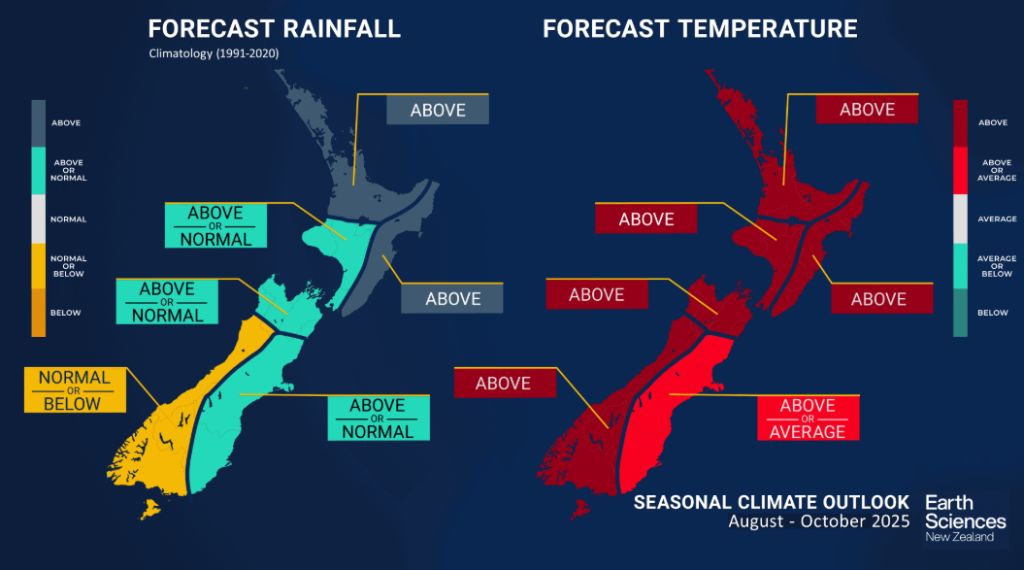
Above average seasonal air temperatures are expected across most of the country, except the east of the South Island, for which above average or near average temperatures are about equally likely, says Brandolino. "Cold snaps and frosts may still occur, but less often than usual."
Soil moisture levels and river flows are expected to be near normal in the north and west of the North Island, and near normal or below normal in the east of the North Island. Near normal or above normal soil moisture levels and river flows are forecast for the South Island.
While conditions in the tropical Pacific remain officially ENSO-neutral, oceanic trends throughout July have moved closer to La Niña territory. "Subsurface temperatures and ocean heat content are showing clear signs of change, boosting the chances of a La Niña developing later in 2025."
"Sea surface temperatures remain above average around New Zealand, particularly off the west coasts of both islands, where marine heatwave conditions persist."
For more detailed information, including for each region, visit:
Seasonal Climate Outlook August - October 2025 | Earth Sciences New Zealand | NIWA (https://niwa.co.nz/climate-and-weather/seasonal-climate-outlook/seasonal-climate-outlook-august-october-2025)
Sub-seasonal, or monthly, projections of rainfall and dryness are updated daily through the NIWA35 forecast.
On 1 July 2025, GNS Science and NIWA - both internationally recognised research organisations - merged to create Earth Sciences New Zealand.
 Gordon Campbell: On Children’s Book Classics - The Moomins
 Zero Waste Network Aotearoa: Container Return Scheme Bill Would Double Recycling Rates And Put Money Back In Households
 Wellington City Council: Statement From The Wellington Mayoral Forum On Options For Regional Governance Reform
 MUNZ: TAIC Report On Kaitaki Incident Gives Shocking Picture Of Decline Of NZ Maritime Infrastructure
 Greenpeace: New Climate Report Yet More Reason To Reduce Dairy Herd
 Better Public Media: Opposing Plans To Scrap The BSA
 Internal Affairs: Citizenship Test For Citizenship By Grant Applicants From Late 2027


