
 Scoop has an Ethical Paywall


NZ Army Embraces Race To Latest Drone Technology
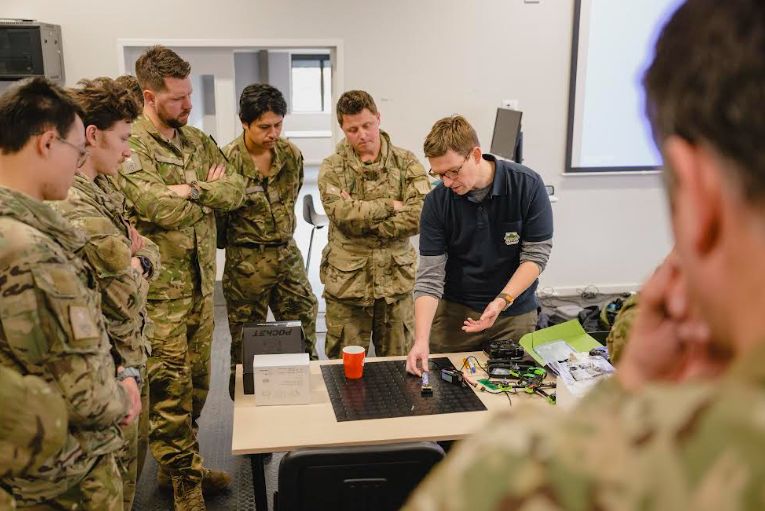
The New Zealand Army is using local technology as it explores the rapidly expanding field of drone warfare and tackling FPV (first-person view) technology with the capability for offensive strikes.
Drones, or uncrewed aerial systems (UAS), have become a critical part of the NZ Army’s intelligence, surveillance, target acquisition and reconnaissance (ISR) capabilities in recent years, and perform a crucial role in its overall combat system.
“UAS are now a ubiquitous part of modern military operations, from humanitarian assistance operations to high-intensity combat,” said the NZ Army’s UAS lead, Captain Richard Adams.
“We must continuously adapt with urgency to ensure our personnel are given the tools they need.
“Based on reporting from Ukraine, drones now account for approximately 70 per cent of casualties on the modern battlefield. The ability to both effectively operate drones, and protect against them, is crucial.”
Drones were increasingly considered to be as common as a rifle, however they were only one platform within a system, and the NZ Army was working to integrate them alongside more traditional systems and other emerging technology, Captain Adams said.
The NZ Army is an active participant in and supporter of the Ukrainian Drone Capability Coalition, for which the New Zealand Government has contributed $8 million to date.
“Our participation in that coalition has been key to understanding this technology as it rapidly evolves,” Captain Adams said.
Last week, 10 qualified drone pilots were trained on FPV platforms at Burnham Military Camp on a course led by 2nd/1st Battalion, Royal New Zealand Infantry Regiment (2/1 RNZIR).
New Zealand-based drone companies Kiwi Quads and Fenix provided drones that could be 3D printed and assembled on site.
Course instructor Sergeant Lachlan McDonald said they were low-cost, easy to build and offered an additional effect to ISR – they could deliver an offensive strike on a target.
“It is an exciting time, with new technology rapidly emerging around the world and changing the way combat occurs on the modern battlefield - we want to keep pace with that innovation and find ways to deliver the most effective warfighting unit,” he said.
Captain Adams said while the NZ Army currently did not operate FPV systems, their impact on the modern battlefield was clear.
“We are actively looking to introduce these systems. The work being done at 2/1 RNZIR is a key step in identifying those soldiers who have the aptitude and ability to operate these systems.”
Next month, NZ Army personnel will test their drone-piloting skills against the best in the world, with a tri-Service team heading to the United Kingdom to compete in the 14-nation Military International Drone Racing Tournament.
Such competitions allow NZ Army personnel to enhance their skillsets across a variety of platforms.
“Providing the necessary training to develop their skills further puts us in the best possible position to adopt this capability at pace,” Captain Adams said.
 Gordon Campbell: On The Risks Of AI In The Workplace
 Horizon Research: New Poll Finds High Concern About Fuel Situation
 Tiaki Wai: Over 1,150 People Give Feedback On Tiaki Wai Water Services Strategy
 Greenpeace Aotearoa: Israeli Forces Illegally Attack Peaceful Humanitarian Flotilla
 Zero Waste Network: Container Return Scheme Bill Could Save Councils $50m A Year And Put Money Back In Households
 Office of the Privacy Commissioner: Privacy Commissioner Does Not Support Policing Amendment Bill
 Foreign Affairs Defence and Trade Committee: Have Your Say On The International Treaty Examination Of The New Zealand—India Free Trade Agreement


