
 Scoop has an Ethical Paywall


New Poll Finds High Concern About Fuel Situation
A nationwide Horizon Research survey conducted from April 20 to 28 2026 on the fuel situation as a result of the war in the Middle East finds the main concerns are
- Rising fuel costs – 77% said this was a concern. This is the equivalent of 2,972,000 adults
- 65% (2,505,000 adults) are concerned about higher inflation caused by fuel price rises and shortages
- Fuel supply shortages – 59% (2,284,000 adults) are concerned, and
- Supply of services and goods – 58% (2,253,000 adults).
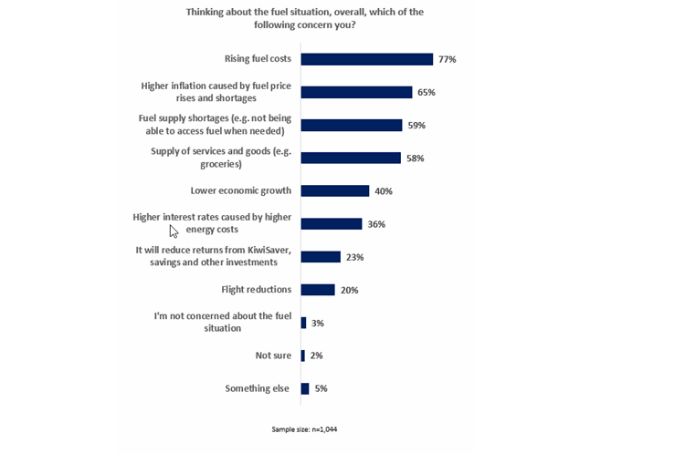
All age groups are concerned about the fuel situation, with rising fuel costs being the top concern for people under 64 years.
45-64 year olds are more likely to be concerned than total sample that their KiwiSaver/other investment returns will reduce.
55-64 and 75+ year olds are concerned about lower economic growth.
Higher income households have more concerns about the fuel situation. They are more likely to be concerned about economic growth and interest rates.
30% of people with a household income more than $150,000 are worried about flight reductions.
Concerns if fuel supplies need to be managed
If fuel supplies need to be managed, with limits on how much fuel can buy, the main concern for 65% (2,512,000 adults) is the increased cost of fuel.
54% (2,083,000 adults are concerned about accessing goods and services.
Half of adults are also concerned about
- Shortage of fuel
- Not being able to travel for essential needs, like work and healthcare, and
- Panic buying.
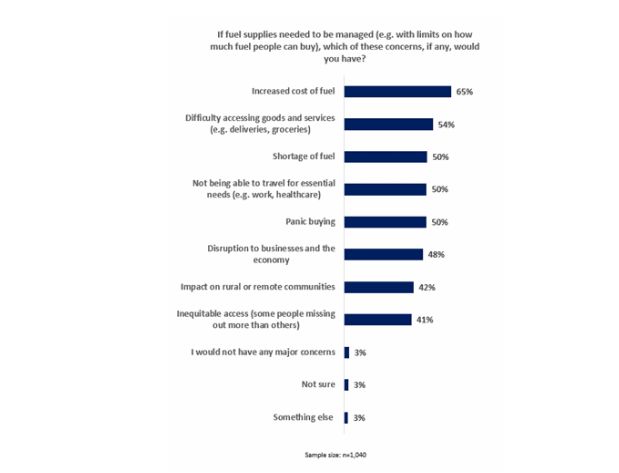
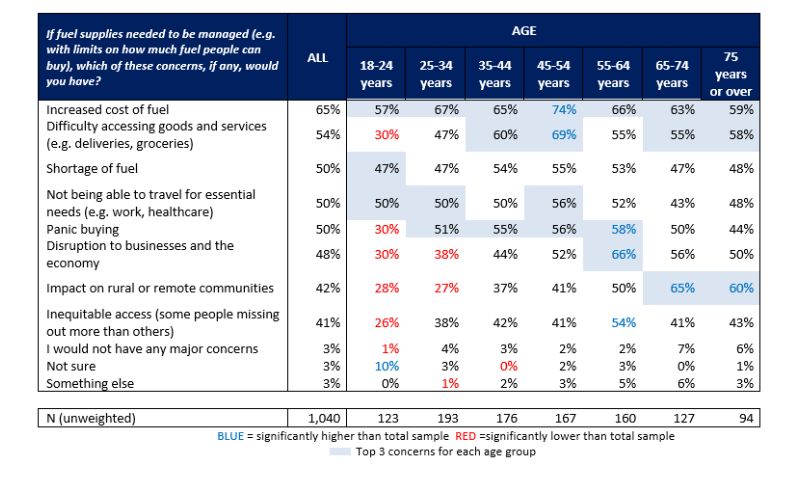
All age groups are concerned about the increased cost of fuel if supplies needed to be managed.
45-54 year olds are most likely to be concerned about the difficulty accessing goods and services.
55-64 are more likely to be concerned about the disruption to businesses and the economy.
65+ year olds are concerned about impact on rural or remote communities.
What people have done in response
The fuel crisis is shifting household spending and behaviour.
81% of adults have already made some changes in response to the fuel crisis.
59% (2,284,000 adults) have reduced driving.
38% (1,457,000 adults) have reduced spending in other areas, such as eating out or retail shopping.
29% (1,105,000 adults) have reduced spending on other necessities, such as groceries or electricity use.
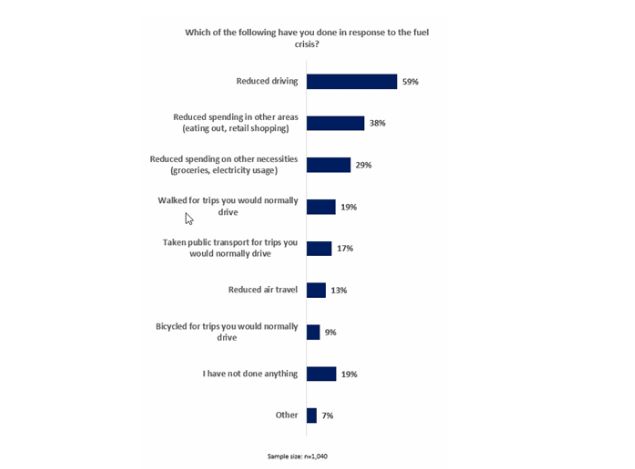
In response to the fuel crisis, 25% of 18-24 year olds have taken public transport for trips they would normally drive.
Among 45-54 year olds, 51% reduced spending in other areas, such as eating out or retail shopping and 44% reduced spending on other necessities, such as groceries or electricity use.
32% of 65-74 year olds have not done anything in response to the fuel crisis.
42% of people with a household income less than $50k have reduced spending in other areas, such as eating out or retail.
33% of people with a household income less than $50k reduced spending on other necessities, such as groceries or electricity usage. Significantly higher than 23% of those with a household income more than $150k.
How is Government handling the fuel crisis?
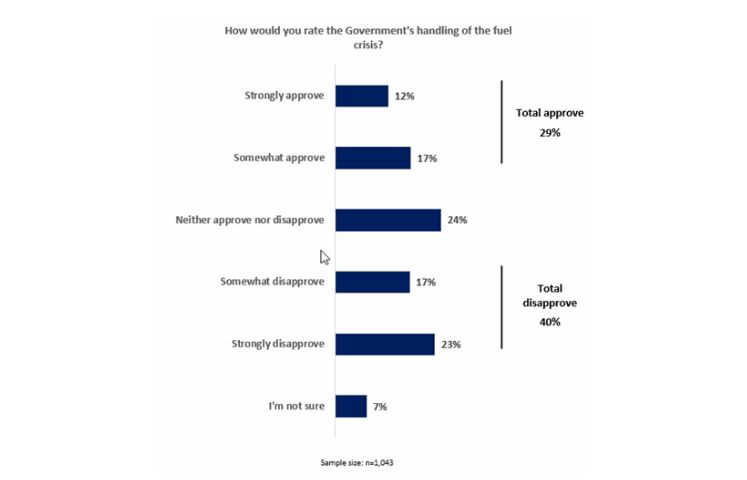
Overall, there is disapproval of how the Government is handling the fuel crisis - 40% disapprove (1,527,000 adults) while 29% (1,133,000 adults) approve.
- 23% (874,000 adults) strongly disapprove
- 12% (468,000 adults) strongly approve.
60% of
National and 51% of ACT voters
approve how the Government is handling the fuel
crisis.
73% of Green and 62% of Labour voters do not approve of how it is being handled.
New Zealand First voters are split – 31% approve and 37% do not approve.
Confidence, looking ahead
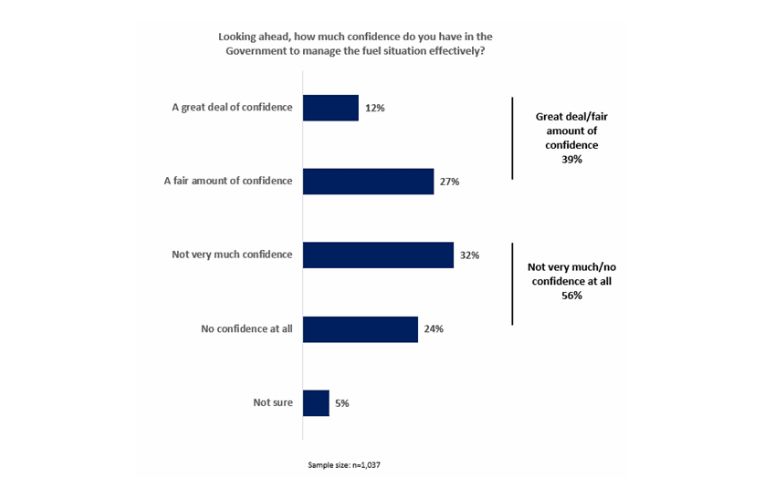
Looking ahead, people have little confidence in how the Government will manage the situation effectively – 56% (2,145,000 adults) have not very much or no confidence at all.
- 24% (928,000 adults) have no confidence at all.
39% (1,511,000 adults) have a great deal or fair amount of confidence in the Government’s managing of the fuel situation.
- 12% (452,000 adults) have a great deal of confidence.
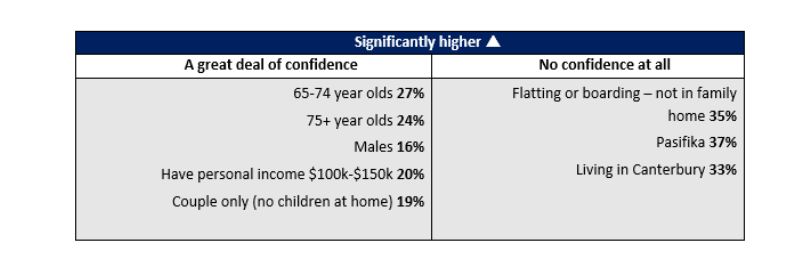
The table below shows significant differences among groups who have a great deal or no confidence at all in how the Government will manage the fuel situation.
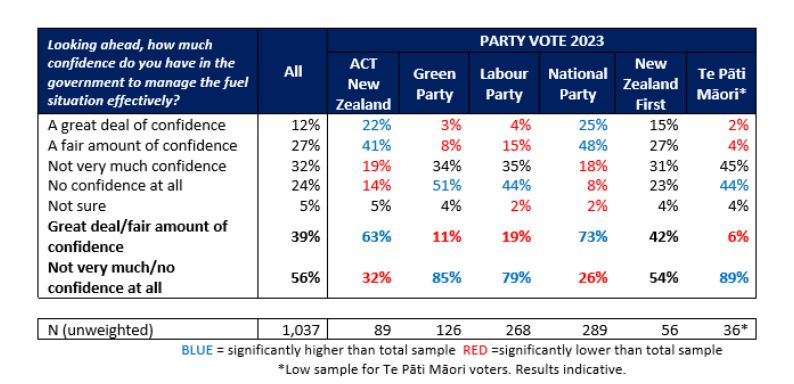
Confidence by party vote 2023
73% of National and 63% of ACT voters have a great deal or fair amount of confidence in the Government’s future management of the fuel situation.
85% of Green and 79% of Labour voters have no confidence.
54% of New Zealand First voters have no confidence.
23% of New Zealand First voters have no confidence at all.
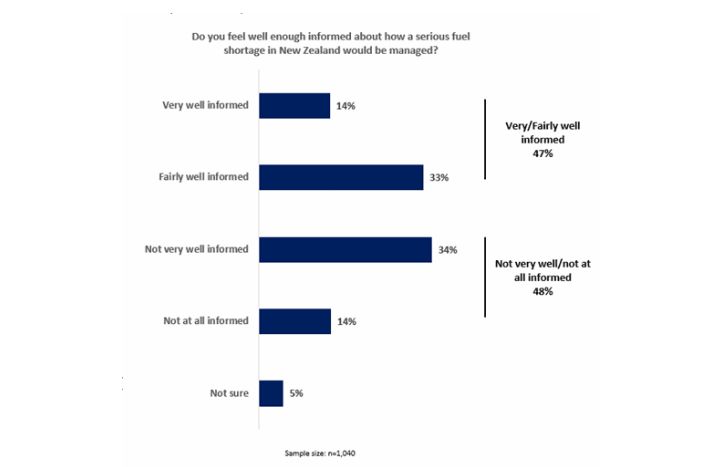
How well informed do people feel?
Results are split on how well informed people feel about how a serious fuel shortage would be managed. Nearly half of adults feel ill informed.
47% (1,801,000 adults) feel very/fairly well informed.
- 14% (545,000 adults) feel very well informed.
48% (1,875,000 adults) feel they are not very well/not at all informed.
- 14% (553,000 adults) do not feel at all informed.
The survey was conducted as part of Horizon's public interest research programme, to ensure New Zealanders are heard.
Methodology
Research method
An online survey of adults living in New Zealand aged 18 and older.
Sample sources
Members of two nationwide Horizon Research panels and a third-party panel (used for source diversity).
Fieldwork dates
20 to 28 April 2026
Sample size
1,044 adults.
Weighting
The total sample is weighted on age, gender, ethnicity, region and Party Vote 2023 to match the NZ adult population.
Maximum predicted margin of error
±3% at the 95% confidence level.
Population estimates in the report
These are based on the Stats NZ Census 2023 population of 3,865,235 people aged 18 or more. All population numbers are to the nearest thousand.
 Gordon Campbell: On The Risks Of AI In The Workplace
 Horizon Research: New Poll Finds High Concern About Fuel Situation
 Tiaki Wai: Over 1,150 People Give Feedback On Tiaki Wai Water Services Strategy
 Greenpeace Aotearoa: Israeli Forces Illegally Attack Peaceful Humanitarian Flotilla
 Zero Waste Network: Container Return Scheme Bill Could Save Councils $50m A Year And Put Money Back In Households
 Office of the Privacy Commissioner: Privacy Commissioner Does Not Support Policing Amendment Bill
 Foreign Affairs Defence and Trade Committee: Have Your Say On The International Treaty Examination Of The New Zealand—India Free Trade Agreement


