
 Scoop has an Ethical Paywall


Country Life: Whanganui Couple Turning Harakeke Into Paper

Gianina Schwanecke, for Country Life
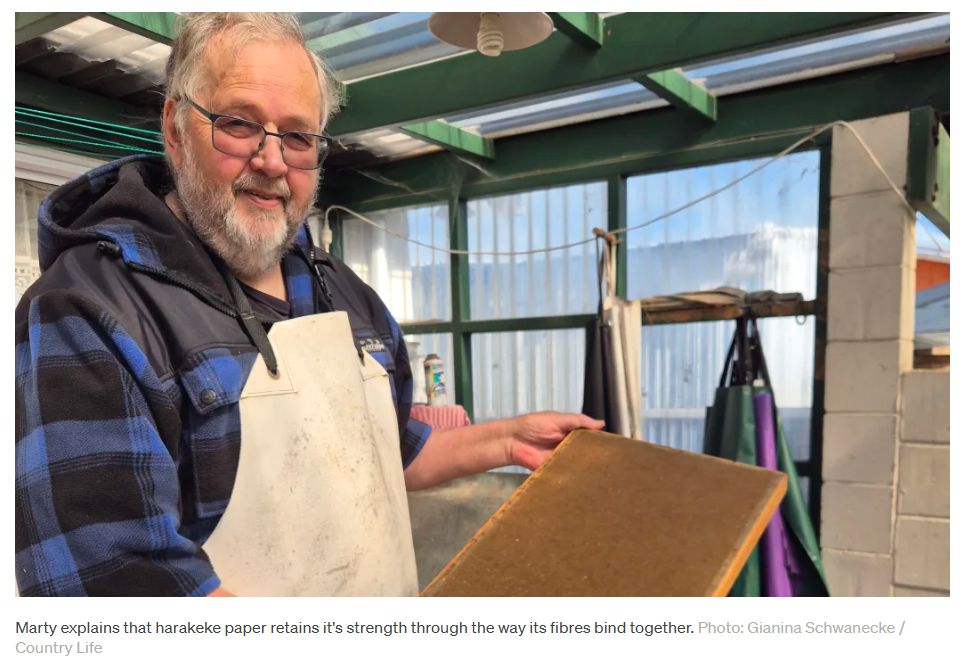
There are many lessons in the pā harakeke, the place where New Zealand's distinctive flax is gathered.
The first lesson: harakeke is not a flax, it's in fact a type of lily, Marty and Marilyn Vreede of Pakohe told Country Life.
The Whanganui couple, a printmaker and te reo Māori teacher, have been making harakeke paper and teaching others to do the same for close to 30 years.
Their workshops include learning about the tikanga involved in harvesting harakeke, with plenty of reo woven throughout too.
Marilyn didn't grow up speaking Māori but rather said she was tricked into attending a week-long immersion course by an aunt in need of a lift.
"I will be forever thankful to her, because it's probably the best thing I've ever done, diving into the deep end," she said.
"It was the best day or best time of my life, but it's also the saddest time of my life, because I realised I'd lost 30 years of who I was. So I'm a staunch advocate for te reo, a staunch advocate for the tikanga."
She went on to become a teacher of te reo, which is how she met Marty.
Through te reo, she learned more about weaving and harakeke.
"I didn't want to know anything else other than the reo, but then I found weaving - I'm not a very good weaver - and the harakeke," Marilyn said.
"There's a lot of lessons in the pā harakeke."
Each rohe has its own tikanga for harvesting harakeke, Marilyn explained.
"There's variations, of course, with the different iwi, but we have been taught here that we leave the rito, which is the new plant, or the baby, the parents, the grandparents, and then we start harvesting from the great-grandparents on. But we don't have to do that very often, because the weavers do it for us."
The couple collect damaged parts of the plant or harakeke offcuts from about 40 local weavers to use in their paper making.
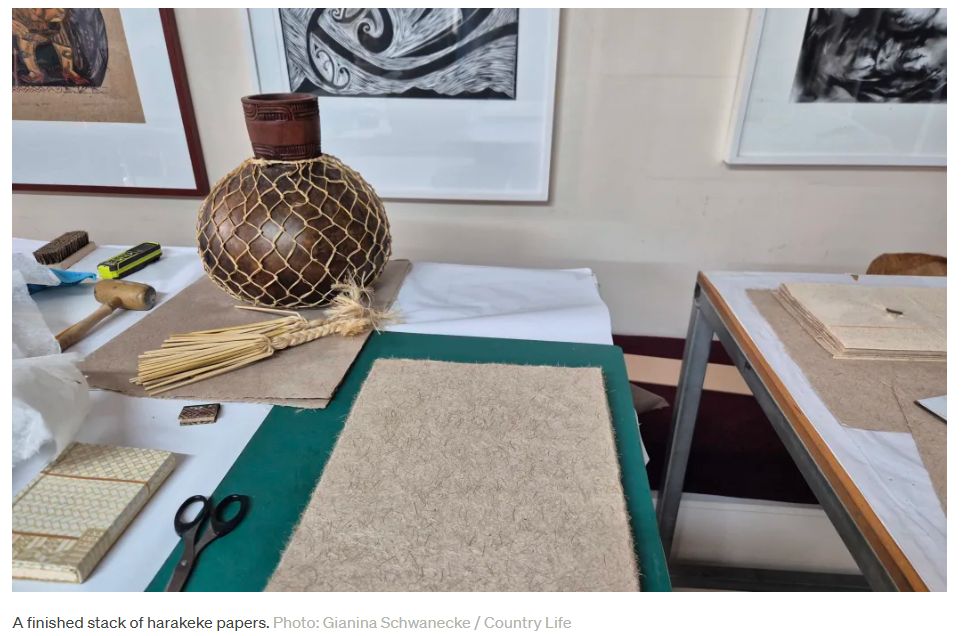
Marty said working with the weavers was the "best way of going about it". They had the knowledge of the best flax to use, and repurposing their castaway tips, butts and spines that can't be used to create something else, makes it more sustainable.
Any parts that Marty and Marilyn can't use themselves still find a new purpose as compost and mulch for their garden - fat, pink worms wriggle in dark, rich soil the colour of chocolate cake.
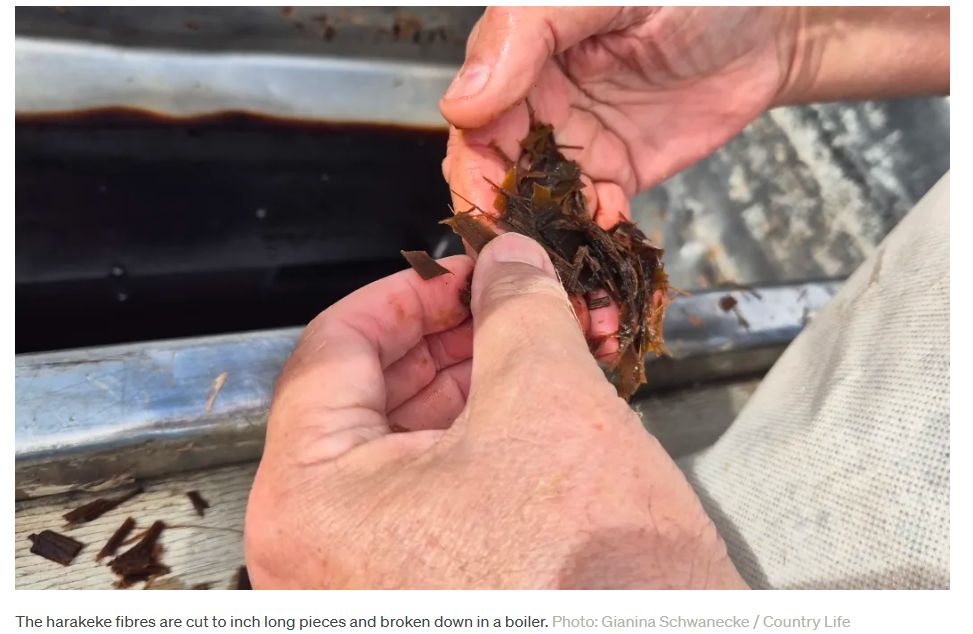
Harakeke is incredibly strong, which is why it makes such an excellent fibre for paper making. However, this means it also has to be broken down before it can be processed.
"A lot of people don't realise that harakeke fibre is incredibly strong," explained Marty. "If you run over a brown piece of fibre on the lawn from a harakeke plant, the motor will absolutely stop in an instant."
Marty explained that harakeke paper retains its strength through the way its fibres bind together - at one stage, people considered commercialising it to use as the base for international currencies.
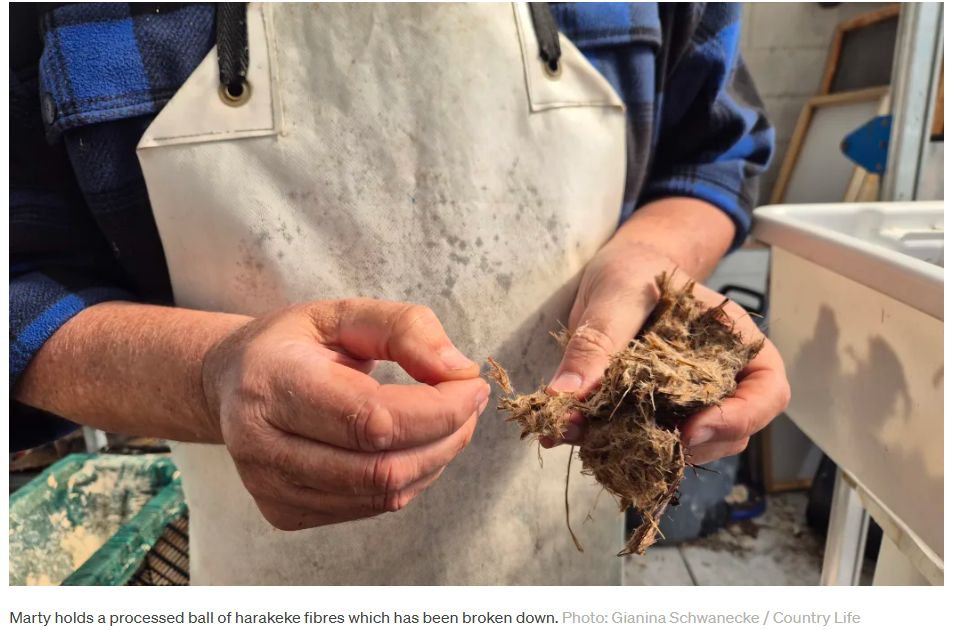
"This is perhaps the best expression of whakawhanaungatanga that I've ever come across, because now every tiny little fibre is holding onto the fibre beside it, is holding onto the fibre beside it, and so on as it goes round, and that's what makes the piece of paper."
Using a chaff cutter, he cut the harakeke down to about an inch long and then placed it into a boiler with tannins to loosen the bonds of the fibre.
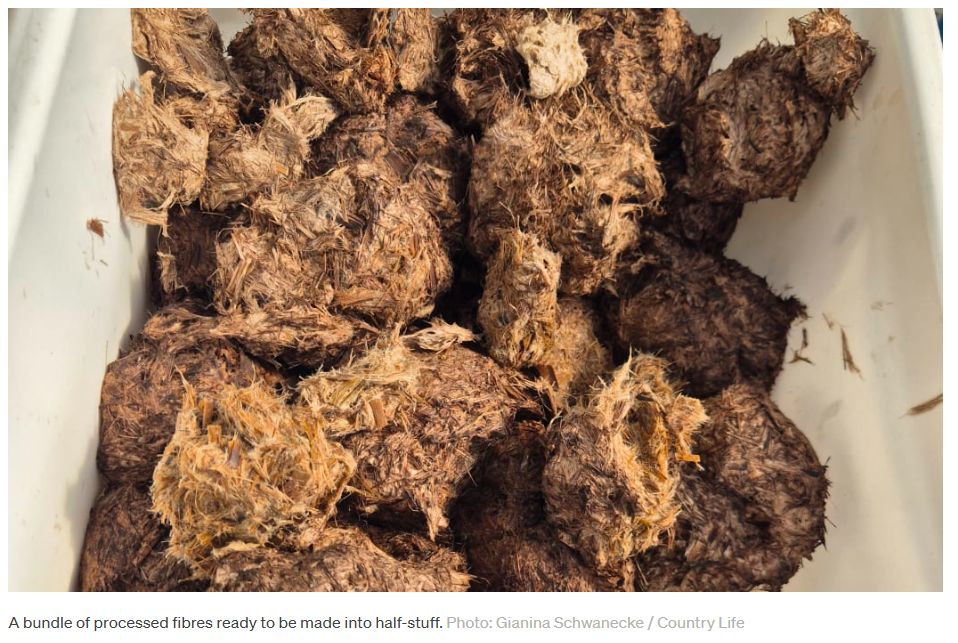
It's then rinsed before being added to a Hollander beater, where it's further broken down, pulled apart and turned into a goopy substance called half-stuff.
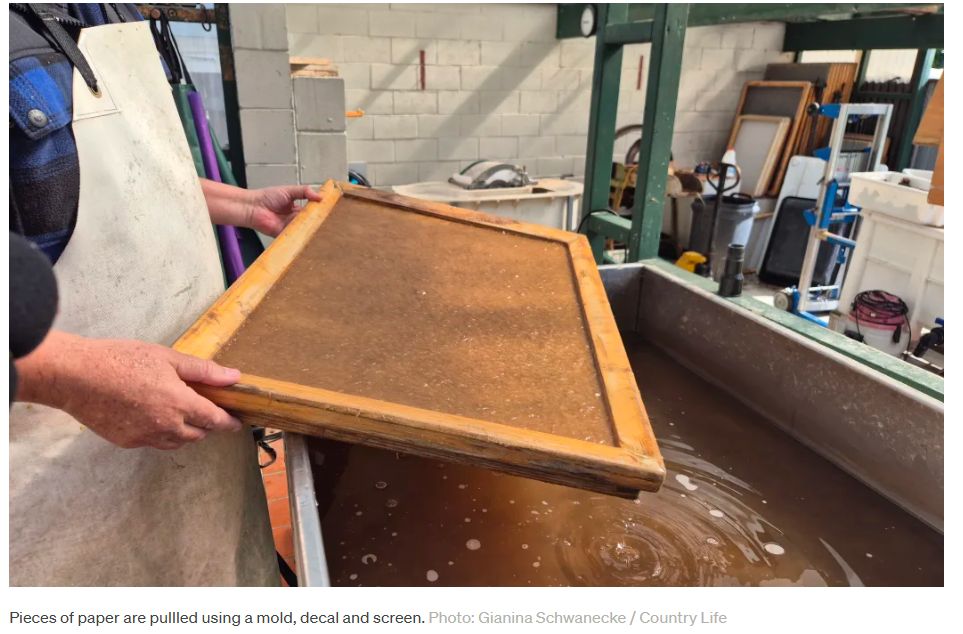
This is rehydrated and placed in a vat where Marty will pull the pieces of paper using a mould, decal and screen.
"What you're trying to do, really, is create a swimming pool of fibre on the top of the decal, and it all runs into and sits on the mesh of the mould.
"By shaking it lengthwise and widthwise, that's getting those fibrils into action and giving us no grain. What it's doing is it's actually settling it out into a very even sheet of paper.
"The decal guides the water and the fibre into the centre of the mould, and when the water drains - it's like a sieve - then that's the making of a piece of paper."
It can be messy, but also therapeutic working with the harakeke in the water, he said.
The pieces of paper are left to dry, which varies depending on weather conditions, before being cut and further processed.
"Paper looks and feels beautiful at every stage. When you're cutting the fibre and chopping it up into small pieces for the boiler, the air is full of the juices of the harakeke fibre, and it smells delicious," Marty said.
"It's just a beautiful, very sweet smell."
Inside, the couple also create resources for revitalising te reo Māori and run workshops.
Learn more:
- You can learn more about Pakohe here.
RNZ
New Zealand's public broadcaster, providing comprehensive NZ news and current affairs, specialist audio features and documentaries.
Radio New Zealand is a Crown entity established under the Radio New Zealand Act 1995. Radio New Zealand News are vital elements in our programming, providing impartial news and information to New Zealanders every day. Radio New Zealand (RNZ) provides listeners with exciting and independent radio programmes in accordance with the Radio New Zealand Charter.
 Gordon Campbell: On Children’s Book Classics - The Moomins
 Nelson City Council: Mayor Welcomes Auditor-General Decision Not To Prosecute Councillor
 Johnnie Freeland: Ko Tātou Tātou - Climate Action In Aotearoa Begins With Relationship
 Zero Waste Network Aotearoa: Container Return Scheme Bill Would Double Recycling Rates And Put Money Back In Households
 Wellington City Council: Statement From The Wellington Mayoral Forum On Options For Regional Governance Reform
 MUNZ: TAIC Report On Kaitaki Incident Gives Shocking Picture Of Decline Of NZ Maritime Infrastructure
 Greenpeace: New Climate Report Yet More Reason To Reduce Dairy Herd

