
 Scoop has an Ethical Paywall


EDS’s Advocacy Lands Marine Protection As Decision Made To Ban Bottom Contact Fishing Methods

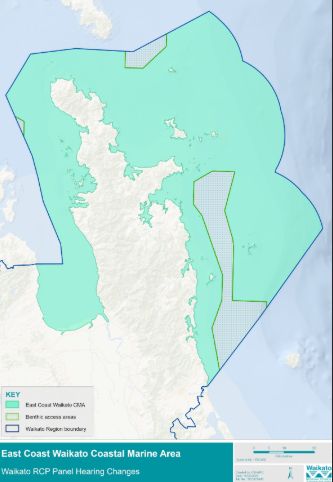
The Environmental Defence Society (EDS) hails a Waikato Regional Council decision to prohibit destructive bottom-contact fishing methods from most of the eastern Waikato coastal marine area.
“This is a landmark moment for marine protection in the Waikato region,” says EDS Chief Operating Officer and environmental lawyer Shay Schlaepfer.
“It follows uncontested scientific evidence that bottom trawling, dredging and Danish seining causes extensive and often irreversible damage to seabed ecosystems. These practices are the single largest source of physical disturbance in the Waikato coastal marine area – flattening complex habitats, killing benthic species, and fundamentally altering the structure of seabed communities.
“Regional councils have a clear responsibility under the Resource Management Act to control the effects of these fishing activities on the environment to maintain indigenous biodiversity.
“The decision by the Waikato Regional Council delivers on that statutory imperative.
“It comes as central Government processes to manage bottom trawling in the Gulf have stalled. In that vacuum, the Waikato regional planning process has stepped up to deliver real biodiversity gains.
“The decision ensures that the high-value benthic biodiversity of the eastern Waikato coastal marine area can now be protected from destructive fishing practices, creating space for marine ecosystems to flourish.
“The ban was recommended by an independent expert panel after hearing extensive submissions led by EDS on the Proposed Waikato Regional Coastal Plan. The Council has accepted that recommendation which, subject to appeals, must now be approved by the Minister of Conservation. That must occur within a reasonable timeframe.
“Any attempt to legislate over this decision would be a flagrant disregard of uncontested scientific evidence and a clear signal that the Government is not serious about recognising and managing environmental harm. EDS expects that it will be upheld and finally approved,” concluded Ms Schlaepfer.
A map showing the spatial extent of the ban is below. The solid green area would be closed to bottom trawling, dredging and Danish seine fishing under the Council’s proposed plan.
The decision is available here.
Environmental Defence Society
EDS speaks for the environment. It has influence.
Since 1971, EDS has been driving environmental protection in Aotearoa New Zealand
through law and policy change. That's why it's one of this country's most influential non-
profit organisations when it comes to achieving better environmental outcomes.
EDS has expertise in key disciplines including law, planning, landscape and science. It
operates as a policy think-tank, a litigation advocate, and a collaborator – bringing together
the private and public sectors for constructive engagement.
EDS runs conferences and seminars on topical issues, including an annual Environmental
Summit and the Climate Change and Business Conference.
EDS is a registered charity and donations to it are tax-deductible.
 Gordon Campbell: On Children’s Book Classics - The Moomins
 Zero Waste Network Aotearoa: Container Return Scheme Bill Would Double Recycling Rates And Put Money Back In Households
 Wellington City Council: Statement From The Wellington Mayoral Forum On Options For Regional Governance Reform
 MUNZ: TAIC Report On Kaitaki Incident Gives Shocking Picture Of Decline Of NZ Maritime Infrastructure
 Greenpeace: New Climate Report Yet More Reason To Reduce Dairy Herd
 Better Public Media: Opposing Plans To Scrap The BSA
 Internal Affairs: Citizenship Test For Citizenship By Grant Applicants From Late 2027


