
 Scoop has an Ethical Paywall


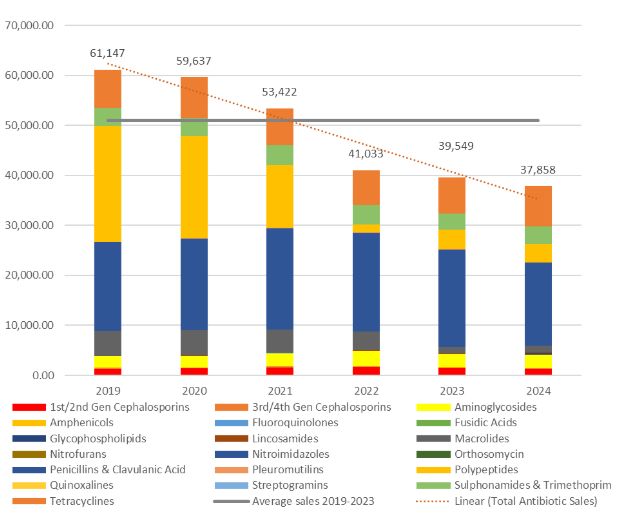
New Zealand Antibiotic Sales For Plants And Animals Continue Downward Trend
(Photo/Supplied)
New Zealand is making progress in the fight against anti-microbial resistance, with sales of veterinary and horticultural antibiotics falling for the seventh consecutive year, says New Zealand Food Safety’s (NZFS) deputy director-general Vincent Arbuckle.
“Antibiotics are essential for the treatment of bacterial infections in humans, animals and plants. If they are not used carefully, and in the prescribed amounts, we run the risk that bacteria will develop resistance to the drugs, which could have devastating effects on our health and economy.”
The latest antibiotics sales figures for plants and animals, released today in NZFS’s annual Antibiotic Agricultural Compound Sales Analysis report, are a clear sign that antibiotics are being more carefully used, Mr Arbuckle says.
“The falling sales are a result of a concerted effort by veterinarians, farmers, industry and NZFS to ensure these life-saving medicines are used appropriately so they work as intended.”
The report evaluated 18 classes of antibiotics sold during 2024 for use for farm animals, pets, and horticulture.
“Since a 2017 peak of 71,361kg, total antibiotic sales have dropped to 37,858kg in 2024. That’s an impressive 47 per cent decrease,” says Mr Arbuckle. “Additionally, results show a four per cent drop since 2023.”
As part of ongoing work to ensure the continued effectiveness of antibiotics, New Zealand Food Safety is reviewing the regulatory oversight of antibiotics used on plants and animals.
“This extensive piece of work, which involves reassessing and reclassifying hundreds of antibiotic products, has been divided into four tranches. Tranche one has been completed with tranche two in progress.”
Read about Tranche One Changes to Cephalosporin, Macrolide, and Penicillin-Based Veterinary Medicines Post-Reassessment at: https://www.mpi.govt.nz/dmsdocument/56137-Tranche-One-Changes-to-Cephalosporin-Macrolide-and-Penicillin-Based-Veterinary-Medicines-Post-Reassessment
“We also work closely with the Ministry of Health and international regulators in an effort to manage AMR,” says Mr Arbuckle.
Notes:
- Read more about the New Zealand Antimicrobial Resistance Action Plan which has been jointly developed by Ministry of Health, NZFS and representatives from across the human health, animal health and agriculture sectors at: https://www.health.govt.nz/system/files/documents/publications/new-zealand-antimicrobial-resistance-action-plan.pdf
- NZFS published the New Zealand Plant and Animal Sectors’ AMR Implementation Plan last year to underpin the national initiative: https://www.mpi.govt.nz/dmsdocument/65079/direct
- Read more about Controlling and preventing antimicrobial resistance: https://www.mpi.govt.nz/animals/veterinary-medicines-acvm/antimicrobial-resistance/
 Gordon Campbell: On Children’s Book Classics - The Moomins
 Johnnie Freeland: Ko Tātou Tātou - Climate Action In Aotearoa Begins With Relationship
 Zero Waste Network Aotearoa: Container Return Scheme Bill Would Double Recycling Rates And Put Money Back In Households
 Wellington City Council: Statement From The Wellington Mayoral Forum On Options For Regional Governance Reform
 MUNZ: TAIC Report On Kaitaki Incident Gives Shocking Picture Of Decline Of NZ Maritime Infrastructure
 Greenpeace: New Climate Report Yet More Reason To Reduce Dairy Herd
 Better Public Media: Opposing Plans To Scrap The BSA


