
 Scoop has an Ethical Paywall


High Court Considers Groundbreaking Treaty Remedy, Supported By Fiji Supreme Court Ruling
The High Court in Wellington on Monday 8 December 2025 will hear the next stage of a landmark constitutional case challenging the Crown’s disestablishment of Te Aka Whai Ora, the Māori Health Authority. This one-day hearing follows four-days of argument before the High Court in August 2025 and will consider a new cause of action never before tested in the courts of Aotearoa.
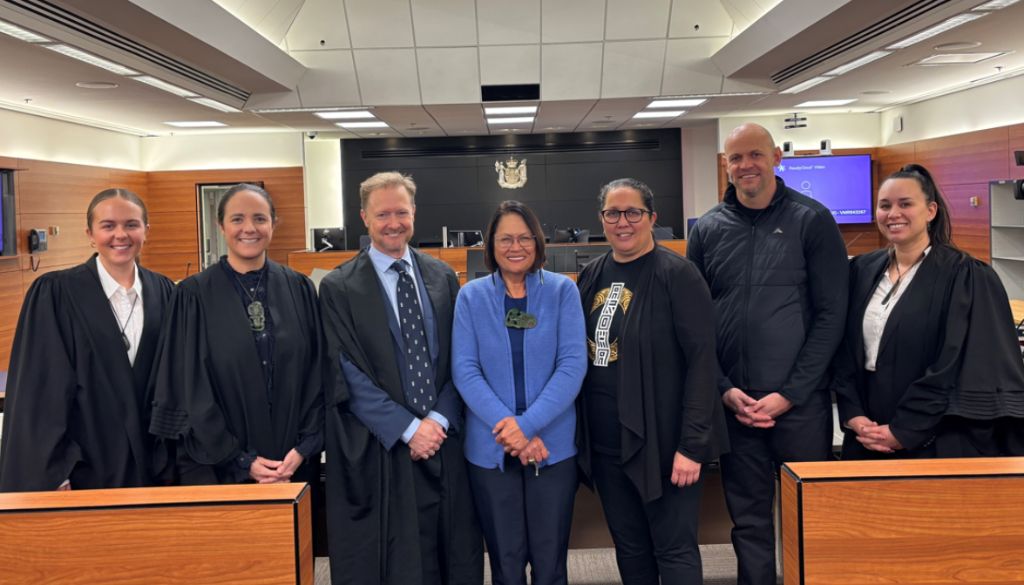
The Applicants, Te Kōhao Health, Te Puna Ora o Mataatua, Papakura Marae and Ngāti Hine Health Trust are asking the Court to confirm that it has the jurisdiction to issue a declaration of inconsistency under Te Tiriti o Waitangi, alongside the equivalent jurisdiction under the New Zealand Bill of Rights Act 1990.
They are also seeking a declaration affirming the correctness of the Waitangi Tribunal’s 2024 Hautupua Report, which found the Crown had committed multiple Treaty breaches when it disestablished Te Aka Whai Ora, a remedy no New Zealand court has ever granted.
This position is strengthened by new international jurisprudence, specifically the 2025 Fiji Supreme Court decision, in which Mr Butler KC (who also appears in this High Court matter) served as amicus. That ruling confirmed that courts can apply a qualified rule of recognition to uphold both democratic and constitutional integrity.
This case is now part of the international record. Last week in Geneva, the United Nations Committee on the Elimination of Racial Discrimination (CERD) raised the matter directly with the Justice Minister and New Zealand Crown delegation during its review of New Zealand’s human rights performance. CERD members repeatedly questioned the Crown about documented breaches of Indigenous and human rights, zeroing in on the disestablishment of Te Aka Whai Ora.
In response, a senior Crown official acknowledged that New Zealand courts have recently considered numerous cases involving alleged racial discrimination, noting: “The most significant case is Te Puna Ora o Mataatua and Attorney-General. The case concerns the disestablishment of the Māori Health Authority.”
The Applicants say the Crown’s decision was made without proper consultation with Māori and in breach of the principles of Te Tiriti o Waitangi. They argue the disestablishment removed the only independent Māori health voice within the Crown system, an authority specifically created to address decades of systemic failure and inequitable outcomes, and that this was done without any credible plan to protect Māori health, equity or uphold Māori human rights.
The case also challenges the Crown’s failure to engage with or respond to the findings of the Waitangi Tribunal, which concluded that multiple Treaty breaches had occurred.
 Gordon Campbell: On Children’s Book Classics - The Moomins
 Nelson City Council: Mayor Welcomes Auditor-General Decision Not To Prosecute Councillor
 Johnnie Freeland: Ko Tātou Tātou - Climate Action In Aotearoa Begins With Relationship
 Zero Waste Network Aotearoa: Container Return Scheme Bill Would Double Recycling Rates And Put Money Back In Households
 Wellington City Council: Statement From The Wellington Mayoral Forum On Options For Regional Governance Reform
 MUNZ: TAIC Report On Kaitaki Incident Gives Shocking Picture Of Decline Of NZ Maritime Infrastructure
 Greenpeace: New Climate Report Yet More Reason To Reduce Dairy Herd


