
 Scoop has an Ethical Paywall


The Story Does Not Finish Here
This Sunday marks fifteen years since 115 people lost their lives in the collapse of the Canterbury Television (CTV) building, a building the Royal Commission later found to be seriously deficient in its design, its engineering oversight, and its consenting process. For the families who lost loved ones, this anniversary is not simply a date on the calendar. It is a reminder of a preventable disaster and of a justice system that has yet to reflect that truth.
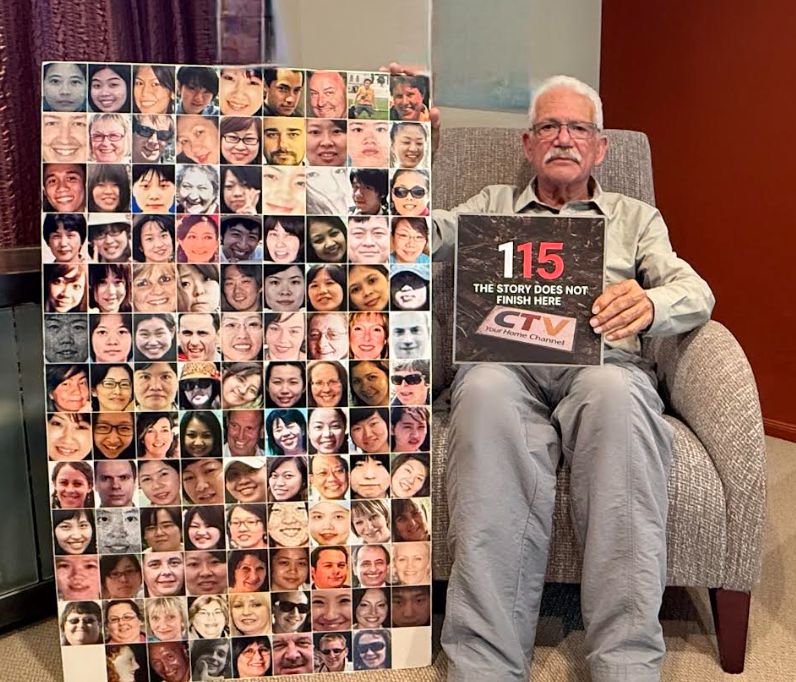
On the 30 November 2017, when police announced there was insufficient evidence to prosecute those responsible for the building’s design and construction, the decision did not land as a narrow legal assessment. It was experienced as a profound moral failure. The Royal Commission had already identified serious and systemic shortcomings. Yet, despite those findings, the criminal threshold was deemed not to be met.
For the CTV Families Group, that gap, between what feels clearly wrong and what is legally provable, remains the source of deep frustration and enduring grief. Our language at the time, words such as “not justice”, “failed”, and “we will not be silenced”, was not rhetorical flourish. It was the distilled outcome of years of engagement with official processes that, from our perspective, have consistently fallen short of genuine accountability.
Following the police announcement that no prosecution would be pursued, the CTV Families Group held a press conference on 6 December 2017. This was not a fleeting expression of anger. It marked the beginning of a sustained campaign to understand why those responsible for investigating the collapse had reversed their earlier position, shifting from telling families the case met both the evidential and publicinterest thresholds for trial to deciding it did not.
Families sought legal advice on a judicial review of the police decision, arguing that the matter should at the very least have been tested in court. After six years, four investigations, and millions of dollars spent, the outcome was stark: noone would be held criminally liable for the collapse of the Canterbury Television (CTV) building.
We described the nonprosecution decision as offensive to the basic expectation that 115 deaths in a knowndefective building would trigger the full weight of the criminal law. The sense of injustice was not abstract, it was visceral, and it demanded answers.
We also warned that declining to prosecute sends a dangerous signal to the construction and engineering sectors: that even when councils identify deficiencies, the consequences may ultimately be minimal. Such an approach risks normalising a culture where systemic failure is tolerated until disaster strikes, and even then, responsibility can dissolve in legal complexity.
Political leaders at the time reflected that discomfort. Justice Minister Andrew Little remarked, “The CTV building collapse joins Pike River as another example of those responsible getting off scotfree.
Editorials across the country echoed the sentiment, noting that the outcome offended our collective sense of justice. Yet, as Prime Minister Jacinda Ardern emphasised, the decision remained an operational one for police and the Crown. That tension, between democratic accountability and the independence of prosecutorial decisions, became yet another challenge the families were forced to navigate.
What emerges from the record is not simply a dispute about one building. It is a commentary on how a society responds when its systems fail catastrophically. For the CTV families, the absence of prosecutions is not a legal endpoint. It is a continuing wound that raises hard questions about whose lives are protected by the law, and how far institutions are willing, or able, to go to match public expectations of justice.
Fifteen years on, our resolve has not diminished. What has changed is the narrative. It has evolved from Still No Justice, Still No Accountability, Still No Closure to a new, determined stance: The Story Does Not Finish Here.
Invitation to the AttorneyGeneral
As part of this next chapter, I will be inviting the Hon Judith Collins KC, in her capacity as AttorneyGeneral, to meet with me in Christchurch. I will ask her to do something the former Labour AttorneyGeneral, David Parker, declined to do: to be fully appraised of why Police reversed their original intention for the case to proceed to trial, and to understand the implications of that decision for public confidence in the justice system.
This request is not an attempt to politicise the issue. It is an attempt to restore confidence in a system that appears to have failed 115 New Zealanders and their families.
The CTV collapse was not an unavoidable act of nature. It was a preventable disaster. Until the justice system reflects that reality, the wound will remain open.
 Gordon Campbell: On The Risks Of AI In The Workplace
 Tauranga City Council: Mauao Restoration Work Has Begun
 Horizon Research: New Poll Finds High Concern About Fuel Situation
 Tiaki Wai: Over 1,150 People Give Feedback On Tiaki Wai Water Services Strategy
 Greenpeace Aotearoa: Israeli Forces Illegally Attack Peaceful Humanitarian Flotilla
 Zero Waste Network: Container Return Scheme Bill Could Save Councils $50m A Year And Put Money Back In Households
 Office of the Privacy Commissioner: Privacy Commissioner Does Not Support Policing Amendment Bill


