
 Scoop has an Ethical Paywall


Across The Tasman: Wāhine From Gang Whānau Lead Indigenous Healing
Wāhine from gang whānau in Aotearoa are leading their own healing journeys. The research documenting that work is now crossing the Tasman.
The vehicle for that healing is the Pouhine wānanga, a traditional programme with over 30 years of use in Hauraki, co-designed with elders and facilitated by the CEO of Te Whāriki Manawāhine o Hauraki, Denise Messiter. Participants have evaluated it as an effective and gentle model for healing intergenerational trauma.
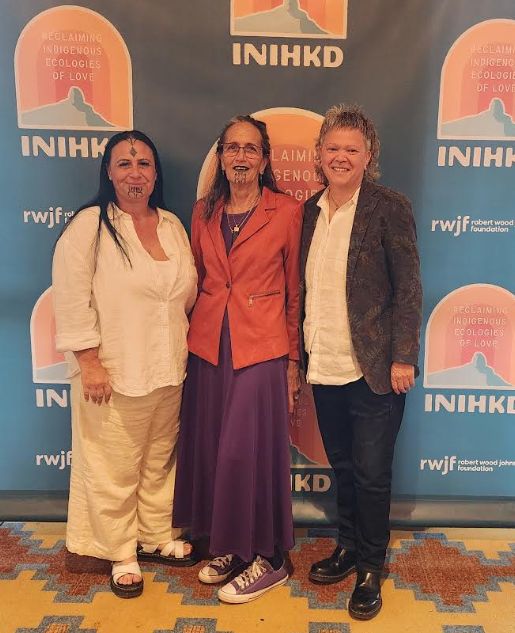
Lead researcher Paora Moyle was awarded a Health Research Council Rangahau Hauora Māori Researcher First Grant to support a project where wāhine from gang whānau voice their lived experiences in their own words. Using Mana Wāhine methodology and pūrākau kōrero, the project captures the healing journeys of these women.
This is the first research of its kind in Aotearoa, led by wāhine from gang whānau. The findings are compiled from the women's own voices rather than written around them. The ngako of this work is for wāhine to tell the story of who they are and why, to be heard, and not be continuously defined by others.
This research sits within what the Abuse in Care Royal Commission of Inquiry made impossible to ignore. Eighty to ninety percent of Māori gang members were abused in state care as children. That treatment drove many of them toward gang whānau for the connection and protection denied them. Gang whānau have always known that the solutions to that harm must come from within. This research documents what that looks like when wāhine lead it.
These are mothers, grandmothers, great-grandmothers, sisters, partners, and leaders who live, laugh, love, and breathe the same air as everyone else in Aotearoa. They work, pay taxes, raise tamariki, plan for the future, and dream of a world where their mokopuna can thrive in violence-free communities.
"We always intended for wāhine to both participate in the Pouhine and for their leadership to train as facilitators, carrying those ancestral teachings back to their own whānau. That facilitation pathway is not separate from healing. It is healing," said Paora Moyle, Director of Research at Te Whāriki Manawāhine o Hauraki.
The Pouhine uses ancestral sound techniques, going beyond formal karanga, to reconnect wāhine Māori with their indigenous voice. These are practices that can be led, carried, and extended by the communities they are designed to serve.
Paula Ormsby, leader of the Wāhine Toa Chapter of the Mongrel Mob Kingdom in Waikato, whose journey is part of this body of work, has spoken to what the Pouhine has meant. "The Pouhine has saved my life. And I am seeing that happen for so many of our wāhine who experience this healing wānanga."
As the research developed, so did the relationships within it. Whakapapa connections between participants who carry both Māori and First Nations Australian ancestry have carried the Pouhine across Te Moana Nui a Kiwa. A wānanga is being held this weekend in Australia with wāhine from gang whānau, with the programme’s ancestral teachings travelling through whakapapa that was always there.
The wāhine have been up front about why their stories must travel.
"Our gang whānau are everywhere and some of us whakapapa to both Aotearoa and First Nations Australia. But no matter where we are, our stories need to be told."
"The INIHKD conferences are a wonderful opportunity to really share about how we live our lives and the way we are often treated by those who occupy our stolen whenua."
Research findings are due for release in August 2026. The project builds on Te Whāriki's presentation at the INIHKD Reclaiming Indigenous Ecologies of Love Conference in Albuquerque, New Mexico in 2025. There, wāhine gang whānau leaders took the international stage for the first time at a gathering of this scale, centring pūrākau as the primary form of knowledge sharing alongside an international audience of Indigenous health scholars, researchers, and practitioners.
The research and its findings have been accepted for centre stage at the Reclaiming Indigenous Ecologies of Love for Future Generations (RIEL) gathering hosted by INIHKD in Rarotonga, Cook Islands, from 9 to 13 November 2026. The gathering brings together Indigenous communities from Aotearoa, Australia, Hawai'i, the Pacific, and North America, centring Indigenous health and healing, environmental and ecological systems, and the relationship between ancestral knowledge and advanced technologies. For the wāhine in this research, Rarotonga is not a destination. It is the next room in a much longer conversation they have always been leading.
 Gordon Campbell: On Children’s Book Classics - The Moomins
 Nelson City Council: Mayor Welcomes Auditor-General Decision Not To Prosecute Councillor
 Johnnie Freeland: Ko Tātou Tātou - Climate Action In Aotearoa Begins With Relationship
 Zero Waste Network Aotearoa: Container Return Scheme Bill Would Double Recycling Rates And Put Money Back In Households
 Wellington City Council: Statement From The Wellington Mayoral Forum On Options For Regional Governance Reform
 MUNZ: TAIC Report On Kaitaki Incident Gives Shocking Picture Of Decline Of NZ Maritime Infrastructure
 Greenpeace: New Climate Report Yet More Reason To Reduce Dairy Herd


