
 Scoop has an Ethical Paywall


New Archive Façade Integrating Māori Design Surpasses Smithsonian Standards In Protecting Taonga - Data
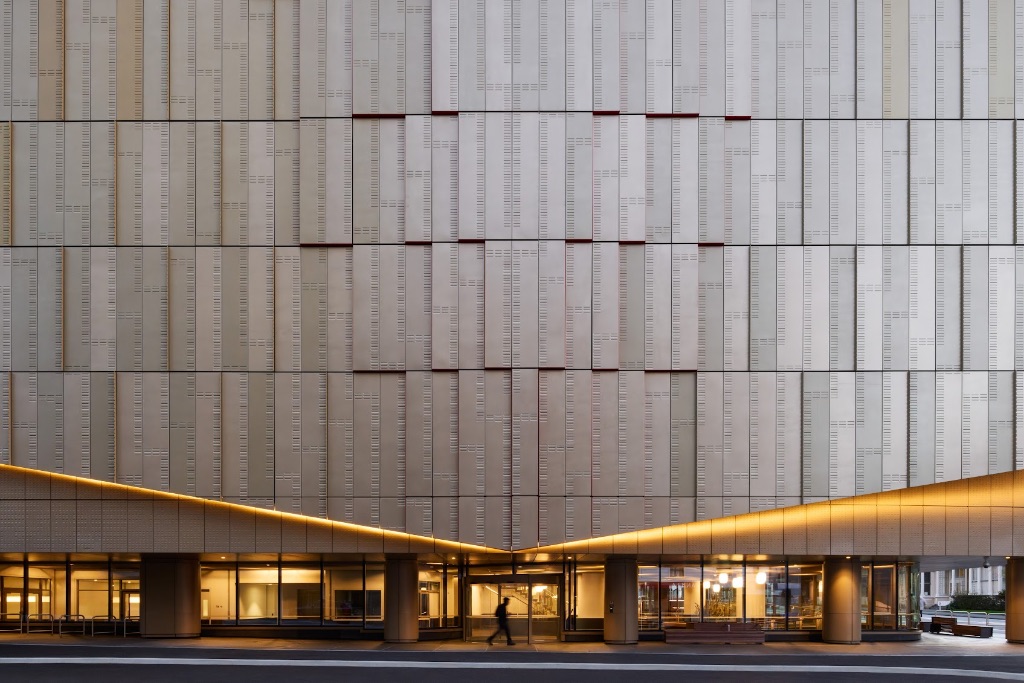
A $290 million Government archive facility in Wellington designed to meet New Zealand’s UNESCO obligations for taonga protection will incorporate a world-leading façade that is up to three times more effective at maintaining climate stability following a natural disaster than leading global archives, outperforming the Smithsonian, the British Library and the US Library of Congress, according to new research.
The 10-level Te Rua Archives New Zealand is a once-in-a-generation civic project that brings together the nation’s most precious governmental records, cultural heritage and documentary collections in one purpose-built facility. It is also the most seismically resistant civic building in the Southern Hemisphere, engineered to preserve the nation’s taonga and occupant life even after a 1-in-1800-year earthquake.
The building is designed not only as a sanctuary for taonga but also as a civic space, with a public floor featuring exhibition areas and a reading room that invites New Zealanders to engage with their history.
The façade of Te Rua provides the first layer of protection against weather, temperature change and seismic movement. It plays a critical role in controlling air leakage and thermal stability, ensuring that the delicate balance of temperature and humidity required to preserve historical documents and taonga is not disrupted even in the event of power loss or natural disaster.
Independent testing confirmed the Te Rua façade achieves air-tightness far beyond national and international archival standards, outperforming the Smithsonian Institution, the Library of Congress, the US National Archives and Records Administration, the British Library, the UK National Archives and France’s Archives Nationales.
The façade’s performance is central to meeting both UNESCO Memory of the World obligations and legislative requirements that compel Archives New Zealand to safeguard documents and taonga in perpetuity. Climate control must hold within ±1°C for at least 48 hours in the event of a power failure – a standard the new building has comfortably exceeded.
The 2,300 panels that make up the façade are finished in a striking bronze rainscreen co-designed with Manawhenua to express the cultural significance of the site.
At the entrance, the Poutama pattern, a Māori term referring to a stepped, stair-like pattern found in tukutuku (woven panels) and other crafts, symbolises genealogy, spiritual and educational advancement, and the human journey of life. It represents levels of knowledge and growth, similar to the steps Tane-o-te-wananga ascended to gain superior knowledge. Manifested in the Architectural form, it serves as a symbolic wayfinder, welcoming visitors while affirming the mana of the collections held inside.
Engineers developed an innovative fixing system that eliminated thermal bridging, ensuring near-zero air leakage and exceptional airtightness. Independent testing to ASNZS standards confirmed the façade’s seismic resilience and climate stability, exceeding the stringent Conservation of Cultural Heritage code.
Phill Stanley, Dexus portfolio manager for New Zealand, says the façade represents both a technical and cultural breakthrough.
“This is New Zealand’s highest performing unitised curtain wall façade, tested and proven to exceed design guidelines and compete on a global scale. It ensures the nation’s most valuable records and cultural history remain stable and protected even in the face of disruption, while also embedding Māori cultural design that honours the significance of the land to manawhenua and the people of New Zealand. It is the embodiment of simultaneously achieving form and function land and stories,” he says.
The 4,000m² exterior was developed in partnership with Tihei, led by artist and tohunga ta moko Rangi Kipa.
Kipa, who conceived and guided the cultural design, says the project was about weaving Māori knowledge and artistry intersecting into the architecture itself.
“Our people aspire for us to embed our native language systems into the very skin of the building. The façade patterns draw on whakapapa and traditional forms, including mark-making language that has been abstracted and contemporised to suit the nature and purpose of the building
“Our approach has also been contextualised within the recognition that this national institution that is dedicated to the documentary heritage of the nation can also acknowledge our histories of displacement of Mana Whenua as it sits directly on the Taranaki Whanui ancestral site of Pipitea Pa-kainga.
“The integration of ancestral Mana Whenua language affirms the mana of the taonga held inside. In this way, the façade is both protection and narrative – a cultural reminder for the nation’s memory, a guardian of the past and a guide for the future,” he says
The Heke Rua Archives was delivered under a Public-Private Partnership (PPP), a model credited with enabling the ambitious façade and performance standards to be achieved without compromise.
Nik Kemp, executive general manager for growth markets at Dexus, says the archive is widely recognised by experts as New Zealand’s most complex infrastructure construction project to date.
“This project demonstrates the real value of public-private collaboration. The PPP model reduced financial risk, ensured the challenging seismic and cultural requirements were fully met, and delivered a building that sets a new global benchmark for asset resilience.”
Kemp says Dexus delivered the Te Rua Archives New Zealand in partnership with the Department of Internal Affairs (DIA), a collaboration that ensured the project balanced cultural integrity, technical excellence and public value.
He says as collections transfer into the facility, the Te Rua Archives is already attracting international attention, shortlisted for multiple global awards and has been cited as a case study in best practice archival preservation.
 Asia Pacific AML: NZ’s Financial Crime Gap - Beyond The 'Number 8 Wire' Mentality
 Westpac New Zealand: Kiwi Households Adapting Despite Widespread Cost Pressure Concerns, Westpac Survey Shows
 University of Auckland: Kids’ Screen Use Linked To Long-Term Deficits In Self-Control And Attention
 University of Auckland: Research To Address Equity In STEM For Māori, Pacific And Female Students
 Stats NZ: Economic Impacts On New Zealand From Conflict In The Middle East – Report
 Advertising Standards Authority: ASA Annual Report 2025 - Platform-Neutral Regulation Keeps Pace With Digital Advertising


